Step 12 · straight through

Having had a spiritual awakening as the result of these steps, we tried to carry this message to alcoholics, and to practice these principles in all our affairs.

Demonstration

· original

“A much more important demonstration of our principles lies before us in our respective homes, occupations and affairs.” (Page 19, Big Book)

“Furthermore, how shall we come to terms with seeming failure or success? Can we now accept and adjust to either without despair or pride? Can we accept poverty, sickness, loneliness, and bereavement with courage and serenity? Can we steadfastly content ourselves with the humbler, yet sometimes more durable, satisfactions when the brighter, more glittering achievements are denied us?” (Page 112, Big Book)

“And what can be said of many A.A. members who, for a variety of reasons, cannot have a family life? At first many of these feel lonely, hurt, and left out as they witness so much domestic happiness about them. If they cannot have this kind of happiness, can A.A. offer them satisfactions of similar worth and durability? Yes—whenever they try hard to seek them out. Surrounded by so many A.A. friends, these so-called loners tell us they no longer feel alone. In partnership with others—women and men—they can devote themselves to any number of ideas, people, and constructive projects. Free of marital responsibilities, they can participate in enterprises which would be denied to family men and women. We daily see such members render prodigies of service, and receive great joys in return.” (Page 120, Big Book)

The demonstration of God’s goodness and power lies not in the achievement of material objectives (spouse and children; money; ‘career’ ‘success’; position; power; prestige) but in one’s adjustment to reality and surrender to the service of God.

Mutual Assured Construction

· original

“a better life ahead for us” (ODAT, 28 March)

It is the us-ness of the life ahead that makes it better.

I won’t have to do anything on my own, and, the longer a person is around, the more experience they have to share to help others.

One might not relish one’s personal future—after all, few are lucky enough to have a comfortable end, and the last years often present considerable challenges—but the prospect of all of this being turned to good account reverses the Othello tile from black to white.

Each day will be good as long as there are others in whose lives I can play the role that God ordains.

Outwit ... out of my wits

· original

“Haven’t we tried all sorts of tricks to outwit him—to make him stop drinking, to make him join AA, to make him go to more meetings, or go to fewer meetings?” (ODAT, 23 March)

Similarly, in recovery, I can’t get anyone to act a certain way.

I also can’t get anyone to see anything.

Once I’ve explained it once, they have the information—if they want it—and that’s the end of it.

I do not need to spend time wracking my brains, working out how to post an elephant through a letterbox.

Now, I leave it outside their front door—duly labelled—knock, and vamoose.

How they get it in the house is up to them.

Train

· original

“Many A.A.’s go in for annual or semi-annual housecleanings.” (Page 89, Twelve Steps and Twelve Traditions)

I do this, somewhere between semi-annually and quarterly. It’s a short, sharp shock, not a lengthy self-indulgence. I find that letting more than six months pass without a review is to let myself drift too far, and I’d rather catch things early. It does not take long, at all, and it can save me weeks or months of error.

Sometimes people spend their whole time in a process of the first nine steps. Fair enough, but it’s like spending all of your time on the train and none of the time at your destination. Hogwarts is considerably more interesting than the Hogwarts Express.

The best way to avoid Step Twelve and actually doing God’s will (which is often repetitive, routine, banal, menial, and entry-level and entails the eclipsing of self and all its manifestations) is to take an excessive interest in the preceding steps, particularly Four and Eleven, which are particular favourite refuges:

The endless expanses of self-examination, pain, injury, suffering, fragility, sensitivity, touchiness, offence, woundedness, neurosis, trauma and its sequalae, family of origin dynamics, and the zombie resurrection of the childhood or other past unpleasantness in the voodoo ceremonies of deep dives, new experiences, peeling layers of onions, getting-in-touch-with, repressed memories, and systemic theories.

The equally endless expanses of spirituality, religion, mysticism, psychedelics (whether micro- or macro-dosed), attempts to hack the universe or hack God, pulling back the curtain of reality to reveal some imagined antecedent metareality, the co-option of ‘spiritual principles’ to force change in or heal others or the world through spiritual means, the attempts to discern the future or ‘read’ remote minds or events, spiritualism and magic, the attempts to force God’s hand through two-way prayer, the attempts to get high or transcend everyday life through transcendental meditation.

Good for others? No idea. Good for alcoholics of my type? No, siree.

I’ve fallen into both gutters on either side of the bowling lane and come back to the simplicity of getting on with my daily tasks (keep the show on the road, fulfil my obligations, do some things I enjoy), keeping my spiritual life to ‘what does God want me to do today?’, and keeping the annual or semi-annual housecleaning to this:

- Where is my attitude wrong?

- Where is my behaviour wrong?

- How should I look at things instead?

- What should I do instead?

… and then getting on with it. 

Help

· original

“or I may miss an opportunity to help someone else” (ODAT, February 7)

Carrying the message is the core of the solution.

Everything else exists to support that.

When that happens, the self vanishes, God works unbeknownst to me, and I am restored to sanity as the by-product.

A few ... nearly all ... none ... sole ...

· original

“A few are fortunate enough to be so situated that they can give nearly all their time to the work.” (Page 19)

If one’s circumstances are such that there is less work, less money, more time to play with, this is not to be viewed as a curse, since firstly this is precisely the situation set out above, the clearing of the way to be useful in the way that God wishes. It is something that one should be grateful for.

Now, of course, one should not be negligent about financial and material matters and one should perhaps look out for actions that God enjoins one to perform in order to facilitate work in the material world, but this needn’t be a grave concern; everything really is in God’s hands, and one can relax, ask, listen, and get on with it.

But the greatest thing in each day really is the ‘work’ of carrying the message to others, and it is this that makes life worthwhile. The more, the better, up to a point.

“None of us makes a sole vocation of this work, nor do we think its effectiveness would be increased if we did.” (Page 19, Big Book)

The situation (“to be so situated”) also includes being morally and spiritually prepared: too much too soon, and the individual can easily think they have it cracked, that they know everything, that they’re ahead of or above the crowd, and one can get sucked into other people’s problems as there’s not too much else in one’s life to take one’s attention.

God will always rectify this, but one has to do one’s part: remain humble, concentrate on demonstrating rather than analysing, fixing, or directing, don’t reinvent the wheel or, heaven forbid, devise your own programme, keep it simple, and don’t professionalise, of course in terms of money, but in terms of being a ‘full-time AA’ with this the sole vocation. Few indeed are equipped to pull it off.

In-and-out burgher

· original

“It is by continuing to give of ourselves that we continue to receive.” (ODAT, 10 January)

The only way, the only way to access direction and strength from God is to open the downstream tap, even when there is apparently nothing to give, and then the upstream valve opens, and the water flows down the pipe.

Almost every answer I need comes from me attempting to convey the programme to someone else, and, in that moment, I am supplied by God with what to say, and what I say is what I need to hear.

Step Twelve starts as soon as one joins and starts to use the programme: one must start to pass it on as soon as one starts to receive.

Obligation

· original

“Has she an obligation to the group, to the fellowship, and to the newcomers who need her help? The obvious answer is Yes. The real answer is No. She is not required to pay back in kind for any of the benefits she has had. Her only obligation is to herself.” (ODAT, 13 December)

It is possible that we have no moral obligations, and that we are enjoined to be selfish and disregard the interests of others.

I think this unlikely.

The writer in question might not have any obligation and be devoid of moral responsibility, even to God, but I do have an obligation: to carry the message, to pay back by paying forward.

Theory

· original

“The spiritual life is not a theory. We have to live it.” (Page 83, Big Book)

It has been chastening to learn that, since I have—long ago—taken the Steps described in the Big Book, if I still experience potent, persistent, or recurrent fear or resentment, it is because I want these conditions more than I wanted the solution. The perfect solution is always a moment away, but I do not resort to it in the moment. Why? Because there’s a payoff in the drama, with me as the tragic protagonist, the aggrieved one, the one-eyed man in the land of the blind, the acute observer of the ills of the world, the spotter of flaws.

Rather than letting resentment and fear build up into a personality, brandishing them like battle scars or entry passes into the exclusive club of Poetic Sufferers, Wounded Heroes, Profound Thinkers, my job is to guard the gates against these intruders, and, if one slips in, to expel it immediately. That job is placed squarely within my bailiwick, and I’m given the tools and strength to do it—provided that I ask. No special skills are required: just entry-level tools from the entry-level pages to the programme written for beginners on pages 67 and 68. I can turn on the light any time I want.

Every cupboard scoured

· original

“the challenge to apply the program to every department of life” (ODAT, 8 December)

Since the programme requires me to apply it to every department, that’s what I’ve had to do, even in those areas that appear to have nothing to do with Al-Anon: food, sleep, exercise, competent financial management, relationship with media and social media, etc.

It turns out the programme is not just a nice set of spiritual ideas but a system that can bring discipline, moderation, orderliness, self-control, awareness, deliberateness, nobility (in both the ordinary and the chemical sense: non-reactiveness), and other characteristics to all areas.

If there are other areas where I am acting impulsively, compulsively, rashly, peremptorily, recklessly, negligently, thoughtlessly, carelessly, incompetently, lazily, automatically, like a sleepwalker, or with disregard for my own good and that of others, there’s a lot of work to do.

Alert

· original

“I will be always ready to carry the message to others. The need is all around me if I keep myself alert enough to recognize it.” (ODAT, 30 November)

When the student is ready, the master shows up. The same works the other way round. When I found I had a message to carry, suddenly people started asking me to sponsor them, as if by magic.

There’s never any need to be lonely or idle, as long as one isn’t picky. There’re enough people around, and enough of those are in trouble in ways that can actually be remedied through benevolent and appropriate intervention.

There will always be service to perform, and there will always be work for me to perform to earn God’s wages: freedom from self.

Hedgehog

· original

“Isn’t it proved by our futile efforts to outwit the alcoholic, to compel him to stop drinking and meet his responsibilities” (ODAT, 29 November)

The clown always wins.

The clown circumvents all the rules.

Things do what they’re not supposed to: flowers squirt water; handkerchiefs are endless.

They always find a way around everything.

And that’s part of the game: even the seeking of help is very often an invitation to a game in which one provides help, then the help doesn’t help, or backfires, or fails, and everyone is in exactly the same position as they were before, except now it’s all your fault.

I can’t give a solution to anyone. You can barely give away a solution, let alone sell it.

What I can do is put it down in plain view, and leave it to others to pick it up, like leaving out water for a hedgehog [by the way, don’t leave milk for them: they’re lactose intolerant and it gives them the squitters].

Anyway, with offering help, nothing else seems to work, and the system requires my indifference to operate.

Actually, going back to hedgehogs, a great example of Do-Gooding Going Very Wrong. People that know nothing about hedgehogs giving them milk because they themselves like milk, regardless of what is actually good for the hedgehog. QED.

Teachest

· original

“Thou therefore which teachest another, teachest thou not thyself?” (ODAT, 30 October)

The first eleven Steps do not build anything. They remove. They pave the way.

The Twelfth Step is what activates change.

It is only, only, only by sharing in meetings and attempting to help others by showing them the programme that I hear and learn anything at all.

Obligation

· original

“Make it plain he is under no obligation to you, that you hope only that he will try to help other alcoholics when he escapes his own difficulties. Suggest how important it is that he place the welfare of other people ahead of his own.” (Page 94, Big Book)

Who do I help?

Those who are willing to help others.

Principles, Steps, Programme

· original

“12. Having had a spiritual awakening as the result of these steps, we tried to carry this message to alcoholics, and to practice these principles in all our affairs.” (Page 60, Big Book)

“No one among us has been able to maintain anything like perfect adherence to these principles. We are not saints. The point is, that we are willing to grow along spiritual lines. The principles we have set down are guides to progress.” (Page 60, Big Book)

What are the principles? They are they Steps.

What are the Steps? They summarise the Programme:

“The Twelve Steps that summarize the program may be called los Doce Pasos in one country, les Douze Étapes in another, but they trace exactly the same path to recovery that was blazed by the earliest members of Alcoholics Anonymous.” (Foreword to the Third Edition)

What is the programme? The contents of the first portion of this volume (up to page 164).

“Therefore, the first portion of this volume, describing the A.A. recovery program, has been left largely untouched in the course of revisions made for the second, third, and fourth editions.”

Principles = Steps = Programme = contents up to page 164.

What are we to practise in all our affairs? Precisely this.

64 tips on helping others

· original

The following are all extracted from Chapters Seven, Eight, Nine, and Ten:

1.   When you discover a prospect for Alcoholics Anonymous, find out all you can about him.

2.   If he does not want to stop drinking, don’t waste time trying to persuade him. You may spoil a later opportunity.

3.   … be patient, realizing [you] are dealing with a sick person.

4.   Get an idea of his behavior, his problems, his background, the seriousness of his condition, and his religious leanings. You need this information to put yourself in his place, to see how you would like him to approach you if the tables were turned.

5.   Sometimes it is wise to wait till he goes on a binge. … Wait for the end of the spree, or at least for a lucid interval. … ask him if he wants to quit for good and if he would go to any extreme to do so.

6.   If he does not want to see you, never force yourself upon him.

7.   Neither should [you] hysterically plead with him to do anything … wait for the end of his next drinking bout.

8.   … [do] not … be over-anxious, for that might spoil matters.

9.   Tell him enough about your drinking habits, symptoms, and experiences to encourage him to speak of himself. If he wishes to talk, let him do so. You will thus get a better idea of how you ought to proceed.

10. When he sees you know all about the drinking game, commence to describe yourself as an alcoholic. … Give him an account of the struggles you made to stop. Show him the mental twist which leads to the first drink of a spree.

11. If you are satisfied that he is a real alcoholic, begin to dwell on the hopeless feature of the malady.

12. … be careful not to brand him as an alcoholic. Let him draw his own conclusion.

13. If he sticks to the idea that he can still control his drinking, tell him that possibly he can—if he is not too alcoholic. But insist that if he is severely afflicted, there may be little chance he can recover by himself.

14. Even though your protégé may not have entirely admitted his condition, he has become very curious to know how you got well. Let him ask you that question, if he will. Tell him exactly what happened to you. Stress the spiritual feature freely.

15. If the man be agnostic or atheist, make it emphatic that he does not have to agree with your conception of God. He can choose any conception he likes, provided it makes sense to him. The main thing is that he be willing to believe in a Power greater than himself and that he live by spiritual principles.

16. Your prospect may belong to a religious denomination. … To be vital, faith must be accompanied by self-sacrifice and unselfish, constructive action. … call to his attention the fact that however deep his faith and knowledge, he could not have applied it or he would not drink.

17. Make it plain he is under no obligation to you, that you hope only that he will try to help other alcoholics when he escapes his own difficulties.

18. Suggest how important it is that he place the welfare of other people ahead of his own.

19. Make it clear that he is not under pressure, that he needn’t see you again if he doesn’t want to.

20. You should not be offended if he wants to call it off, for he has helped you more than you have helped him.

21. You will be most successful with alcoholics if you do not exhibit any passion for crusade or reform.

22. Never talk down to an alcoholic from any moral or spiritual hilltop; simply lay out the kit of spiritual tools for his inspection. Show him how they worked with you.

23. Offer him friendship and fellowship.

24. Tell him that if he wants to get well you will do anything to help.

25. If he is not interested in your solution, if he expects you to act only as a banker for his financial difficulties or a nurse for his sprees, you may have to drop him until he changes his mind.

26. He should not be pushed or prodded by you, his wife, or his friends. If he is to find God, the desire must come from within.

27. If he thinks he can do the job in some other way, or prefers some other spiritual approach, encourage him to follow his own conscience.

28. Search out another alcoholic and try again. You are sure to find someone desperate enough to accept with eagerness what you offer.

29. We find it a waste of time to keep chasing a man who cannot or will not work with you. If you leave such a person alone, he may soon become convinced that he cannot recover by himself

30. He … says he is prepared to go through with the Twelve Steps of the program of recovery. Having had the experience yourself, you can give him much practical advice.

31. Be certain … that he is not trying to impose upon you for money, connections, or shelter. Permit that and you only harm him.

32. Helping others is the foundation stone of your recovery. A kindly act once in a while isn’t enough. You have to act the Good Samaritan every day, if need be.

33. Burn the idea into the consciousness of every man that he can get well regardless of anyone. The only condition is that he trust in God and clean house.

34. Remind the prospect that his recovery is not dependent upon people. It is dependent upon his relationship with God.

35. When working with a man and his family, you should take care not to participate in their quarrels. You may spoil your chance of being helpful if you do.

36. If you have been successful in solving your own domestic problems, tell the newcomer’s family how that was accomplished.

37. Your job now is to be at the place where you may be of maximum helpfulness to others, so never hesitate to go anywhere if you can be helpful.

38. Try not to condemn your alcoholic … no matter what he says or does. He is just another very sick, unreasonable person. Treat him, when you can, as though he had pneumonia. When he angers you, remember that he is very ill.

39. There is an important exception to the foregoing. We realize some men are thoroughly bad-intentioned, that no amount of patience will make any difference. An alcoholic of this temperament may be quick to use this chapter as a club over your head. Don’t let him get away with it. If you are positive he is one of this type you may feel you had better leave.

40. The first principle of success is that you should never be angry. … Patience and good temper are most necessary.

41. Be sure you are not critical during such a discussion.

42. Attempt … to put yourself in his place.

43. Let him see that you want to be helpful rather than critical.

44. … after his next binge, ask him if he would really like to get over drinking for good. Do not ask that he do it for you or anyone else. Just would he like to?

45. If he is lukewarm or thinks he is not an alcoholic, we suggest you leave him alone.

46. Avoid urging him to follow our program.

47. Wait until repeated stumbling convinces him he must act, for the more you hurry him the longer his recovery may be delayed.

48. Again, you should not crowd him. Let him decide for himself.

49. We never, never try to arrange a man’s life so as to shield him from temptation.

50. If he gets drunk, don’t blame yourself. God has either removed [the person’s] liquor problem or He has not. If not, it had better be found out right away. Then you and [the person] can get right down to fundamentals. If a repetition is to be prevented, place the problem, along with everything else, in God’s hands.

51. … the impression that he is to be wrapped in cotton wool and placed on a pedestal. Successful readjustment means the opposite.

52. It is of little use to argue and only makes the impasse worse.

53. When we see a man sinking into the mire that is alcoholism, we give him first aid and place what we have at his disposal. For his sake, we do recount and almost relive the horrors of our past. But those of us who have tried to shoulder the entire burden and trouble of others find we are soon overcome by them.

54. This is not to say that all alcoholics are honest and upright when not drinking. Of course that isn’t so, and such people often may impose on you. Seeing your attempt to understand and help, some men will try to take advantage of your kindness. If you are sure your man does not want to stop, he may as well be discharged, the sooner the better. You are not doing him a favor by keeping him on. Firing such an individual may prove a blessing to him. It may be just the jolt he needs.

55. But there are many men who want to stop, and with them you can go far. Your understanding treatment of their cases will pay dividends.

56. Next he can be assured that you do not intend to lecture, moralize, or condemn

57. Say that you believe he is a gravely ill person, with this qualification—being perhaps fatally ill, does he want to get well? … Will he take every necessary step, submit to anything to get well, to stop drinking forever?

58. If he says yes, does he really mean it, or down inside does he think he is fooling you, and that after rest and treatment he will be able to get away with a few drinks now and then? We believe a man should be thoroughly probed on these points. Be satisfied he is not deceiving himself or you.

59. After satisfying yourself that your man wants to recover and that he will go to any extreme to do so, you may suggest a definite course of action.

60. For most alcoholics who are drinking, or who are just getting over a spree, a certain amount of physical treatment is desirable, even imperative. … Whatever the method, its object is to thoroughly clear mind and body of the effects of alcohol.

61. … he should understand that he must undergo a change of heart. To get over drinking will require a transformation of thought and attitude.

62. We all had to place recovery above everything, for without recovery we would have lost both home and business.

63. When the man is presented with this volume it is best that no one tell him he must abide by its suggestions. The man must decide for himself.

64. In case he does stumble, even once, you will have to decide whether to let him go. If you are sure he doesn’t mean business, there is no doubt you should discharge him. If, on the contrary, you are sure he is doing his utmost, you may wish to give him another chance. But you should feel under no obligation to keep him on, for your obligation has been well discharged already.

Kitchen

· original

“On awakening let us think about the twenty-four hours ahead. We consider our plans for the day.” (Chapter Six, Big Book)

“There is a direct linkage among self-examination, meditation, and prayer. Taken separately, these practices can bring much relief and benefit. But when they are logically related and interwoven, the result is an unshakable foundation for life.” (Twelve Steps and Twelve Traditions)

Step Ten: clean the kitchen.

Step Eleven: figure out, perhaps using recipe books, what to cook.

Step Twelve: cook.

Cleaning is not the point. Recipe books are fun but they’re not the point.

The point is the cooking.

The meal is chiefly for others.

Spark

· original

“The spark that was to flare into the first A.A. group was struck at Akron, Ohio, in June 1935, during a talk between a New York stockbroker and an Akron physician.” (Foreword to the Second Edition, Big Book)

For something to catch fire, it must be dry.

Once I was dry of alcohol, and my own ideas ran dry, I caught fire in AA automatically. Fire needs only (a) appropriate conditions (dryness) and (b) proximity.

When twelfth-step work feels like hard work, and the message is not going in, the person is not dry. Pause and return when they’re dry.

Scrambled

· original

“We help best by inspiring people to think through and solve their own problems. Otherwise we deprive them of the opportunity to develop experience and strength from working things out for themselves.” (ODAT, 7 May)

Even helping others with step work is usually impossible. I was mentally scrambled when I got into recovery, and neither I nor anyone else could unscramble the scrambled. God could, but that took time. Other people heard inventory, made specific suggestions in relation to Step Nine, and gave specific guidance on specific life situations based on sound recovery principles and their decades of experience; that guidance was invariably helpful. But people stayed clear of my mind.

Now the tables are turned, I recognise that the most effective thing to do is present the programme to others and leave them out largely of the process. If they want to listen and take on board what I’m saying, great; if not, that’s fine too. But I can’t unscramble the scrambled. They’ll have to sort that out with God.

Dyb-dyb-dyb-dyb

· original

“we tried to carry this message to alcoholics” (Chapter 5, Big Book)

There’s no virtue in ill-preparedness.

A cat crouches to spring.

A cellist learns the notes.

A cook procures the ingredients.

A sharer prepares the message to deliver.

Him

· original

“Each individual, in the personal stories, describes in his own language and from his own point of view the way he established his relationship with God.” (Chapter 2, Big Book)

I was at a meeting and about to share, and I asked God, “What shall I say?”

I heard, “Talk about Me.”

So I did.

Catch-22

· original

“As to two of you men, whose stories I have heard, there is no doubt in my mind that you were 100% hopeless, apart from divine help.” (Chapter 2, Big Book)

The chance to share puts me in a Catch-22 situation: talk about the solution to alcoholism (divine help) but risk alienating those one wants to help.

Louise would say: tell the truth; they’re going to die anyway.

Talking about God won’t really harm anyone, so I do it anyway.

A talk on Step Twelve ...

· original

... can be found here.

See the front page for links to downloads ('TAPES') and podcasts ('PODCASTS').

Triptych

· original

“Our stories disclose in a general way what we used to be like, what happened, and what we are like now.” (Chapter 5, Big Book)

“A triptych is a work of art (usually a panel painting) that is divided into three sections. … The middle panel is typically the largest and it is flanked by two smaller related works, although there are triptychs of equal-sized panels.” (Wikipedia)

When I’m asked to speak at a meeting, the subject is me, not ‘it’: not what ‘it’ used to be like, etc., but what ‘I’ used to be like. Like a triptych, there are three parts, and the largest part is ideally the ‘what happened’, in other words the programme I have been working.

This is what I find useful when I hear others: a little bit about what the person was like, so I can identify; a little bit about what they are like now, to provide a contrast and an indication of what the results of the programme can be; but mostly what I can actually do about my problem, as reflected in the speaker’s experience.

“Sobriety—freedom from alcohol—through the teaching and practice of the Twelve Steps, is the sole purpose of an AA group.” (Language of the Heart)

I would get very frustrated in my early days, because, within half a minute I had identified with the speaker, so no more drunkalogue was required, and, within another half a minute, I had figured out that this person was doing well in life, so the motivation was there. More often than not, the meal was a bread sandwich: the left and right panels of the triptych but little or nothing in the main middle panel. I looked out for and grabbed hold of people who could actually articulate what they did about their problems and took their numbers.

That’s why, now the roles are reversed, I aim, when sharing, to convey as much substance as possible.

Marshmallow

· original

A great trap I have fallen into is to use spiritual growth to create a little universe, separate from the real universe, containing just me and lots of marshmallow thoughts about God and love and suchlike.

Spiritual growth, raising my consciousness, seeing through the follies and vanities of my thinking, and other such laudable pursuits, instead of being the means by which I am emptied out in order for God to achieve His will through my hearty, diligent, painstaking work on His behalf, become the main purpose and objective of my life.

Spiritual self-centeredness is as dangerous to me as greed, chambering, intemperance, gluttony, wantonness, malice, or other faults.

Self needs to be curetted out of me, leaving just a space for God to work.

The measure of a spiritual awakening is not good sharing in meetings but the work I'm doing in carrying the message of AA and Al-Anon and concerted constructive action in the other departments of my life.

Listen to yourself!

· original

I’ve had the misfortune to hear myself speaking on recordings, in a work context, mostly, but occasionally in a recovery context. I say ‘misfortune’; it’s uncomfortable, but it’s beneficial, because it allows one to identify and eliminate annoying habits and tics in one’s public speech. This information is useful if one is going to eliminate anything that will distract from the content or, in AA, the message one is carrying or will reduce one’s credibility. I’ve listed these out. Some are to do with intonation and other aspects of ‘form’; others veer into content. I’ve fleshed out the list of patterns I’ve been guilty of and have worked on with varying success, with a few more patterns that can irk.

  • High rising terminal (https://en.wikipedia.org/wiki/High_rising_terminal)
  • Laughs, giggles, chuckles, snorts, and gurgles when nothing is funny
  • Insecurity fillers (‘you know’, ‘you know what I mean’, ‘right’, ‘like’, ‘sort of’)
  • Hesitation markers (‘um’, ‘er’)
  • Stuttering out of uncertainty or hurry
  • Flat affect / apparent boredom
  • Axe-grinding
  • Excessive emphasis
  • Ramping up with repetitions and superlatives
  • Exaggeration and caricature
  • Lip-smacking and other non-verbal noises
  • Dropping register (reducing ‘-ing’ to ‘in’’ and ‘think’ to ‘fink’) to sound more ‘street’ (sometimes the person forgets and starts to speak middle class again by accident)
  • More than the occasional swearing
  • Seeing how many times one can say the full phrase ‘Alcoholics Anonymous’ (rather than just ‘AA’) per minute, or, for special effect ‘the Big Book of Alcoholics Anonymous’
  • Repeatedly referring to the word ‘man’ (if one is a man) or ‘woman’ (if one is a woman) rather than just ‘person’ or ‘someone’ when the biological sex is neither here nor there
  • Dramatising with continual reference to death, life and death, life, etc.
  • Following mispronunciations with deliberate gibberish out of embarrassment rather than unobtrusively correcting

The result of minimising or eliminating these and other quirks is much more effective message carrying with far fewer distractions, and greater confidence in speaking in any context.

Death threats: a tightening up

· original

There are several points in the Big Book where it is made explicit what the individual must do to avoid drinking and therefore death. Taken together, these constitute the essence of the AA programme, though other elements are presupposed (Step One) or necessary concomitants (Step Ten). The essence can be captured under six headings.

UNITY

One cannot recover alone. This is true at the beginning but also after many years. People drift, dangerously, and drifters drink.

“But out of this frightening and at first disrupting experience the conviction grew that A.A.’s had to hang together or die separately.” (Foreword to the Second Edition, Big Book)

RESENTMENT

The link between resentment and drinking is clear: resentment leads to separation from God; separation from God means separation from our source of protection.

“It is plain that a life which includes deep resentment leads only to futility and unhappiness. To the precise extent that we permit these, do we squander the hours that might have been worthwhile. But with the alcoholic, whose hope is the maintenance and growth of a spiritual experience, this business of resentment is infinitely grave. We found that it is fatal. For when harboring such feelings we shut ourselves off from the sunlight of the Spirit. The insanity of alcohol returns and we drink again. And with us, to drink is to die. If we were to live, we had to be free of anger. The grouch and the brainstorm were not for us. They may be the dubious luxury of normal men, but for alcoholics these things are poison.” (Chapter 5, Big Book)

HARMFUL CONDUCT

Lesser known is this item: behaviour that harms others, whether deliberate or unrepentantly permitted, leads to drinking.

“If we are sorry for what we have done, and have the honest desire to let God take us to better things, we believe we will be forgiven and will have learned our lesson. If we are not sorry, and our conduct continues to harm others, we are quite sure to drink. We are not theorizing. These are facts out of our experience.” (Chapter 5, Big Book)

STEP FIVE

Secrecy, specifically lack of confession, likewise.

“The best reason first: If we skip [the fifth] step, we may not overcome drinking. Time after time newcomers have tried to keep to themselves certain facts about their lives. Trying to avoid this humbling experience, they have turned to easier methods. Almost invariably they got drunk. Having persevered with the rest of the program, they wondered why they fell. We think the reason is that they never completed their housecleaning. They took inventory all right, but hung on to some of the worst items in stock. … He should realize that we are engaged upon a life-and death errand.” (Chapter 6, Big Book)

STEP NINE

On this point, there are two specific injunctions plus a couple of illustrative stories. The two injunctions concern amends in general and creditors in particular.

[W]e will never get over drinking until we have done our utmost to straighten out the past. We are there to sweep off our side of the street, realizing that nothing worthwhile can be accomplished until we do so.” (Chapter 6, Big Book)

“We must lose our fear of creditors no matter how far we have to go, for we are liable to drink if we are afraid to face them.” (Chapter 6, Big Book)

“After consulting with his wife and partner he came to the conclusion that it was better to take those risks than to stand before his Creator guilty of such ruinous slander. He saw that he had to place the outcome in God’s hands or he would soon start drinking again, and all would be lost anyhow. He attended church for the first time in many years. After the sermon, he quietly got up and made an explanation. His action met widespread approval, and today he is one of the most trusted citizens of his town. This all happened years ago.” (Chapter 6, Big Book) 

“Some time later, and just as he thought he was getting control of his liquor situation, he went on a roaring bender. For him, this was the spree that ended all sprees. He saw that he would have to face his problems squarely that God might give him mastery. One morning he took the bull by the horns and set out to tell those he feared what his trouble had been. He found himself surprisingly well received, and learned that many knew of his drinking. Stepping into his car, he made the rounds of people he had hurt. He trembled as he went about, for this might mean ruin, particularly to a person in his line of business. At midnight he came home exhausted, but very happy. He has not had a drink since.” (Chapter 11, Big Book)

SPIRITUAL ACTIVITY

The necessity of a spiritual life is arguably less well understood in AA. But even when that fact is acknowledged, the purport is often not understood. Often, prayer and meditation, contemplation, spiritual retreats, and other practices are viewed as the content of the spiritual life. These are not the content but the facilitators; the vessel not the draught. The spiritual life is one of work. The following items are placed in a sequence specifically to illustrate this: the two points of the necessity of a spiritual life for mere survival and the core thereof, namely work with other alcoholics. No work with other alcoholics, no spiritual activity; no spiritual activity, no active relationship with God; no active relationship with God, no mental defence; no mental defence, drinking; drinking, death.

“As to two of you men, whose stories I have heard, there is no doubt in my mind that you were 100% hopeless, apart from divine help.” (Chapter 3)

To be doomed to an alcoholic death or to live on a spiritual basis are not always easy alternatives to face.” (Chapter 4, Big Book)

“Perhaps your husband will make a fair start on the new basis, but just as things are going beautifully he dismays you by coming home drunk. If you are satisfied he really wants to get over drinking, you need not be alarmed. Though it is infinitely better that he have no relapse at all, as has been true with many of our men, it is by no means a bad thing in some cases. Your husband will see at once that he must redouble his spiritual activities if he expects to survive. You need not remind him of his spiritual deficiency—he will know of it.” (Chapter 8, Big Book)

“It is easy to let up on the spiritual program of action and rest on our laurels. We are headed for trouble if we do, for alcohol is a subtle foe. We are not cured of alcoholism. What we really have is a daily reprieve contingent on the maintenance of our spiritual condition. Every day is a day when we must carry the vision of God’s will into all of our activities.” (Chapter 6, Big Book)

“Both saw that they must keep spiritually active. One day they called up the head nurse of a local hospital.” (Chapter 11, Big Book)

“For if an alcoholic failed to perfect and enlarge his spiritual life through work and self-sacrifice for others, he could not survive the certain trials and low spots ahead. If he did not work, he would surely drink again, and if he drank, he would surely die.” (Chapter 1, Big Book)

“All went well for a time, but he failed to enlarge his spiritual life.” (Chapter 3, Big Book)

“Fred would not believe himself an alcoholic, much less accept a spiritual remedy for his problem.” (Chapter 3, Big Book)

“Though the family does not fully agree with dad’s spiritual activities, they should let him have his head. Even if he displays a certain amount of neglect and irresponsibility towards the family, it is well to let him go as far as he likes in helping other alcoholics.” (Chapter 9, Big Book)

“Practical experience shows that nothing will so much insure immunity from drinking as intensive work with other alcoholics. It works when other activities fail.” (Chapter 7, Big Book)

“All of us spend much of our spare time in the sort of effort which we are going to describe.” (Chapter 2, Big Book) 

“Once more: The alcoholic at certain times has no effective mental defense against the first drink. Except in a few rare cases, neither he nor any other human being can provide such a defense. His defense must come from a Higher Power.” (Chapter Three, Big Book)

Räuberleiter

· original

A Räuberleiter (German), literally a ‘robber’s ladder’, is where one person gives another person a leg up, as it were, to gain access to some restricted premises or to steal something. I like the idea of a robber’s ladder: an illicit way of reaching a higher level, one morally dubious non-expert giving another morally dubious non-expert a leg up to access something that ought to be out of reach. The spiritual experience really ought to be out of reach to alcoholics, but it isn’t. There’s no actual ladder to get there. There is only one alcoholic helping another. No external tools or devices, like ladders or jetpacks. Using oneself as the means to help another. The upward process of the steps is by means of the amateurish and questionable Räuberleiter. But what is gained is not stolen: it is actually the due inheritance; the realm of the spirit is where one always ought to have belonged.

Stones and demonstrations

· original

“He stood in the Presence of Infinite Power and Love. He had stepped from bridge to shore. For the first time, he lived in conscious companionship with his Creator. Thus was our friend’s cornerstone fixed in place. No later vicissitude has shaken it.” (Chapter 4, Big Book)

“He is the Principal; we are His agents. He is the Father, and we are His children. Most good ideas are simple, and this concept was the keystone of the new and triumphant arch through which we passed to freedom.” (Chapter 5, Big Book)

“Helping others is the foundation stone of your recovery.” (Chapter 7, Big Book)

“A much more important demonstration of our principles lies before us in our respective homes, occupations, and affairs.” (Chapter 2, Big Book)

The Chapter 2 quotation about the ‘much more important demonstration’ can (erroneously) lead one to think that one somehow relegates service and sponsorship to a corner of one’s life in order to do the much more important business of everyday life.

In fact, the most important things are the reliance on God and the service of God through carrying the message: No cornerstone, no keystone, no foundation: no recovery at all; no areas.

What I do in my home, occupation, and affairs supplies the best examples of how to apply the principles of the Steps, Traditions, and Concepts, and therefore offer the best demonstration (because this is where the principles and one’s character are put most severely to the test), but that does not mean that the service and sponsorship are less important.

I once asked someone which of two things was more important. He answered ‘yes’.

I think that’s the answer for me to the question of which of having a spiritual awakening, carrying the message, or practising the principles is the most important.

The answer is ‘yes’.

Practising these principles in all our affairs

· original

I have a habit of keeping secrets from myself. Orthodox and well-behaved over here; rebellious, dissolute, and sly over there. Bulkheads separating different areas.

Sometimes I need to give myself a good talking to.

Here’s an exercise that leaves me nowhere to hide.

  1. Say a prayer.

  2. Ask God what I need to start doing, stop doing, and do differently.

  3. I write three lists, scanning and scouring each area of my life.

This gives me (a) a lot to work on (b) a focus for what I need to bring God to bear on in my life.

I then read the lists daily. There is now nowhere to hide from myself.

What’s your experience?

Done

· original

“My friend promised when these things were done I would enter upon a new relationship with my Creator.” (Chapter 1, Big Book)

Imagine if taking the Steps were a journey from London to Edinburgh. One passes through each of the intermediate stations and arrives in Edinburgh. But, rather than getting out in Edinburgh and living in Edinburgh, one gets a flight back to London and decides to continue living there, enriched by much train lore and railway-related wisdom.

It turns out that Edinburgh was never the goal. There was never any interest in Edinburgh. The aim all along was to live in London, just without the horror and the pain.

But guess what? London is London, and London is not Edinburgh.

I did the Steps, yes, sure, to recover from alcoholism (result!) and to get a good ol’-fashioned design for living.

But I still wanted money, security, a career, stuff, advancement, achievement, status, friends, holidays, luxuries, all sorts of things, and the job of life was to obtain, keep, and secure these things against pestilence, war, and termites.

I did not want to abandon myself to God and then content myself with whatever came back to me from God.

I certainly did not set aside large chunks of time to serve God directly through sponsorship and carrying the message or having such work the primary occupation of my mental activity (this is what living in Edinburgh is, in the above example).

It took a second rock-bottom of materialism (‘London’) to convince me I really did want to live in Edinburgh.

A talk on pages 128 to 131 ...

· original

 ... can be found here.

A downloadable version can be found, along with podcast links, by clicking TAPES and PODCASTS on the homepage.

Two-Stepping

· original

Without necessarily taking that first drink, we often get quite far off the beam. Our troubles sometimes begin with indifference. We are sober and happy in our AA work. Things go well at home and office. We naturally congratulate ourselves on what later proves to be a far too easy and superficial point of view. We temporarily cease to grow because we feel satisfied that there is no need for all of AA’s Twelve Steps for us. We are doing fine on a few of them. Maybe we are doing fine on only two of them, the First Step and that part of the Twelfth where we “carry the message.” In AA slang, that blissful state is known as “two-stepping.” And it can go on for years. (Twelve Steps and Twelve Traditions)

The chief sign of two-stepping is where I find myself again and again being 'saved' by twelfth-step work and service. Twelfth-step work works when other activities fail, not because other activities fail. Other activities should and do largely work.

It is certainly the case that, when other activities (exceptionally) fail, I must engage heavily in service and twelfth-step work as the only available remedy.

It is also the case that, when I am generally off-bream and realise I need to rework the first eleven steps to come back on beam, it is the twelfth-step work that (a) keep my head above the water (the drink) and (b) empowers me to actually do the reworking work.

However, when I find myself in the position of someone 'whose head is always insane unless I'm doing service or sponsorship', there's something wrong. Something in the first eleven steps has been missed: usually a lot of things. Almost invariably I'm (a) attached to material-world outcomes (hard to achieve, and yield only thin and exiguous milk, regardless of how one works the udders, as it were) and (b) not trusting God's plan for my 'salvation'. Everything else is detail.

Step Twelve should ideally arise out of abundance. It should not be the hammer to break the glass again and again because the carriage is full of smoke. The carriage is not full of smoke because life is being lifey or life does not stop happening just because one is sober. It is full of smoke because my arse is on fire, and the question is then to find out why my arse is so flammable.

The Work

· original

A few are fortunate enough to be so situated that they can give nearly all their time to the work. (Chapter 2)

We do not like the thought that the contents of a book or the work of another alcoholic has accomplished in a few weeks that for which we struggled for years. (Chapter 8)

This couple has since become so fascinated that they have dedicated their home to the work. (Chapter 11)

The 'work' in AA is the facilitation and performance of carrying the message.

How much time am I spending on the programme each day?

It's the time I am spending on the facilitation and performance of carrying the message.

It's possible to be spending hours on AA activities each day, whilst spending nought minutes on 'the work'.

Everything else, all the 'work on myself', and anything contained in the first eleven steps, is not the work but the preparation for the work.

When I'm not getting the promised results of being happy, joyous, and free, even though I'm apparently doing 'lots of AA things, including work on myself', it's usually because I'm not doing 'the work' as described above.

The solution when I'm in a bad way is not the first eleven steps. It's the Twelfth Step.

A new way of life

· original

 ... a way of life that is incredibly more wonderful as time passes. (Big Book)

... Al-Anon reveals a new way of life to us ... (One Day At A Time In Al-Anon, January 25)

The purpose of the Steps is to bring about Step Twelve: the structuring of my life around the service of God.

This necessarily necessitates stop certain things, starting certain things, and certainly doing everything differently.

The purpose of the Steps is not to allow me to keep everything exactly as it is but just not feel the pain of it.

A talk on Step Twelve ...

· original

 ... can be found here.

The preparation and the meal

· original

Practical experience shows that nothing will so much ensure immunity from drinking as intensive work with other alcoholics. It works when other activities fail. (Big Book)

One of the ways in which we help ourselves to serenity and an orderly life is through Twelfth Step work ... (One Day At A Time In Al-Anon, November 30)

The first eleven steps are the preparation for the meal. The meal is Step Twelve: spiritual awakening, carrying the message, serving God and only God in all I do.

If I'm hungry, it's because I'm not eating food. That could be because I didn't prepare the food, in other words I didn't take the first eleven steps. If I've taken the first eleven steps, the problem is that I haven't eaten the meal I prepared. Even if it's a while since I prepared it, it can be quickly warmed up in the oven.

When I’ve got a problem, I often think I’m back at Step One or think I need another Step Four. Usually, I don’t. Normally what I need is to seek God and the Higher Realms in Step Eleven, restructure my life around service in and outside the fellowship in Step Twelve, and clean out all of the defective beliefs, thinking, and behaviour in Step Ten, as they come up during the day. Anything that does not come up cannot be all that important, anyway. But the activating kick-start for this whole process is Step Twelve. Sometimes, when the battery is dead, one needs to start off by pushing the car, and so I get out there and carry the message in meetings. Soon enough, my time is filled with people to help. Then, once a new schedule for my day and week is established, I can go back and clear up any odds and ends in the first nine steps that might have been missed, have grown back, or have arisen in the meantime as my life has changed. I’ve found this much more effective than plonking myself immediately back at Step One and reserving myself a good year or two of staring at myself (and inveigling someone else into the solipsistic exercise) before having to put myself out for God. I am the problem. God is the answer. The programme IS Step Twelve. The preceding eleven steps are the preparation.

Step Twelve and the multiple traps

· original

12. Having had a spiritual awakening as the result of these steps, we tried to carry this message to alcoholics, and to practice these principles in all our affairs.

Completing the first nine steps achieves nothing. It clears away but it does not build. It consists in demolition and removal of refuse. It's the acquisition of the gym pass: it does not make you fit or strong.

Step Twelve proper starts with the completion of Step Nine. Steps Ten and Eleven are supports for Step Twelve. The first nine steps are the preliminaries; Step Twelve is the thing itself, and the only thing.

There are many traps in Step Twelve. It has three parts, and each part must be understood, implemented, and woven together with the others.

The spiritual awakening element holds the least dangers: spending one's life trying to establish a relationship with God as literally the most significant feature of one's life will necessary entail waking up to the other parts of Step Twelve, sooner or later. It's rare for people to get entirely lost in this, because good spiritual advisors outside AA will invariably point the individual back to the main locus of their service of God within AA, and the fever abates. The only real danger lies in esoteric forms of religion or in religions or spiritual practices that do not recognise the relationship of subordination to God. I can't see a theoretical problem with godless religions, but in practice individuals will sometimes be unable to oust themselves from the throne without the deliberate act of recognising the throne as rightfully belonging to God.

The second trap lies in devoting one's life to service. The problem lies not in this, per se, but in doing so on one's own efforts, without an active, more-than-theoretical relationship with God. The people one is serving become irritating; the work becomes drudge; it is not imbued with the spirit of God; even if it is kept up, it will be largely joyless. But more often than not it will gradually be side-lined and dwindle to a perfunctory compliance.

The greatest of the three traps lies in the third element: practising these principles in all our affairs. The trap lies in continuing with outward, wooden, desultory spiritual observances and lacklustre, minimal, formulaic service, whilst reserving one's passions and real efforts for the 'affairs'.

Note that the third part of Step Twelve is not have affairs. It is not: get a family, acquire qualifications, get a career, do well, achieve material security, develop a broad social circle, excel at hobbies and interests. The fameux 'I've got a big life' brigade are the perfect exemplar of this. These trophies are vaunted as demonstrations that the programme works. But these are the trophies of material victories and by no means the preserve of the spiritual or the step-worker: often the reverse is the case. Career, in particular, is usually at the cost of God and service.

The third part of Step Twelve is the development of character and the practise of virtues. The domain is the broad ocean of affairs. But the affairs themselves are not the point. They're the packaging required for delivery of the goods. They're not the gift. Becoming absorbed in and preoccupied with these things in themselves is like the moggie that is more interested in the cardboard box than in the feline climbing frame or plushie cat-house supplied in the box.

An example: the three virtues du jour might be patience, tolerance, and thoughtfulness. This could be achieved sweeping the streets or at the board table. The person at the board table is not doing better than the streetsweeper per se. The employed person with an illustrious career is not doing better than the unemployed person who is volunteering at a soup kitchen per se. The person with a large family is not doing better than the single person per se. The person who is doing the better is the person who is developing their character and practising virtues more assiduously. Service of God does not require importance. What is big in God's eyes is not what is big in man's eyes.

In the Bible, it says, 'But seek ye first the kingdom of God, and his righteousness; and all these things shall be added unto you,' and this sums up the above ideas. Continue for a lifetime with the development of the right relationship with God, and everything else will follow. Subordinate that to anything else, and the vine will slowly wither. The vine will wither so slowly, however, that, by the time the fruit start to wither, the roots are long dead. What happens next? Relapse, after ten, twenty, or thirty years of apparently fruitful recovery.

What's the answer? Seek a relationship with God and nothing else, then everything else will be built around the relationship, by God, not by me.

Your Time Is Up: Put Your Pens Down

· original

Yesterday, we asked this:

Imagine you get a few hours off work to do with as you please. What would you do?

Make a list of five things you would do.

Then we'll pick this up tomorrow.

Are your first thoughts:

  • Spiritual reading or listening? Prayer? Meditation? Contemplation? Time with God? Overdue stepwork?
  • Going to a meeting? Carrying the message?
  • Performing acts of service within one's twelve-step fellowship?
  • Performing acts of service in the world?
  • Being in nature, with animals, with children, with family, with friends?
  • Playing music? Painting? Other creativity or something genuinely nourishing?

What was associated with these possibilities? Guilt and obligation, or untrammelled joy?

Or was something else on the cards?

What am I after?

Money? Security? Achievement? Comfort? Power? Prestige? Self-satisfaction?

Or awakening from the nightmare? Appreciation of God's created universe? Annihilation of self? Dissolution into service? Unity with others?

What was it that did it in the end?

· original

Various people tried to help me, from around 1986 onwards. In 1993, I start to adopt ideas and take actions that really, really helped. These ideas and actions literally saved my life (because they enabled me to stay sober and not commit suicide, the latter being a constant risk). In 2002, a new layer of ideas and actions came in, which upgraded me. In 2009 and 2010, yet more layers of solution came in. In between these key dates, other ideas and actions drip-dripped into my life from numerous sources.

The result of this is that I live a life that is highly effective, highly efficient, and remarkably harmonious given where I started.

Key ideas

  • Recognising that most of what I came into recovery believing was wrong
  • ... that most of what I was thinking was destructive to myself
  • ... that most of what I was feeling stemmed from a delusional mindset
  • The past has gone and cannot affect me
  • I can be affected only by what is currently going on in my mind
  • There is no one to blame for how I feel
  • I am responsible for how I feel, 100% of the time, no exception
  • It is possible to be absolutely fine, whatever is happening
  • My problem stems from my values, my delusions, my demands
  • Selfishness and self-centredness are my only core issues
  • My solution must lie in utter destruction of self
  • Self-forgetting and self-sacrifice are the name of the game
  • Utter reliance on God

Key actions

  • Inventory, confession, amends
  • Prayer and meditation
  • Service
  • Building a life around being of constructive use to others
  • Putting myself last not first

I cannot stress enough that the reason I incorporated the above ideas and actions into my life is because they worked, and nothing else worked.

I was horrified, insulted, offended, incredulous, and vicious in my response to the above ideas and actions when they were offered to me, and I was equally haughty and excoriating towards those who propounded them, out of their own experience.

This quotation from ACIM is apropos:

T-2.III.3. The acceptance of the Atonement by everyone is only a matter of time. ... 3 You can temporize and you are capable of enormous procrastination, but you cannot depart entirely from your Creator, ... 5 Tolerance for pain may be high, but it is not without limit.

It is important to understand this, when communicating with or trying to help others.

The ego will fight the above, tooth and claw, because they represent not only life to me but death to it. Because I was identified with the ego, I fought for it, against myself.

The ego will, in particular, latch onto forms of 'healing' which do not really heal but provide temporary relief, through the shifting of guilt onto the past and onto others, and the elevation of self to occupy so much of the picture that the illusory locus of fear in the world is temporarily obscured.

Many people presented the above ideas to me way before I adopted them, and they taught me this valuable lesson: don't try to yank unripe fruit off the tree.

Stupidly simple

· original

The part of Step Twelve where it talks about 'practising these principles in all our affairs' is very simple. It means I conduct my affairs, but that, in conducting them, my chief activity is practising these principles.

The worldly purposes of my job, for instance, are no longer my purposes.

My purpose, in my job, is to practise these principles.

How do you do that?

Take three principles contained in or derivable from the programme (ask God for these), and practise them.

The three I was given today are:

Submission

Quietude

Industry

So that's what I'm practising.

Three recordings of the wonderful John McQ ...

· original

 ... can be found here.

Cloud capp'd towers

· original

He would like us to keep our heads in the clouds with Him, but that our feet ought to be firmly planted on earth. (Big Book)

And, like the baseless fabric of this vision, The cloud-capp'd towers, the gorgeous palaces, The solemn temples, the great globe itself, Ye all which it inherit, shall dissolve (The Tempest)

Select facts of the world must be apprehended for me to perform my work. But few. The rest: a vision without base. To be upset by the world: delusion. What am I thinking about? And why? Is this thought necessary? And this one? What then? God. And the next right action. And God. And the heavens.

All our affairs

· original

5. Each Alcoholics Anonymous group ought to be a spiritual entity having but one primary purpose—that of carrying its message to the alcoholic who still suffers.

3.  Made a decision to turn our will and our lives over to the care of God as we understood Him.

12. Having had a spiritual awakening as the result of these steps, we tried to carry this message to alcoholics, and to practice these principles in all our affairs.

OED: Affair: An activity performed by a person, often on a habitual basis; something to be done; a piece or item of business; an occupation, a pursuit; a task, a duty.

I don't have a life. I gave God my life. It's His, not mine.

God has given me back affairs: check out the definition of affairs above.

I don't have a home: I have habitual activities and things to be done.

I don't have a career: I have an occupation and a pursuit.

I don't have positions or roles: I have tasks and duties.

There are only things to do, and God sustains me within that and gives me all necessary resources.

Nothing can not go my way because I don't have a way.

There is nothing to fear because there is nothing to lose.

The primary purpose is to help other people stay sober, and that is achieved by practising these principles in all my affairs.

Tradition XII and practising anonymity

· original

Anonymity means I don't care about me. I'm part of a continuous consciousness. What is for the good of all? That's the question I must ask.

Ironically, this means breaking my anonymity at the personal level (although not at the public level).

To protect my anonymity at the personal level is to place myself at the centre of the universe, as a personality requiring protection.

Complete abandonment of self means trusting God in all matters and obeying the Traditions as they're written. That's placing principles before personalities.

Where is the other hand?

· original

When anyone, anywhere, reaches out for help, I want the hand of A.A. always to be there. And for that: I am responsible.

When I am holding out my hand to help someone, what is the other hand doing?

Holding God's hand.

When I am holding God's hand, and holding out my hand to you, God silently and invisibly takes your other hand.

This is what creates the Divine Triadic Circuit.

Life's mission

· original

Life's mission is to wake up and help others wake up, through sponsorship.

That requires sobriety and having 'a life' (home, occupation, and affairs).

These are the means of demonstration.

They are not the purpose.

The purpose is to serve God by helping others.

This kicks in the moment we have something to give, because we have received something.

To keep, give.

To get, give: turning on the tap draws down the water from the cistern.

Gravity (= principle = God) does all the work.

Quarterly inventory (UPDATED)

· original

I have acquired the habit of writing a quarterly housekeeping inventory, and sharing it with four people, before discussing any headlines with my sponsor.

Here is the procedure:

- Schedule the quarterly inventory for once a quarter.
- Enter the dates into one's diary into the future, so one does not forget.
- Pick a method.
- On the date in question, write the inventory, in one sitting preferably. Don't belabour it.
- If necessary, condense the results so they can be read out in 5 to 15 minutes max.
- Share with four friends who also regularly write inventory.
- Narrow down to a list of the top problems and corrective measures.
- Be prepared to present the problems and corrective measures.
- Present these to a sponsor.
- Listen to the sponsor's feedback.
- Take notes.

Follow up:

(1) List of people to forgive (pages 65–67 of the Big Book).  
(2) List of people to make amends to.  
(3) List of sane and sound ideals to grow towards (page 69–70 of the Big Book).  

Implement. A good way is to read the sane and sound ideals daily, to keep the consciousness fresh.

Methods:

Review the first three Steps. Take Step Three.

# Step 1

Where have I engaged in compulsive, addictive, or destructive behaviour? ('Powerless over the first ...')  
Where has my activity been immoderate? ('Powerless after the first ...')  
What were the negative consequences? ('... had become unmanageable.')  

Where have I been vigilant, worried, or preoccupied about another person's drinking, using, sobriety, or recovery?  
What have I done to monitor, control, or regulate another person's drinking, using, sobriety, or recovery?  

What do I think my problems are?  

# Step 2

Do I like how I have been feeling?  
Do I like what I have been experiencing?  
Do I hope I am wrong in my beliefs, thinking, and behavaiour?  
Do I hope that there is a different way?  
Do I believe that there is a different way?  
Do I believe that that different way will change my beliefs, thinking, and behaviour?  
Do I believe that that will change what I feel and experience?  

# Step 3

Am I done being in charge?  
Am I willing to turn in all things to God? 

# Inventory process

(1) St Augustine's Prayer Book method.
(2) Big Book pages 64–71 (complete Step Four).  
(3) Page 67 questions.  

# Page 67 question method

Make a list of areas:

- Major relationships
- Other categories of people (e.g. waiters in restaurants, people in shops, people at meetings, students, colleagues)
- Other areas of my life, e.g.
    - Money
    - Retirement planning
    - Looking after my home
    - Education
    - Work
    - Diet
    - Exercise
    - Sleep
    - Hobbies
    - Service
    - Religion
- Anything else not already covered.

Ask the following questions:

'Mistakes': How am I seeing this relationship or area wrong? How should I see this relationship or area instead? What did I do I shouldn't have done? What did I fail to do I should have done?

'Selfishness': Where did I (unreasonably) put me ahead of others?

'Dishonesty': What lies did I tell? What did I fail to disclose that I should have? How was I underhanded? How did I deceive myself?

'Self-seeking': What was I after?

'Fear': What was I scared of losing or not getting?

'Blame': Where did I cause trouble or make things worse?

'Faults': Pick the top three at play in this relationship:

Arrogance; avarice; contempt; cowardice; cruelty; disobedience; distrust; domination; envy; gluttony; impenitence; indifference; jealousy; lack of discipline; lust; malice; over-ambition; over-sensitiveness; presumption; pride; prudery; pugnacity; retaliation; sentimentality; shame (hurt pride); sloth; snobbery; timidity; vanity; violation of confidence; wastefulness.

'Wrongs': What did I do that harmed others?

Add:

'Corrective measures': What should I have done instead / What should I do in future?

Example (imagine a work relationship):

Mistakes: Saw work as a way to make quick money. Should have seen it as an opportunity for service. Worked sloppy. Should have worked hard.  
Selfishness: Put my ease and comfort ahead of my boss's priorities.  
Dishonesty: Lied about why I hadn't done the work. Blamed Susan.  
Self-seeking: Easy life. Money. Praise.  
Fear: Hard work. Being called out. Being sacked.  
Blame: Didn't follow instructions. Cutting corners.  
Faults: Sloth. Shame (hurt pride). Disobedience.  
Wrongs: Delivered bad work, and my boss had to work late to fix it. Susan got blamed for my bad work.  
Corrective measures: Make amends. Show up early. Listen carefully. Take notes. Tell the truth. Work super hard. Ask for help if needed.  

Sharing to carry the message

· original

'Each of us in his own way works for the good of the others' (ODAT, July 21)

To fast from what is bad for me and feast on what is good for me, I need to recall the idea that hell is a banquet with starving people fighting over food but with straight arms so they can't bring the food to their mouths, whereas heaven looks exactly same, but the people are feeding each other. When I'm in meetings, I share not for me but for the good of others. I surrender up the opportunity afforded by the three to five minutes of sharing time for the Higher Power to use as the Higher Power wishes: not to vent, dump, justify, blame, or complain but to share what I have been like, what I did about it, and what results I got. In allowing the Higher Power to avail itself of the opportunity to work through me, I hear myself saying whatever I need to hear myself. My eye is kept entirely off exactly how others might be helped, and who those others might be. My eye is kept entirely on the elements of my experience the Higher Power wishes me to direct outwards into the world. Then I discover that I have received everything I need by giving everything I have.

Unwelcome news

· original

To stay sober permanently, a couple of things are necessary:

- Work the Steps repeatedly
- Spend many hours a week helping other people work the Steps

But what about my life?

After Step Three, it no longer exists. Rights of disposition relinquished. We get given back the life God has in store for us. But it's not ours. Why is this OK? Because what God has in store is better than anything we could plan for ourselves.

Step Twelve IS the programme

· original

The purpose of the first eleven Steps is Step Twelve.

No Carrying The Message (= maybe 15 hours a week of sponsoring and service),  no programme, no solution.

Gratitude

· original

When I feel gratitude upstream towards the people who have helped me, I point it downstream and repurpose it to help others.

Us and them

· original

'I don't go to many meetings. They're all terrible. No programme'.

'Maybe if you went to them, they wouldn't be so terrible.'

Step 12 All our affairs: Quarterly housekeeping

· original

We need to do regular comprehensive inventory. The following procedure is suitable for people who have recovered, are fully in the flow of service and sponsorship, but are due a periodic check-up. If, however, you are not currently heavily involved in sponsoring and service, have recently been engaged in active addiction, or are otherwise very dysfunctional, maybe a full run through the Steps with a competent sponsor will be more appropriate. If you've never done the Steps out of the Big Book, do that instead.

The procedure:

- Briefly revise Steps One, Two, and Three
- If you're currently sponsoring plenty of people (at the time of writing, I have eleven in an active Step process plus a large number of people who call regularly for input), your first three Steps should be pretty clear, as you're constantly explaining them through your own experience and thus reinforcing them for yourself
- But consider these three Steps specifically in relation to persistent, recurrent, or deeply affecting problems:
    - Am I powerless to fix these problems given my current state of power? (Step One: Powerlessness)
    - Are these problems running my emotions, my thinking, my behaviour? (Step One: Unmanageability)
    - Do I trust that God can fix these problems, too? (Step Two)
    - Am I willing to submit to the following process? (Step Three)
- If so, you're ready
- The following is an effective and efficient way of taking Steps Four through Nine
- As a starting point, I use the St Augustine's Prayer Book list of character defects (I use a historic edition, with the content reproduced below. There is a more contemporary edition available from Amazon, including on Kindle, with slightly updated language. I frankly prefer the historic edition)
- The list is Christian in origin and sometimes in idiom, but feel free to adapt to whatever your religion is
- The behaviour is (largely) universal human behaviour, so it should be easy to overlook the origin of some of the language
- If you're not religious, ignore the religious items
- Substitute 'Higher Power' for 'God' if you need to
- Copy the list into a document (e.g. note software or MS Word, etc.)
- Ask God to guide your contemplation and writing every step of the way
- Read through each defect
- If you recognise one as currently 'live' in your life (i.e. since your most recent review), keep it in the document
- If it's not you, or not you any more, delete it from the document
- You'll be left with a list of your current character defects (Step Four)
- If it helps, write one example of each below each defect
- Write out for each defect (or block of defects, as they are written in paragraph form)
    - Harms done to others (Step Eight)
    - Amends to be made (Step Nine)
    - Corrective attitudes and actions (Steps Six and Seven)
- Share the results with a few friends in AA who do regular reviews (Step Five)
- Make the amends necessary
- Take the corrective attitudes and behaviours:
    - Collate into a new document
    - Organise and pare down in a way that makes sense to you
    - Read them and meditate on them every morning
    - Continue implementing them until they are incorporated into your mode of thinking and behaviour (Step Eleven)
- Ask God constantly for help to grow towards the vision of God's will

# An example of a worked section


Resentment. Unwillingness to face up to difficulties or sacrifices. Unjustified rebellion or complaint at the circumstances of our lives. Escape from reality or the attempt to force our will upon it. Transference to God, to our parents, to society, or to other individuals of the blame for our maladjustment; hatred of God, or antisocial behaviour. Cynicism. Annoyance at the contrariness of things; profanity or grumbling.

- Be brave, sanguine, and insouciant
- Do not resist
- Don't avoid reality
- But don't deliberately seek out troubling aspects of it
- Take 100% responsibility for my negative reactions
- See the good in humanity
- Never complain about anything or anyone
- Never criticise anything or anyone, including in my mind

# The full list from the St Augustine's Prayer Book


## Pride


Pride is putting self in the place of God as the centre and objective of our life, or of some department thereof. It is the refusal to recognise our status as creatures, dependent on God for our existence, and placed by Him in a specific relationship to the rest of His creation.

Irreverence. Deliberate neglect of the worship of God every Sunday in his Church, or being content with a perfunctory participation in it. Disregard of other Holy Days or of additional opportunities for giving God honour. Failure to thank God or to express our gratitude adequately. Disrespect for God or holy things by deliberately treating them, in thought, word or deed, in a profane, contemptuous or over-familiar manner. Use of holy things for personal advantage, or the attempt to bribe or placate God by religious practices or promises.

Sentimentality. Being satisfied with pious feelings, emotional displays and beautiful ceremonies without striving to obey God’s will.

Presumption. Dependence on self rather than on God, with the consequent neglect of the means of grace—sacraments and prayer. Dispensation of ourselves from ordinary duties on the grounds that we are superior persons. Satisfaction or complacency over our spiritual achievements. Refusal to avoid, when possible, immediate occasions of temptation. Preference for our own ideas, customs, schemes or techniques. Foolish optimism. Failure to recognize our job as a divine vocation, or to offer our work to God. Unwillingness to surrender to and abide in Christ, to let him act in and through us. Failure to offer to God regularly in intercession the persons or causes that have, or should enlist our interest and support.

Distrust. Refusal to recognize God’s wisdom, providence and love. Worry, anxiety, misgivings, scrupulosity, or perfectionism. Attempts to discern or control the future by spiritualism, astrology, fortune telling or the like. Magic or superstition. Over-sensitiveness. Expectation that others will dislike, reject or mistreat us; over-readiness so to interpret their attitude, or quickness to take offense. Unfounded suspicions. Timidity in accepting responsibility, or cowardice in facing difficulty or suffering. Surrender to feelings of depression, gloom, pessimism, discouragement, self-pity, or fear of death, instead of fighting to be brave, cheerful and hopeful.

Disobedience. Rejection of God’s known will in favour of our own interests or pleasures. Disobedience of the legitimate (and therefore divinely ordained) laws, regulations or authority of the Church, state, husband, parents, teachers, etc.; or slow and reluctant obedience. Failure when in authority to fulfil responsibilities or to consider the best interests of those under us. Refusal to learn God’s nature or will as revealed in Scripture, expounded in instructions or expert advice, or discernible through prayer, meditation or the reading of religious books. Absorption in our own affairs, leaving little time, energy or interest for the things of God. Violation of confidence. Breaking of legitimate promises or contracts. Irresponsibility. Treachery. Unnecessary disappointment of another, or the causing of shame or anxiety to those who love us.

Impenitence. Refusal to search out and face up to our sins, or to confess and admit them before God. Disregard of our sins or pretence that we are better than we are. Self-justification or discounting our sins as insignificant, natural or inevitable. Self-righteous comparison of ourselves with others. Refusal to accept just punishment or to make due reparation when possible. Deceit or lying to escape the consequences of our sins, or allowing another to suffer the blame for our faults. Overcompensation or attempts at self-reform or self-vengeance, to avoid surrender to God in humble penitence. Shame (hurt pride), sorrow for ourselves because our sins make us less respectable than we like to think we are, or because we fear punishment or injury to our reputation, rather than sorrow for what sin is in the eyes of God. Refusal to admit we were in the wrong or to apologize. Refusal to accept forgiveness from God or others. Doubt that God can forgive our sins, or failure to use the means of getting assurance of his forgiveness when we need it. Unwillingness to forgive ourselves.

Vanity. Crediting to ourselves rather than to God our talents, abilities, insights, accomplishments, good works. Refusal to admit indebtedness to others, or adequately to express gratitude for their help. Hypocrisy. Pretence to virtues we do not possess. False humility. Harsh judgments on others for faults we excuse in ourselves. Boasting, exaggeration, drawing attention to ourselves by talking too much, by claiming ability, wisdom, experience or influence we do not have, or by eccentric or ostentatious behaviour. Undue concern over, or expenditure of time, money or energy on looks, dress, surroundings, etc., in order to impress others; or deliberate slovenliness for the same purpose. Seeking, desiring or relishing flattery or compliments.

Arrogance. Insisting that others conform to our wishes, recognize our leadership, accept our own estimate of our worth. Being overbearing, argumentative, opinionated, obstinate.

Snobbery. Pride over race, family, position, personality, education, skill, achievements, or possessions.

## Anger


Anger is open rebellion against God or our fellow creatures. Its purpose and desire is to eliminate any obstacle to our self-seeking, to retaliate against any threat to our security, to avenge any insult or injury to our person.

Resentment. Refusal to discern, accept or fulfil God’s vocation. Dissatisfaction with the talents, abilities or opportunities he has given us. Unwillingness to face up to difficulties or sacrifices. Unjustified rebellion or complaint at the circumstances of our lives. Escape from reality or the attempt to force our will upon it. Transference to God, to our parents, to society, or to other individuals of the blame for our maladjustment; hatred of God, or antisocial behaviour. Cynicism. Annoyance at the contrariness of things; profanity or grumbling.

Pugnacity. Attack upon another in anger. Murder in deed or desire. Combativeness or nursing of grudges. Injury to another by striking, cursing or insulting him; or by damaging his reputation or property. Quarrelsomeness, bickering, contradiction, nagging, rudeness, or snubbing.

Retaliation. Vengeance for wrongs real or imagined, or the plotting thereof. Harsh or excessive punishment. Hostility, sullenness or rash judgment. Refusal to forgive, or to offer or accept reconciliation. Unwillingness to love, to do good to, or to pray for enemies. Boycotting or ostracizing another for selfish reasons. Spoiling others’ pleasure by uncooperativeness or disdain, because we have not got our way, or because we feel out of sorts or superior.

## Envy


Envy is dissatisfaction with our place in God’s order of creation, manifested in begrudging his gifts and vocation to others.

Jealousy. Offense at the talents, success or good fortune of others. Selfish or unnecessary rivalry or competition. Pleasure at others’ difficulties or distress. Belittling others.

Malice. Ill-will, false accusations, slander, backbiting. Reading false motives into others’ behaviour. Initiation, collection or retailing of gossip. Arousing, fostering or organizing antagonism against others. Unnecessary criticism, even when true. Deliberate annoyance of others, teasing or bullying.

Contempt. Scorn of another’s virtue, ability, short comings, or failings. Prejudice against those we consider inferior, or who consider us inferior, or who seem to threaten our security or position. Ridicule of persons, institutions or ideals.

## Covetousness (traditionally greed)


Covetousness is the refusal to respect the integrity of other creatures, expressed in the inordinate accumulation of material things; in the use of other persons for our personal advantage; or in the quest for status, power or security at their expense.

Inordinate Ambition. Pursuit of status, power, influence, reputation, or possessions at the expense of the moral law, of other obligations, or of the rights of others. Ruthless or unfair competition. Putting our self or our family first. Conformity to standards we recognize as wrong or inadequate in order to get ahead. Intrigue or conspiracy for self-advancement.

Domination. Seeking to use or possess others. Over protection of children; refusal to correct or punish lest we lose their affection; insistence that they conform to our ideal for them contrary to their own vocation. Imposing our will on others by force, guile, whining, or refusal to cooperate. Over-readiness to advise or command; abuse of authority. Patronizing, pauperizing, putting others under a debt of gratitude, or considering ourselves ill-used when others’ affection or compliance is not for sale. Respect of persons, favouritism, partiality, flattery, fawning, or bribery to win support or affection. Refusal to uphold the truth to fulfil duties, to perform good acts, or to defend those wrongfully attacked, because we fear criticism or ridicule, or because we seek to gain the favour or approval of others. Leading, tempting or encouraging another to sin.

Avarice. Inordinate pursuit of wealth or material things. Theft, dishonesty, misrepresentation, or sharing in stolen goods. Cheating in business, taxes, school or games. Making worldly success the goal of our life or the standard for judging others.

Prodigality. Waste of natural resources or personal possessions. Extravagance or living beyond our income, to impress others or to maintain status. Failure to pay debts. Gambling more than we can afford to lose, or to win unearned profits. Unnecessary borrowing or carelessness with others’ money. Expenditure on self of what is needed for the welfare of others.

Penuriousness. Undue protection of wealth or security. Selfish insistence on vested interests or on claimed rights. Refusal to support or help those who have a claim on us. Sponging on others. Stinginess. Failure to give due proportion of our income to Church and charity, or of our time and energy to good works. Failure to pay pledges promised to the Church or charities, when able to do so.

## Gluttony


Gluttony is the overindulgence of natural appetites for food and drink, and by extension the inordinate quest for pleasure or comfort.

Intemperance. Overindulgence in food, drink, smoking, or other physical pleasures. Fastidiousness, fussiness, demanding excessively high standards, or dilettantism. Condemnation of some material things or pleasures as evil in themselves, attempting to prohibit their use rather than their abuse.

Lack of Discipline. Negligence in keeping the days of fasting or abstinence, or failure to use other needed means of self-discipline. Neglect of bodily health—not getting sufficient rest, recreation, exercise, or wholesome nourishment. Failure to use or to cooperate with available medical care when ill. Use of sickness as a means of escape from responsibilities.

## Lust


Lust is the misuse of sex for personal gratification, debasing it from the holy purpose for which God has given it to us.

Unchastity. Violation of the Church’s marriage laws. Lack of consideration for one’s partner in the use of the marital relationship. Refusal to fulfil the purpose of Holy Matrimony in the bringing forth and giving adequate care to children, or to take our full share in the responsibilities or work involved. Unfaithfulness to one’s spouse. Sexual indulgence outside matrimony, in thought or act, alone or with others.

Immodesty. Stimulation of sexual desire in others by word, dress or actions; or in oneself by reading, pictures, or fantasies. Collecting or recounting dirty stories.

Prudery. Fear of sex or condemnation of it as evil in itself. Refusal to seek adequate sexual instruction or the attempt to prevent others from obtaining it. Stimulation of excessive and harmful curiosity by undue secrecy. Repression of sex.

Cruelty. Deliberate infliction of pain, mental or physical. Tormenting of animals.

## Sloth


Sloth is the refusal to respond to our opportunities for growth, service or sacrifice.

Laziness. Indolence in performing spiritual, mental or physical duties, or neglect of family, business or social obligations or courtesies. Procrastination of disliked tasks. Busyness or triviality to avoid more important commitments. Devotion of excessive time to rest, recreation, amusement, television, light reading or the like. Waste of employer’s time, or shoddy or inadequate work.

Indifference. Unconcern over injustice to others, especially that caused by currently accepted social standards; or unmindfulness of the suffering of the world. Failure to become adequately informed on both sides of contemporary issues or on the Christian principles involved. Neglect of duties to state or community. Failure to provide adequately for, or to treat justly those in our employ. Ignoring of needy, lonely or unpopular persons in our own or the parish family, or in the neighbourhood; or unwillingness to minister to them. Insufficient attention to the religious and other needs of our family. Failure to fulfil our obligation of Christian missionary witness, or to take a full and in formed part in the effort to make the Church’s unity and holiness a manifest reality on earth.
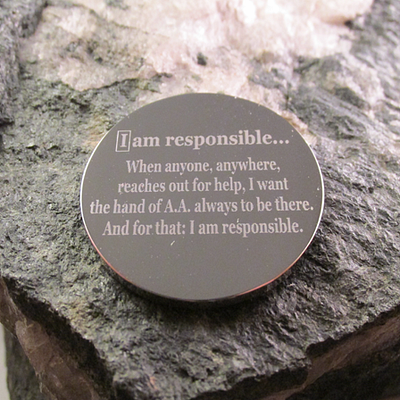
Low-Hanging Fruit!

· original

Often in recovery, I have found myself unhappy and immediately concluded: I need to redo the first nine Steps / seek ‘outside help’ (which has an ominous, expensive, and time-consuming ring to it). Sure, that might work, and that might be necessary, and I’ve certainly done both. However: in almost every case, the answer has not been found in the past or in some dark corner of my psyche but in some practical aspect of my life that is out of whack or some fundamental spiritual principle that is not being observed. Once such matters are resolved, I have been pleasantly surprised to find my psyche relieved without any laborious process and certainly without any navel-gazing. Living life satisfactorily turned out to be the answer.

Here’s a list of questions I have asked myself over the years and whose resolution has been necessary for me to be achieve stability, usefulness, and happiness. There is a lot of material here, and Rome won’t be built in a year, let alone a day, but running through this list will reveal a lot of ‘low-hanging fruit’ in terms of improving one’s life and one’s experience of life.

The topic of this post is therefore: Low-Hanging Fruit!

Almost all of these can be addressed by applying Steps Ten (including a spot-check inventory on a current problem), Eleven (including devising action and corrective measures), and Twelve (including taking the action and implementing the corrective measures), seeking the guidance of people in AA who are functional and happy in the area in question, or through rudimentary research, reading, or recourse to ordinary professionals who can help with practical matters, e.g. a yoga class or recruitment consultant.

Alarmingly, some of these aspects of life are sufficiently important individually to knock a person off balance if they are out of alignment. With many of these matters out of alignment, is it any wonder a person is experiencing generalised malaise?

These questions are divided into eight areas:

PHYSICAL

- Do I have a regular, stable sleeping-and-waking pattern?
- Do I sleep enough (clue: if I am tired more than occasionally, the answer is ‘no’)?
- Do I have peace and quiet at some point every day?
- Do I shut off devices long enough before bed for my mind to calm down?
- Do I eat regular, super-healthy meals, in moderate quantities?
- Am I addicted to nicotine?
- Do I abuse caffeine?
- Do I abuse sugar / grain products?
- Do I undertake vigorous exercise regularly?
- Do I stretch every day / do yoga, etc., or use other joint mobility exercises?
- Are there any medical problems I need to see a doctor or other physical practitioner, e.g. a physiotherapist, about?

PRACTICAL

- Are there any pressing practical difficulties in my life that I am avoiding facing or are otherwise unresolved?
- Do I spend more money than I earn?
- Do I record everything I spend and earn and examine the results regularly to draw up a budget and stick to it?
- Do I have a job, occupation, or caring role?
- If I don’t have these, am I studying, volunteering, or taking other concerted steps to sort something out in this area?
- Am I otherwise occupying myself fruitfully and in the benefit of others for a substantial part of the day and week?
- Am I freeloading in any way?
- Am I engaged in any other illegal or illicit activity?
- Do I do anything I would not care to broadcast at my home group?
- What do I do for fun? (TV, YouTube, Facebook, etc. does not count: Valium with a plug.)
- Do I have enough fun?
- Do I have any contact with nature, animals, or children?
- Do I do anything creative?
- Is my living space orderly, tidy, clean, and pleasant?

SOCIAL

- Do I have social contact with people I can confide in and learn from?
- Do I have social contact with peers?
- Do I have social contact with people who can confide in and learn from me?
- Do I sit down and eat with others?
- Do I cook for others?
- Do I let others cook for me?
- Do I have friends?
- Do I spend time with them (including virtually)?
- Do I have a wider circle of acquaintances?
- Do I have any connection with my community?
- Do I have any wider connection with society?

SPIRITUAL

- Do I consider myself a physical being or a spiritual being in a physical form?
- Do I see myself as a servant, child, employee, etc. of the Higher Power?
- Is my life devoted to serving that Higher Power and accepting the gifts the Higher Power provides?
- Do I have an identity that separates me from other beings, including non-human beings, or one that joins me to all other beings?
- Do I have an established, regular, and robust prayer and meditation practice?
- Have I completed the first nine Steps, including every last amend?
- Any secrets?
- Any resentment?
- Anyone unforgiven?
- Any fear squashed down and not abandoned in pursuit of God’s will?
- Do I see the material as a vehicle for the spiritual or an end in itself?

MORAL

- Do I think about myself?
- Am I concerned with sex, money, power, prestige, comfort, thrills, and appearance?
- Am I concerned with how others behave, my finances, my needs, my wants, what others think of me, and what I think of myself?
- Or am I concerned with eliminating my character defects to better serve others’ needs, to help them achieve their hearts’ desire?
- Am I engaged in any behaviour that harms others or others find distressing, disagreeable, or plain annoying?
- Any unmade amends?
- Any unfaced creditors?
- Any unfulfilled obligations?
- Do I give a substantial chunk of my income to charity or a substantial chunk of my time to charitable work?
- Any area where self-will is running riot?
- Is my life filled with service?
- Do I consume more than I need?

RELIGIOUS

- Do I have a religion?
- If I do, am I practising it wholeheartedly or fitfully, perfunctorily, and guiltily?
- If I do not have a religion, have I resolved the question finally and satisfactorily or is the matter worth more investigation?
- Is it worth revisiting a religion, possibly with a different approach, or investigating other ones?

PHILOSOPHICAL

- What is my basic philosophy of life?
- Where did I get it from?
- Does that philosophy bring me peace, acceptance, joy, and a sense of purpose?
- Or does it bring me restlessness, unhappiness, gloom, fretfulness, cynicism, and apathy?
- What am I doing to improve my philosophy of life?

MENTAL

- Am I familiar with the standard cognitive distortions and biases affecting human beings generally?
- Do I concertedly watch out for and correct these?
- What am I currently learning?
- What am I currently reading or listening to?
- Do I consume ‘junk thinking’?
- Do I police what my mind dwells on or do I let it think about whatever it wants?
- Am I careful about the external material I expose my mind to (in the media, in social media, in terms of entertainment, or in terms of the other people in my life)?
- Do I permit fear, resentment, guilt, shame, nostalgia, fantasy, and scheming to occupy my mind or do I spot and turn away from these promptly?
- Am I applying the tools of Steps Ten, Eleven, and Twelve consistently to root these out?

All of these matters can be taken to God and one’s confidantes for simple diagnosis and correction.

As Super Dave says, I act my way into right thinking!

What do you do when you complete the Steps?

· original

Well, the problem lies in the question, really. You don't complete the Steps, not really!

Option 1: Practise Step Twelve as a way of life (supported by the preceding eleven Steps, especially Steps Ten and Eleven).

Option 2: Try to live a life run on self-will (sex, money, power, prestige, comfort, thrills, appearance).

Option 3: Start finding fault with your home group, your sponsor, and your spouse. Gossip.

I've tried all three, and Option 1 is definitely the best.

Personal chef, or chef training other chefs?

· original

'The minute we put our work on a service plane, the alcoholic commences to rely upon our assistance rather than upon God.' (Page 98, Alcoholics Anonymous)

We're told in AA that we're supposed to be of service, but then we're warned about putting our work on a service plane. Why?

The purpose of sponsorship is to show the individual how to establish a relationship with God, how to transcend material reality, in order then to devote their life to service, chiefly through helping others do the same, in a never-ending chain. On the side, lots of other people are served, helped, and benefited, but the fast-breeder nuclear reactor is helping others have spiritual awakenings. That's what powers the entire grid.

Many of the people I have tried to sponsor did not finish the process of the first nine Steps, and, of those who have completed the process, only some do indeed devote their lives to service.

Although it's good to relieve symptoms, and it's certainly true that a spiritual life will yield benefits in terms of a more effective, efficient, and harmonious material life, if the purpose is to feel better and/or to better fulfil one's own material objectives, the point has been missed.

For a long time, I used AA for my own purposes (relief of symptoms and more successful material living), and that's fine as far as it goes, but first of all the symptoms would come back and secondly the ego would re-spread through the material life and I would find myself repeatedly back at square one. The by-products of a spiritual life, namely relief of symptoms and more successful material living, will eventually disintegrate as the ego grows back, unless the spiritual life is lived for its own sake.

What does that mean in practice?

'All of us spend much of our spare time in the sort of effort which we are going to describe.' (Page 19, Alcoholics Anonymous)

The only way to retain symptomatic relief and successful material living is for neither of these to be a relevant factor in how I structure my life, in other words for life to be on an entirely different basis:

'He was on a different footing. His roots grasped a new soil.' (Page 12, Alcoholics Anonymous)

'If you want it, you can't have it.' (Cahuenga B)

One very dis-spiriting experience as a sponsor is sponsoring people as a service-provider, much like an acupuncturist or chiropractor, whose services are there to serve the individual.

Sponsorship works best, for everyone, when it is understood from the outset that the purpose of sponsorship is to train other people to sponsor. As a by-product, symptoms are relieved and the material life improves, but that's not the point.

A spiritual life does not necessarily entail being placid and comfortable in the world. It often entails great emotional and material difficulty. That's why, for it to be maintained, a fundamental choice needs to be made: Do I want to live a spiritual life for its own sake, or do I want to live a spiritual life because I think it will make me more comfortable, happy, and successful, in the terms I set?

Lurking at the back of these considerations is the cold hard fact that an ongoing spiritual experience is the only solution I have found to alcoholism and to the other obsessions of the mind, and that this spiritual experience involves awakening to a greater reality and sacrificing self entirely.

To sum up, I make myself available for sponsorship to people who want to transcend self and place themselves at God's disposal for a life of service.

A sponsor who is a service-provider to a sponsee is like a personal chef.

A sponsor in the sense described in the Big Book is a chef training other chefs. Sure, you get to eat great meals along the way, but that's not the point.

We've got one job ...

· original

Newcomers to AA are often suspicious and hesitant and have all sorts of blocks to seeking help. When they ask, it's a big deal. Here's my approach to handling newcomer requests and indeed other requests for help in AA:

- When the phone rings and it's an unrecognised number, it's often a newcomer or someone else seeking help; I answer it.
- This is especially the case if I have been told someone might be calling me.
- If I miss a call, I text back as soon as I discover I have missed the call and ask, 'I saw a missed call: can I help you?'
- If I can't ring back straight away, I let them know when I will ring back.
- I then follow through.

This has a top priority in my life. If I get everything else right in AA but drop the ball on this, the rest is a waste of time. If I get nothing right but this, I am a success. These contacts with newcomers are the moments that change the course of people's lives. If we miss the opportunity, they might not call someone else. The fog descends, and they're off again, sometimes for years, sometimes forever.


Steps Ten, Eleven, and Twelve

· original

In Step Ten, with God's help and under God's guidance, I change my thinking in real time by spotting when I'm talking and listening to the ego and switching to talking and listening to God.

In Step Eleven, with God's help and under God's guidance, I change my beliefs, knowledge, and understanding by praying, reading, listening, learning, meditating, and raising my consciousness to a higher level.

In Step Twelve, with God's help and under God's guidance, I change my behaviour: I do God's will not my ego's.

When my thinking, beliefs, knowledge, understanding, and behaviour change: so does my life.

Accept nothing less than peace and joy

· original

Once you've cleared out the past in Steps One through Nine, accept nothing less than peace, joy, love, effectiveness, and efficiency in your life.

Here're a bunch of ways to practise Steps Ten through Twelve.

Follow the instructions on pages 84 to 88 of the Big Book daily, in particular any of the prayers or directions that can be implemented literally scores of times a day, e.g. the 'watch and turn' instructions on page 84, the 'constant accompaniment' thoughts on page 85, and the 'pause' instructions on page 87.

Be diligent about allowing no negative thought to fester without ruthlessly pulling it out and substituting a God thought in its place. Remember: God is on your side; you cannot be harmed because you are spirit, given temporary custodianship of your human existence by God; there are no problems, only situations to navigate, projects to manage, and tasks to accomplish; there is always a different way to look at any situation; and grace, cheerfulness, usefulness and calm are always available; fear is a liar; resentment is folly; lingering guilt and shame are misplaced. Peace is always available.

Listen to AA talks or other spiritual instruction. You can do this while walking, driving, doing housework, shopping, etc. No need to set aside special time, although that won't hurt, either. You can even attend meetings by dialling in and listening whilst doing these other activities.

Read spiritual literature, extract quotations and ideas to apply; compile your own index cards, post-it stickers, scrapbooks, notebooks, etc. of quotations and ideas. Share them with others.

Find more people to sponsor. Give existing sponsees more time. Go to meetings where there are lots of people who are new, in trouble, or in search of solutions to pressing and difficult problems. Think constantly about people who are struggling and how your life can be used by God to help them.

Find more service in meetings or in the fellowship structure.

Start an anonymous blog and write about your experiences of the programme to help others. Set up an anonymous Facebook page to share recovery resources, thoughts, and experiences. Find a way of doing anonymous TikToks to share helpful ideas with others. Use your imagination.

Get to meetings super early and talk to everyone.

Spend time trawling through Facebook groups devoted to AA (or whatever fellowship you're in) and you'll find lots of people who are suffering and looking for answers, experience, information, and guidance. Answer them. Befriend them. Help them.

Constantly (that means 'all the time') think about what tools you are applying to what problems and what results you are getting and how you will present these to other people in recovery who might ask for input, experience, or guidance.

If a person has time for fearful, anxious, depressing, despairing, angry, resentful, guilty, and shame-filled thoughts, they have time to meditate. That was great news for me, as it meant there was clearly lots of brain space to be repurposed into prayer and meditation!

Learn lots of prayers or passages from AA or spiritual literature and learn to say them (or sing them) out loud to block old, unhelpful thinking patterns. Consciously and deliberately apply the principles contained in the prayers or the literature to each problem or situation or feeling that arises: How does God want me to view this? What does God want me to do?

The programme is not a decoration or a separate pastime: it is a method of living. If not adopted wholeheartedly, which means with my whole heart, my whole mind, and my whole effort in the material world, I will simply fall back into the old method of living, which is the ego's method of living. You gotta have a method of living. The only question is: Which one? One that leaves you bored, heavy, and miserable, or one that fills you with infinite energy?

It does not require more effort, really: it requires willingness. Not doing the above is a false economy, because I pay the price in unhappiness. A person is thinking and 'doing' all day long anyway anyway: the question is only what a person is thinking and doing. Redirecting the thinking and action along different lines. That's all we're doing here, folks.

If you know someone who is doing more of the above than you, you're missing a trick.

Look at their lives: they're probably getting more done, more effectively and efficiently, and having more fun whilst doing it. Do you want more peace and joy? I certainly do. So the above is how I go about it!

How you know you're doing enough? When you're fizzing with excitement about life.

Step 12: How do you take someone through the Steps?

· original

There are many ways. There always have been. Early AAs differed. New York, Akron, and Cleveland all did things differently, from each other, and internally.


Here are the four approaches I use most often:

Option 1

Read the book Alcoholics Anonymous with someone. Physically be with them as you read. They read a paragraph / you read a paragraph. You discuss it. You both identify. You explain points to them. You make sure they understand everything and take notes so they can take someone else through. When you get to an instruction, you explain how they carry out the instruction, with reference to your own experience. Check they've done it right (by listening to what they've written, if it's a written instruction). Continue.

Advantages: It's thorough. It's personal. You're making sure everything is understood as you go. It's the 'gold standard'.
Disadvantages: It's slow. It can be academic. It can be deadly dull. They can lose interest and fail to see the point. The process can miss the wood for the trees. It can infantilise the sponsee. Much of the book is straightforward and doesn't need to be pored over or explained. Most of the help is needed on the actual implementation of the instructions not on understanding plain English. As a sponsor, you can sponsor far fewer people if you approach it this way. You're depriving other people of help you could otherwise provide.
Mitigation of disadvantages: Adopt elements of other approaches / mix and match.

Useful for:
Sponsors with a lot of time on their hands.
Sponsors who have few other responsibilities in life.
Sponsees who are new in recovery, first time round.
Sponsees who are 'not big readers' and don't easily assimilate ideas from written materials.
Sponsees who are mentally ill, confused, distraught, and / or have disordered thinking.
Sponsees who need help maintaining focus and motivation.

Option 2

Give them worksheets on each chapter with questions to focus the attention and get them to read out or talk through their answers when they're done. There are lots of worksheets available, written by different AA members. When you get to an instruction, you explain how they carry out the instruction, with reference to your own experience. Check they've done it right (by listening to what they've written, if it's a written instruction). Continue.

Advantages: It's much quicker. It's easier to see the overall arc of each chapter and step. It makes the sponsee more responsible for their own recovery.
Disadvantages: It's less personal. Some detail can get lost.
Mitigation of disadvantages: Get them to read with other sponsees of yours or in small groups. Fill in gaps as and when you spot them.

Useful for:
Sponsees who are newly back but not new in recovery.
Sponsees with a good education.
Sponsees who are highly motivated.

Option 3

Give them whole chapters to read or whole steps to look at, with a couple of basic questions, like, 'What is the physical craving?' 'What is the mental obsession?', etc. Then open up a discussion and make sure they've understood all of the main points. When you get to an instruction, you explain how they carry out the instruction, with reference to your own experience. Check they've done it right (by listening to what they've written, if it's a written instruction). Continue.

Advantages: Same as for Option 2 but even more so.
Disadvantage: Requires well-developed critical faculties on the part of both sponsor and sponsee. Possibility of missing certain details. Sometimes produces poor initial results as the sponsee is not capable or organised enough. This can be frustrating and discouraging for both sides.
Mitigation of disadvantages: Same as for Option 2.

Useful for:
Sponsees who have been through the Steps before and have been sober a while.
Sponsees with a good education.
Sponsees who are highly motivated.
Sponsees who are systematic and orderly.

Option 4

Basically Option 1 but select certain passages for shared discussion, and get the individual to read the intervening passages on their own or with others. When you get to an instruction, you explain how they carry out the instruction, with reference to your own experience, with reference to your own experience. Check they've done it right (by listening to what they've written, if it's a written instruction). Continue.

Advantages: As for 1, but much quicker. Real focus on the main points. They can fill in the detail later on. Easier for the sponsee to retain an overview.
Disadvantages: Some detail can get lost.
Mitigation of disadvantages: Fill in gaps as and when you spot them.

Useful for:
People with very limited reading abilities and/or real problems focusing.
People who are at great risk of slipping and badly need to progress quickly to Step Five and/or Step Nine if they're going to stay sober.

Step 12: Being overwhelmed / getting things done

· original

It's easy to get overwhelmed by one or more material problems.

As a result, one wastes energy on worry, energy that could be diverted into action.

Here's a solution:

  • Under the Concepts, God has final responsibility and ultimate authority (Concept I)
  • I'm just delegated tasks to do (Concept VI)
  • I have authority only over my tasks (Concept III, Concept X)
  • I have responsibility only for my tasks
  • I have no authority over outcomes
  • I have no responsibility for outcomes
  • Therefore: I need not feel guilty because of outcomes
  • God can solve anything (Step Two)
  • No obstacle is final
  • At worst it signals the necessity of a change in direction
  • I trust God
  • God solved my alcoholism
  • God has solved all other problems to date
  • So God will solve this problem too
  • If something can't be 'solved' ...
  • ... it's not a problem: it's a situation
  • Situations are not good or bad: they're simply scenarios to process
  • There is therefore no need for fear

So, that's the theory.
What's the practice?

  • Take my life
  • Divide it into roles
    • E.g.: Husband, homeowner, housekeeper, businessman, lecturer, sponsor, sponsee, AA member, community member ...
  • Divide each role into live 'projects' (= scenarios to process), e.g.
    • Homeowner:
      • Replace gas central heating system
  • With each role, project-manage it:
    • Break it into sub-projects, e.g.
      • Homeowner:
        • Replace gas central heating system:
          • Commission an installer
            • Identify potential suppliers
            • Obtain quotations
            • Review quotations
            • Conclude a contract
          • Commission scaffolding
          • Get planning permission from the local authority
          • Get permission from the freeholder
          • Arrange for time off work
          • Inform other household members
          • Prepare flat for work
    • Triage into:
      • Balls that are in my court
      • Balls that are in other people's courts
    • Balls in my court
      • Take the action
      • Steer (monitor + adjust)
      • Complete
    • Balls in others' courts
      • Put the ball in their court
      • Monitor
      • Follow-up
      • Redirect (in the case of a dead end)
    • When I can't decide
      • Consult those affected
      • Consult experts
      • Consult God
      • Ask for help
      • Pray
      • Meditate
      • Decide

This gives me:
  • A list of things to do (balls that are in my court)
  • A list of balls that are in other people's courts

I schedule the things to do today.
If possible, take actions as soon as possible rather than as late as possible.
If it must be done today, do it today.
If it can be done today, do it today, even if it does not need to be done today.
Get ahead, because you don't know what's coming.
Fill the day reasonably with useful activities.
Then stop, relax, look after yourself, and have fun.
If I'm maximally proactive, I'm literally doing everything I can ...
... so anything I can't do today goes in the God box: God will give me the wherewithal in the due season.

Repeat this planning exercise daily when planning for the day (page 86).
This ensures I can leave my head 'clear and empty', because I'm maxing out on fulfilling my duties.

When I've done my part, I can let go of the results.
Until I know what my part is and have done it, I cannot let go of the results.
If I am still struggling to let go of the results, I have an attachment.
An attachment is a belief that my well-being depends on a material circumstance.
Attachments are mistakes.

A solution to attachment:
Nothing real can be threatened.
Nothing unreal exists.
Herein lies the peace of God.

My job is to believe this by applying this solution until I know it is true.

I apply this by applying it practically to the situation:

The physical fabric of my flat can be threatened. But nothing real exists. So the physical fabric of my flat does not exist.
My image of myself can be threatened. But nothing real exists. So my image of myself does not exist.

Step 12: Practising these principles in all our affairs

· original

Once a person has completed the Twelve Steps in Alcoholics Anonymous, problems can still arise, even decades later. Step Twelve suggests we practise these principles in all our affairs. Here is a format for applying the Twelve Steps to a problem.* **

*Bonus: for each Step, the experience can be deepened by reading the relevant section of the book Alcoholics Anonymous and the Twelve Steps and Twelve Traditions, alone or with a friend or friends, placing oneself in the text, saying, 'Did this happen to me?' 'Do I think like that?' 'Do I feel like that?' and turning statements into questions, e.g. (page 60) 'Am I driven by a hundred forms of fear?'. The actions below can also be supplemented and fleshed out using the contents of the two books. The labels on the right side of the desktop version of https://first164.blogspot.com/ also provide access to materials on individual steps and/or parts of the step in question. But don't get bogged down. Be as thorough as necessary but as swift as possible. We're here to get the job done, and to get the job done properly, but not to wallow in recovery-related activity or indulge ourselves in interesting but pointless 'alconomics'. We're here to wake up and live out a useful relationship with God in the world, not dream interesting dreams on our own.

For great insight into the Steps, listen to the following speakers (available from many websites): Don P (Colorado); Father Tom W (Oakland); Sandy B (Florida); Bob B (Minnesota); Clint H (California); Mike L (Indiana); Dr Paul O (Laguna Beach); Bob O (Colorado); Gary B (Indiana); Paul M (Riverside); Marilyn S (Los Angeles); Clancy I (Los Angeles); Tom I (North Carolina); Mildred F (Toronto); Don C (Colorado); Mark H (Texas); Joe H. (Colorado, California).

** If you get stuck, consult wiser friends and/or a sponsor/spiritual advisor.

Step 0: What is the problem?

Compulsive sexual activity? Compulsive use of sex / dating apps? Sexual / romantic intrigue? Overeating? Undereating? Gambling? Fear? Anger? Guilt / shame? Materialism? What else?

Give a brief description of the problem. What is the mental pattern or behaviour pattern that needs to change?
When you consider changing the pattern, what pain or fear do you experience?
What benefit are you getting out of holding onto the pattern?
What will it cost you if the pattern does not change?
What would you gain if the pattern does change?
How has this pattern threatened or damaged your important relationships?
Has this pattern made your home life unhappy?
Have you lost self-respect and/or reputation due to this pattern?
Has this pattern caused any type of illness?
Does anyone enable you to act out this pattern?
How are the people around you affected by this pattern?
How do the people around you respond to this pattern?
How you have tried to fix, change, or control this pattern (give examples)?
What emotions or states are you using this pattern to avoid, suppress, alter, control, or relieve?
Why do you think you're stuck?
Are you willing to do anything to be relieved of this problem?

If you are willing, you are ready to take certain steps.

1. We admitted we were powerless over ...— that our lives had become unmanageable.

Consider powerlessness as you would with alcohol:

'I keep starting, despite knowing I shouldn't (mental obsession). And when I start, I can't moderate or stop (physical craving).'

Consider unmanageability as you would with alcohol:

'If I keep starting, I can't moderate, and I can't stop, who or what is in control of ('managing') my life and how I experience it?'

(Answer: the ego, the devil, the yetzer hara, the animal soul, the disease, the addiction ... however you describe it, it ain't you!)

What tools of the programme have I been using to solve the problem?
To what extent have they worked/failed?
Where are the gaps?
Why do I think they have failed to solve the problem?

Am I powerless, at my current level of understanding, to solve the problem?
Is my life therefore unmanageable?

2. Came to believe that a Power greater than ourselves could restore us to sanity.

What false idols have I been worshipping rather than God? (See Annex One below)

What problems has a Higher Power solved before in my life?
Do I know anyone who reports the Higher Power solving a problem like this in their lives?
Do I believe that the Higher Power can solve this problem, too?

3. Made a decision to turn our will and our lives over to the care of God as we understood Him.

Am I willing to trust God with this area?
Am I willing to re-surrender the rest of my life to God along with this area?
Am I willing to take the remaining Steps in this area?
Am I willing to continue taking the remaining Steps in the rest of my life?

If so: take Step Three (see page 63 of the Big Book).

4. Made a searching and fearless moral inventory of ourselves.

'Putting out of our minds the wrongs others had done, we resolutely looked for our own mistakes. Where had we been selfish, dishonest, self-seeking and frightened? Though a situation had not been entirely our fault, we tried to disregard the other person involved entirely. Where were we to blame? The inventory was ours, not the other man’s. When we saw our faults we listed them. We placed them before us in black and white. We admitted our wrongs honestly and were willing to set these matters straight.'

Write out the answers to these eight questions in this area and any related or troublesome area.

If resentment, fear, and sex are particularly troublesome in this area, write out the relevant inventories as well.

Forgive anyone who needs to be forgiven (page 67).

5. Admitted to God, to ourselves, and to another human being the exact nature of our wrongs.

Read out the inventory (or a summary of it) and discuss it with another person.

6. Were entirely ready to have God remove all these defects of character.

We have emphasized willingness as being indispensable. Are we now ready to let God remove from us all the things which we have admitted are objectionable? Can He now take them all—every one? If we still cling to something we will not let go, we ask God to help us be willing.

7. Humbly asked Him to remove our shortcomings.

When ready, we say something like this: 'My Creator, I am now willing that you should have all of me, good and bad. I pray that you now remove from me every single defect of character which stands in the way of my usefulness to you and my fellows. Grant me strength, as I go out from here, to do your bidding. Amen.' We have then completed Step Seven.

8. Made a list of all persons we had harmed, and became willing to make amends to them all.

Make the list! Become willing!

9. Made direct amends to such people wherever possible, except when to do so would injure them or others.

Make amends!

Write out a vision of God's will (the overall destination) and a sane and sound ideal (what I should believe, think, and do) in this area and any related or troublesome area.

10. Continued to take personal inventory and when we were wrong promptly admitted it.

Measure my daily progress against the vision of God's will and sane and sound ideal.

Adjust the vision and ideal as necessary.

11. Sought through prayer and meditation to improve our conscious contact with God as we understood Him, praying only for knowledge of His will for us and the power to carry that out.

Work tirelessly to raise my consciousness to a higher level. The purpose of my life is to be in touch with the One Power and to attune myself to that Power.

If you do not feel that God is with you, powering you, and providing you with light and joy all throughout every day, consider rereading and applying all of the contents of Emmet Fox's book Power Through Constructive Thinking in every free moment for 40 days. Download a copy to your phone, and download the audiobook version. Listen constantly. Learn the prayers he suggests off by heart and repeat them morning, noon, and night.

If you're Jewish, subscribe to various different daily and weekly emails from https://www.chabad.org/ and listen to Chabad Radio (available 24 hours a day) on the app. Study Torah. Rabbi Gordon's classes on Torah and Tanya, available as podcasts and on the website, are particularly enlightening, entertaining, and engrossing.

For a whackier approach, try A Course In Miracles, and in particular listen to one of the best ACIM teachers, Ken Wapnick, here: https://facimstore.org/collections/mp3-download (not free of charge). For free classes go to https://www.youtube.com/user/annakujawa1 or  https://www.youtube.com/c/EARLPURDY/featured.

Check out the videos below.

12. Having had a spiritual awakening as the result of these steps, we tried to carry this message to ..., and to practice these principles in all our affairs.

Share how God has solved my problem, far and wide.


Annex One: False idols and dependencies

Here are some of the false idols and dependencies we have tried: Sex, money, power, prestige, comfort, thrills, and appearance.

'Sex' can include hunting for it and having it.

'Money' can include acquiring it, hoarding it, and spending it.

'Power' can include rescuing, policing, bullying, stalking, reform and crusade, over-organisation, living by rules, restriction, asceticism, worry, scheming, and dominating others.

'Prestige' can include pride (what others think of us), self-esteem (what we think of ourselves), attachment to identity (ethnicity, nationality, religion including a specific branch thereof, background, social status, economic status, career status, sex, gender, sexuality, political beliefs, ideology), and spiritual prestige (being good, nice, wise, calm, free of character defects, sought-after, 'recovered', useful, effective, efficient, harmonious, devout or pious, observant, learned, knowledgeable, skilled).

'Comfort' can include food and beverages, numbing out with entertainment, news and other media, social media, compulsive use of electronic devices, computer games, and apps, surrounding ourselves with people, constant activity, constant talking, constant texting, talking about feelings to avoid feeling them, withdrawing from society, duvet-diving, obsessive thinking, meditating to disassociate or zen out ('being a bliss ninny'), and inducing physical, mental, emotional, spiritual, and social exhaustion.

'Thrills' can include risk-taking, danger-seeking, gambling, romance, exercise-related highs, fantasy, nostalgia, inducing physical injury or pain, engaging in aberrant, immoral, or antisocial behaviour in order to wallow in guilt and shame, creating crises, creating drama, and creating situations from which we require rescue.

'Appearance' can include the fostering of an image, clothes, cosmetic procedures and surgery, make-up & grooming, bodybuilding, body-sculpting, and weight control. We could increase the list ad infinitum.


Annex Two: Video resources to support the Twelve Steps

Rabbi Dr Abraham Twerski: Decisions
https://www.youtube.com/watch?v=HSD2QHXoLP0

Rabbi Manis Friedman: Existing vs living
https://youtu.be/ev_jBAqCUaA

Rabbi Moshe Bryski: The Courage to Change
https://www.chabad.org/multimedia/video_cdo/aid/1318390/jewish/The-Courage-to-Change.htm

Rabbi Shais Taub: You Ruined My Life! Getting Over Resentment
https://www.chabad.org/1780349

Rabbi Tali Loewenthal: How and Why of Chassidic Prayer
https://www.chabad.org/multimedia/video_cdo/aid/2250676/jewish/The-How-and-Why-of-Chassidic-Prayer.htm

Shimona Tzukernik: A Life Worth Living
https://www.chabad.org/1525095

Rabbi Manis Friedman: Something from Nothing
https://www.chabad.org/897055

Rabbi Dr. Abraham Steinberg
The Biological Interface of the Brain and the Soul
("There are scientists who believe that the mind is wholly material. But this position leaves many important neurological questions unanswered. Scientific and religious arguments both indicate that mind, soul and life in general, are likely irreducible to a purely biological explanation.")
(Rabbi Dr. Abraham Steinberg is a senior pediatric neurologist and Chief of Internal Medicine B at Shaare Zedek Hospital in Jerusalem. He is Professor of Medicine at the Hebrew University where he directs the Center for Medical Ethics. He is the author of many books and articles on Jewish medical ethics, general medical ethics, the history of medicine and pediatric neurology. In 1999 he was awarded the prestigious Israel Prize for his multi volume “Encyclopedia of Medicine and Halacha.”)
https://www.chabad.org/2425624

Rabbi Shais Taub: Honour your mother and father; a spiritual view on the challenges of the fifth commandment
https://www.chabad.org/multimedia/video_cdo/aid/1421493/jewish/Honor-Your-Mother-and-Father.htm

Rabbi Yitzchok Schochet: Prozac for the Soul?
https://www.chabad.org/4256230

Rabbi Shais Taub: Finding Yourself, Finding G-d
https://www.chabad.org/multimedia/audio_cdo/aid/3006547/jewish/Finding-Yourself-Finding-G-d.htm

Rabbi Shais Taub: My Name is and I am a human being
https://www.youtube.com/watch?v=ROMnFTl0ZGo 

Eckhardt Tolle: How to deal
https://www.youtube.com/watch?v=wKpmXhGVMxI

Earl Purdy & Anna Kujawa on special relationships
https://www.youtube.com/playlist?list=PLB9EAB447298905C4

The stages of helping others

· original

Sometimes, helping others is a great distraction from the co-called problems of life and a great antidote to selfishness.

This is the entry-level of service, however.

It's possible to get stuck there, and, years later, still hold the position that life is difficult, there are lots of problems, and I'm still basically self-centred, but, hey, at least I have newcomers to call. This is good as far as it goes, but it's not necessarily great for the newcomers: if there's an internal problem, they'll know. We're still carrying the mess even though we think we're carrying the message.

The next level is being fine with life but struggling with sponsees (because, let's face it, the job is difficult and it takes a long while to get the hang of handling people who aren't very well). Here, the internal problem actually arises the moment the phone rings and disappears the moment you put the phone down. At precisely the moment the resolution of the internal problem needs to shine through to others, that resolution is obscured, like a cloud passing the sun. Suboptimal sponsorship is better than no sponsorship, but the good is the enemy of the best.

The best is to perceive that life is not difficult, there are no problems because God's got it covered, and all I have to do is ask for my role and get on with it, both outside the sponsorship relationship and within it.

From that position of abundance, that abundance overflows into the lives of those around me, including those I sponsor, like an overflowing fountain.

From that position of abundance, I need nothing, eliminating selfishness, so I can devote myself entirely to helping others.

Helping others is not a distraction from a jagged life but is life.

A basic plan for carrying the message

· original

'It is easy to let up on the spiritual program of action and rest on our laurels. We are headed for trouble if we do, for alcohol is a subtle foe. We are not cured of alcoholism. What we really have is a daily reprieve contingent on the maintenance of our spiritual condition. Every day is a day when we must carry the vision of God’s will into all of our activities. "How can I best serve Thee—Thy will (not mine) be done.’" These are thoughts which must go with us constantly. We can exercise our will power along this line all we wish. It is the proper use of the will.' (Page 85, Big Book)

'Showing others who suffer how we were given help is the very thing which makes life seem so worthwhile to us now.  Cling to the thought that, in God’s hands, the dark past is the greatest possession you have—the key to life and happiness for others. With it you can avert death and misery for them.' (Page 124, Big Book)

'Our real purpose is to fit ourselves to be of maximum service to God and the people about us.' (Page 77, Big Book)

'God will constantly disclose more to you and to us. Ask Him in your morning meditation what you can do each day for the man who is still sick. The answers will come, if your own house is in order. But obviously you cannot transmit something you haven’t got. See to it that your relationship with Him is right, and great events will come to pass for you and countless others. This is the Great Fact for us.' (Page 164, Big Book)

Putting these together, I can ask God, every day, how I can place myself in a position where God can use my experiences, story, knowledge, action, and results to help others through me.

I can actively create opportunities by:
  • hanging out with other people in recovery
  • participating in recovery events
  • doing service
  • going to meetings
  • getting there early and leaving late
  • reaching out to those who are new or struggling
  • building relationships with these people
  • constantly asking God to work through me, before, during, and after such experiences.


Sharing the message with anyone who cares to listen

· original

I’ve learned a lot in AA. I will share that with anyone who is desperate enough to do the work required, rapidly, to have a spiritual awakening, and would like to know how the Big Book might help them if they apply its contents. I will share with people from any fellowship. How is that possible? I’m sharing what I have. I can’t share what I don’t have but I must share what I do have. I must not withhold what I have on the grounds of false humility or fear. If my time is literally maxed out, I will redirect the person to the many dozens of people I know who also offer what I offer.

What if someone asks a question I can’t answer because it’s not part of my experience? I tell them they’ll have to ask someone who does have relevant experience. If they need to run through Step One in part or in full with someone who shares the exact same addiction or problem, great! If they need to discuss bottom lines and top lines with someone from a different fellowship, great! The more the merrier. This is a team effort. If they want to talk to loads of old-timers, too, great! They take themselves through the Steps; I’m just a conveyer of information and a provider of a framework. They are responsible—as was I—for building the team of black-belt, gold-star, God-dependent helpers. But I can still help them understand the fundamental principles of addiction described in the Big Book and the fundamental principles of the AA programme, which, between Steps Two and Eleven, are largely identical from fellowship to fellowship.

If they are super new and have no Twelve Step fellowship experience, then they’re probably best off with someone with really similar problems, to establish the bond of identification. But lots of requests in Twelve Step world come to AA Big Bookers from people in other fellowships who have already done the Steps and are looking for extra experience about the Big Book because it’s either totally lacking locally or there simply aren’t enough sponsors to go round locally, so they look elsewhere. In an ideal world, all requests, say, from Al-Anons could be satisfied by Al-Anons. But we’re not in an ideal world. Until all of the other fellowships are groaning with people who understand the Big Book and its contents, we’re going to have to help out, and that, too, is a team effort: not just for people with over twenty years, but for all of us.

In all this endeavour, I remember I’m just there to share my experience and provide guidance on how to replicate the result that was achieved in me: a spiritual awakening. I’m not the be-all-and-end-all to anyone; I’m not a substitute for either God or the full forces of a Twelve-Step fellowship. I don’t have to wait to be an expert. I don’t have to know all the answers. I just need to share what I’ve been given. Here it is: make of it what you will.

Sometimes people withhold because they lack confidence, don’t know all the answers, or haven’t got it all worked out. This is hubristic and predicated on the idea that a sponsor (i.e. the sharing guide) should have self-confidence, should know all the answers, and should have it all worked out. Wrong. We have God-confidence and allow God to work through us; we encourage the other person to develop a relationship with God, too. We share answers that we do have; if we don’t have an answer, we ask around or redirect the individual to someone who does have the answer. And we don’t work it out: we might start out with a plan, but God guides me differently with every person, and how I guide people changes over time as I learn what works and what doesn’t work. Trying to figure it out rather than jumping in, learning on the job, and trusting God is the way I keep God out of it. I need to keep God totally in the mix.

We learn by doing. We don’t figure it out, get perfect, and then start doing.

On this topic, I heard the following, which may be of interest.

Rabbi Yehoshua Gordon, audio/video class on the 4th portion of the Torah portion Bamidbar.

https://www.chabad.org/multimedia/rabbigordon_cdo/aid/1208729/jewish/Rabbi-Gordon-Bamidbar-4th-Portion.htm

“I want to just point out something here that I think is of critical importance. Let us not think for a minute that we have to go to a great yeshiva and be ordained as a rabbi and become a great Torah scholar and learn the whole Talmud backwards and forwards and memorise it and THEN we could become someone’s teacher. No. We could study Torah right here, whether we’re learning this live right here, or we’re seeing it on the Internet, and then we can take the subject matter of what we learn, a little later today, and share it with someone, and then we have become that person’s teacher. There is so much potential that we have, so that, if you ever wake up in the morning and you say, ‘oh another day, I don’t know, my life has no meaning!’ go encounter someone, find someone, share the last Torah thought you studied with them: you become their teacher; you can literally transform their lives, and one does not have to be a great scholar in order to accomplish that.

And I’ll quote the Rebbe, who was my teacher; the Rebbe said: When a person is introduced to a new study, for example, somebody comes and teaches him a brilliant new teaching; ‘What’s the new teaching?’, he says, ‘You know what, he says, you know what, there’s an alef, there’s a bet, there’s a gimel, there’s a dalet; now repeat after me: alef, bet, gimel, dalet. OK, we’ll continue tomorrow.’ Before tomorrow comes, when he meets someone, he has to say, ‘You know what, I found out: alef, bet, gimel, dalet!’ ‘OK, what comes after that?’ ‘Tomorrow!’

So that becoming someone’s teacher does not mean you have to become an accomplished scholar; you just have to care enough to share, and those who do, know how much they accomplish. The Alter Rebbe writes in his introduction to Tanya, his famous introduction to Tanya, ... Those who can teach, don’t hold back your teaching, because those who, G-d forbid, refuse to teach to someone else, when they’re able to, they are really doing something that’s not good, they’re messing ... I don’t even want to go on and say what the Alter Rebbe says. So that every one of us has an obligation and an opportunity to teach anyone and everyone we encounter, and that is the greatest privilege that we have, and it’s an opportunity that repeats itself every day and every hour and every moment.”

Extract from the Tanya referred to:

‘And to those scholars, I urge you to be forthcoming with advice, do not to place “a hand upon your mouth” (Proverbs 30: 32), to, G-d forbid, act with false humility and modesty, claiming that you do not know the answer when, in fact, you do. The bitter punishment for “one who withholds (spiritual) sustenance” (ibid. 11: 26), is well known (from Talmud, Sanhedrin 91b), and, conversely, the great reward, for sharing Torah wisdom is also well known, from our Sages’ teaching (Talmud, Temurah 16a) on the verse (Proverbs 29: 13), that when one who is poor in wisdom is enlightened by one rich in wisdom, it is mutually beneficial, and “G-d gives light to the eyes of both of them.” For when the scholar will assist a reader in understanding this book, “G-d will shine His face upon (both of) you” (see Numbers 6: 25), “the light of the King’s face, which is life” (Proverbs 16: 15).’

Miller, Chaim. The Practical Tanya—Part One—The Book for Inbetweeners Kol Menachem.

Glossary:

Alef, bet, gimel, and dalet are the first four letters of the Hebrew alphabet.

Alter Rebbe: https://en.wikipedia.org/wiki/Shneur_Zalman_of_Liadi

Talmud: https://en.wikipedia.org/wiki/Talmud

Tanya: https://en.wikipedia.org/wiki/Tanya

Torah: https://en.wikipedia.org/wiki/Torah

Yeshiva: https://en.wikipedia.org/wiki/Yeshiva


Working the Steps fast

· original

Why do we have to work the steps fast?

(1) Treatment for alcoholism requires completion of the first nine Steps and living in the last three Steps. Until we've had a spiritual awakening, sobriety is contingent on grace, and, without absolute surrender to the process (demonstrated by vigorous action), grace can run out at any time.

(2) Spiritual awakenings flow from intense experiences. Spread the experience over too many months or even years, and no awakening happens: the actions have been taken but the effect is missing because it has been diluted over time.

(3) If the water is coming in as fast as you're bailing out, you're in no better a position at the end of the process than you were at the beginning. If the water is coming in faster, you're in a worse position at the end of the process.

(4) A learning experience requires daily consolidation. Without this daily consolidation, the learnings are forgotten and no progress is made.

Anything less than vigorous daily action on the Steps suggests that Step One has not been understood. Step One entails this: without a spiritual awakening, I could drink at any time, and if I drink, I might never stop. The solution to alcoholism is Step Twelve. Until we're there, we're still in the problem.

The same principles apply with other addictions, anonism, and codependency.

The Steps take a few weeks to a maximum of three months to complete (including amends). If they're taking longer, Step One needs to be revisited, because it had been lost or was never accepted in the first place.

The solution to alcoholism

· original

The solution to alcoholism is the service of God through Step Twelve.

This means that being in the solution means being in Step Twelve (with Steps Ten and Eleven as the method), the first nine Steps having been completed.

To this end, the first nine Steps must be completed swiftly.

If an individual is not completing the first nine Steps swiftly, the goal of practising Step Twelve as the urgently required solution for alcoholism is not being pursued.

The solution is required urgently for alcoholics: the state of untreated alcoholism is one in which the individual could drink at any time and, if they drink, might never stop.

Any dallying means that Step One is not understood or not believed or that the individual does not care whether they are consumed by alcoholism.

Clear sharing (updated 2020-04-28)

· original

I appreciate clear sharing. Clear sharing provides me with information or instructions I can implement. If sharing is not clear, it might entertain me or inspire me in the moment, but it has no lasting effect. This is called 'frothy emotional appeal'.

Clear sharing tends to comprise the following five points. The order varies depending on the content.
  • Make a point.
  • Explain the point.
  • Illustrate the point with an example.
  • Reference the literature.
  • Place it in the context of the programme.
It's totally clear when someone is putting themselves in my shoes, asking, 'How would someone that does not yet understand this point need it explaining to them?'

Does it sometimes sound didactic? Absolutely. But better that than an hour of froth that gives me no single tool to use in my life, no single insight to alter my perception.

Panache, wit, and energy help the medicine go down. But they are secondary to the medicine.

Clear sharing doesn't just 'happen': it happens when people decide they want to actually convey a message to people, and spend time, effort, and energy considering how to do it and practising it over and over again, in meetings, with sponsees, and sometimes in anticipation of those two opportunities.

There is great play made of spontaneity. If you can convey great content spontaneously, wonderful! But give me slightly stilted yet highly nutritious content over fast-food froth any day of the week.

* * * * *

For instance: when talking about alcoholism being progressive, I might explain that that means that it gets worse as I get older, and I might illustrate it with the example of needing more and more alcohol whilst getting less and less of an effect, combined with the fact that, once I resumed drinking, it was becoming harder and harder to get sober again. I might then cite passages from the Doctor's Opinion. I might then place that in the context of Step One: the physical craving and the fact that no slip is safe because I might never stop. The fact that I have stopped before does not mean, if I started, I would stop again.

* * * * *

'But the ex-problem drinker who has found this solu­tion, who is properly armed with facts about himself, can generally win the entire confidence of another al­coholic in a few hours. Until such an understanding is reached, little or nothing can be accomplished.' (Page 18)

'Seeing much of each other, scarce an evening passed that someone’s home did not shelter a little gathering of men and women, happy in their release, and constantly thinking how they might present their discovery to some newcomer.' (Page 159)

'Our very lives, as ex-problem drinkers, depend upon our constant thought of others and how we may help meet their needs.' (Page 20)


Anonymity in public places

· original

Q: If I'm at a thing. A conference. A hotel. A nail salon. You know. With strange people. Do I tell them I'm in AA if the opportunity arises?

A: Yes. But make sure there's no TV camera running. It's anonymity at the level of press, radio, TV, film, and public Internet forms. But in other settings? Everything goes. This is a major way we carry the message. Occasionally career considerations will militate against this. But rarely. So tell people. There. Drop the baloney about humility. You didn't get yourself sober so it's not humble to conceal it. It's denying God a means to work through you.

Is it appropriate for me to continue to go to AA?

· original

My attitude: there are people that need help in AA, and we have but a daily reprieve. I have never found maintaining my sobriety inappropriate, and I have never found helping others to a resolution of their problems inappropriate.

I never question my continued extremely active engagement in AA because I don’t have the right to leave new suffering alcoholics to fend for themselves and I don’t have the right to expect others to do the job for me.

I fit myself to AA. It is not a garment I discard because it no longer suits me. I have never prayed to God and been given the answer, ‘stop serving Me; stop helping others.’

I love AA, but even when I don’t I continue taking indicated action and soon enough I love it again.

This approach has solved every single mental, emotional, psychological, material, and social problem I have ever had.

What are the principles we practise in all our affairs?

· original

The Big Book, right up to page 164 (and also beyond) frequently sets out principles and how to apply them. For instance, page 117 talks about not disagreeing in a resentful or critical spirit, page 96 talks about not flogging a dead horse in a sponsorship setting, etc. The contents of the Big Book up to page 164 are the AA programme, and the Twelve Steps as set out on page 59 summarise this programme. The principles themselves are scattered throughout.

A good way to establish whether something is a principle is to ask yourself whether any particular line or instruction contains an idea that could be fruitfully used more broadly in one's life.

How to find people to work with

· original

The answer to alcoholism (and most other problems) is serving God by helping others, chiefly through sponsorship.

Here's how to find people to work with:
  • Make sure your own house is in order (Steps One to Eleven).
  • Go to lots of meetings, in particular meetings with a lot of people who are new or struggling.
  • Get there early, leave late, and stay for fellowship. Don't sit there staring at your phone. Talk to people. If you don't know anyone, hard luck: talk to people anyway. Ask God for inspiration and guidance in the moment.
  • At meetings, pray constantly to be of maximum service and to keep an eye out for people you might be able to help or otherwise build a relationship with.
  • Get numbers of people new or struggling and build relationships with them, letting them know that you're available to help (although not pushing it further than that).
  • Share at every meeting, honestly and with a presentation of the solution you have been shown, exactly what you did, and the excellent results you got.
  • Get on a twelfth-steppers list so you are likely to be called to make first contact with newcomers.
  • Be thoroughly familiar with the contents of the Big Book and in particular the instructions on taking the Steps.
  • Be certain of the procedure you are going to follow (typically but not always the precise process you went through with your own sponsor).
  • If you are going to be using handouts or similar, have the online link available to give out or otherwise be prepared to give the instructions immediately to anyone who asks. Maybe have a physical copy of the first assignment with you at all times.
  • Be prepared with a list of daily or weekly tasks or tips you expect a sponsee to carry out. Consider having this in hard copy and carrying round a few copies with you.
  • Endeavour to make this your number one priority, and pray every morning to maximise your opportunities to help other people.
  • If, on a particular day, you do not have a phone or face to face appointment with a sponsee, go to a meeting.
  • Strip from within you any shred of resistance, fear, reluctance, or other impediment. You're in charge of your own consciousness, not anyone else, and it's time to step up to the plate and take responsibility: anything that gets in the way of serving God must go.
  • Remember: you agreed at the start to go to any lengths for victory of alcohol or whatever else ails you.
In other words: be prepared and create the conditions in which God can work most effectively.

There is no problem

· original

There is no problem. There is only God. I can opt to serve God, or I can wallow and wade and wander in dark wilderness avoiding this only true option.

A heart overflowing with gratitude has no room for resentment or fear, and gratitude will attract gratitude: whatever I project into the world will be reflected back at me.

What is the basis for gratitude? Humility: the recognition of the nothingness of self and the all-ness of God, and the corollary: all good comes from God (via the True Self) and no good comes from self (the false self). This humility is the basis of anonymity: identity = the false self. No self means there is nothing to harm, and there is no possibility of fear or resentment.

So, on the basis of gratitude, humility, and anonymity, I launch into the week with one desire and one desire only: to serve God and to carry this message of recovery into every corner of my life.

How?

Sponsorship
Sharing (in all modes, wherever I encounter unrecovered, recovering, or recovered alcoholics)
Service

How else?

Practising these principles in all our affairs. But the 'how' comes before the 'how else'.

Get to it!

Become a leader

· original

After you've been through the Steps a couple of times, you're a few years sober, and things are going well, it is time to become a leader. What does this mean? Well, it certainly does not mean taking command. It does mean taking action however.

The main features are these:

  • Acting as a co-custodian of the traditions and concepts at your 'base camp' home group.
  • Starting a new Big Book-based, step-focused 'outreach' group (away from the home group you got sober in), preferably in a part of town where there is a great need for solid recovery but where there are few if any Big Book or step meetings.
  • Engaging in service above group level to take a role in running the AA service structure and in carrying AA's message to the outside world.
There is a point at which one has to become a giver as well as a taker and use the strength of the base camp AA group to extend the message out into the AA world as a whole and indeed the world as a whole.

Step Twelve, carrying the message: a review

· original

Not all questions will apply at all stages of recovery. Ideally, all of the following forms of Twelfth-Step work should be undertaken over the course of the day, week, month, or year, accordingly:

  • Sponsorship (a rough guide: a person should be able to handle at least one for every year of sobriety, so someone ten years sober should be able to handle around ten sponsees as a minimum)
  • Attendance at a home group every week unless dead, out of town, or contagious
  • Service at a home group
  • Unless active step work is being undertaken daily with sponsees, attendance at additional meetings to generate opportunities for sponsorship
  • Attendance at weekly AA meetings to carry a strong message where it is needed the most
  • Service within the AA service structure (intergroup, convention committee, workshop committee, area, district, region, national sub-committee, conference, general service board)
  • Writing for an AA publication
  • Writing own AA and recovery-related materials to publish anonymously online
  • Engagement in online AA forums
  • Attendance at weak AA meetings to carry a strong message where it is needed the most
  • Speaking at treatment centres, rehabs, etc.
  • Carrying the message to the outside world through public information work and/or through the local telephone service
  • Talking on a daily basis to newcomers or other people who are struggling
  • Long-distance sponsorship (e.g. to people in prison, 'loners', and people in places where there is little or no strong AA)
  • Work to improve knowledge of the traditions, concepts, service and structure manuals, and AA history
  • Presence on all relevant lists of twelfth-steppers available to the local AA telephone services.

Wild self-abandonment

· original


The AA pledge (above) suggests that AA should never say 'no' to a reasonable, relevant request. At the individual level, this looks like it means we say 'yes' to all AA requests. It does not. It means we're responsible for making sure AA says 'yes' to all AA requests, provided that they are reasonable and relevant. We're not, for instance, responsible when someone asks for money or lodging. With the reasonable, relevant requests, almost all of the time, I discharge the duty myself. Occasionally the duty is best served by being discharged by someone else, in which case I pass the job on to them. This is not because I don't want to do it but because, for instance, I have a sponsee who is fairly new and is desperate to find someone to work with, and has several hours a day free to give to that person, whereas I might be able to offer a couple of hours a week. I do this also so that I am free to handle requests that come in that I am specially positioned to meet. The trade-off is not between self and God but between intensive work and extensive work, the former being what God is commissioning me to do. But I temper this with the offer for the person to continue calling me. If God has placed someone in my life, there is a reason, and I never shut the door on anyone or say I won't talk to them. Phone calls are available to anyone, provided I can be useful, and missed phone calls get returned within 24 hours.

It is possible to swing so far the other way, i.e. making sure that every request is met but not, ourselves, pulling our weight. That's a very obvious way of not doing God's will, as we're simply leaving it to others and then acting only as the final safety net or fuse in the fuse box. This is less dangerous, as it's hard to conceal to ourselves for long that we're not stepping up to the plate.

The most insidious form of self-reliance is to do a lot of service or sponsorship but to set boundaries on the basis that we won't be able to cope with more. There is no trust that God will help us find a way. This means that we do not reach our potential, as it is only when the pressure is applied that we're forced to grow to a new level where our intensive (not extensive) work with other alcoholics (page 89 of the book Alcoholics Anonymous) forces us to work smarter and quicker, as we grow in understanding and effectiveness (page 84).

This is partial surrender, compliance in the place of surrender, following God's will provided it's not hard or inconvenient, provided there are no sacrifices. This is not following God's will. This is getting by on just enough, with our own ideas of what we think is enough. It blocks God from truly working through us, as it leaves Him with one hand tied behind His back. It also means that there are going to be other false Gods, other false idols, other false north stars guiding us, grabbing our attention, and zapping our energy.

What is the result? Service becomes tiring because we're doing it on our strength not God's; life becomes tiring because the ego's demands are never satisfied and the ego takes more than it yields. What happens next? We pull back further, we pull up the drawbridge earlier, and we retreat even further into self-reliance.

When I have fallen into this trap, I have believed I can get by with only partial relief of selfishness. I want to abandon the bits of self that get in my way, and get just enough benefits of the programme that I have some relief from running on self in other areas of my life. But it stops short of full abandonment:


(Twelve Steps and Twelve Traditions, Step 6)

There are several passages in the Big Book that suggest complete abandonment of self:


(Alcoholics Anonymous, page 14 et seq.)

Note that this is not just serving when it suits us: 'self-sacrifice' is a grand term, and denotes less martyrdom and more the abandonment of selfish desires.


(Alcoholics Anonymous, page 15)

Self-abandonment, again, is a strong term.

Exactly how 'abandoned' do we need to be?

Step Six is about the abandonment of limited objectives:


(Twelve Steps and Twelve Traditions, Step 6)

The limited objectives are where we take on just enough service to satisfy ourselves we are doing enough: but if the requests are still coming through, God's calling us. This is where we need to step out of our comfort zone into the danger of performing God's will when we are frightened it will be too much. We must never forget that it is God who provides the strength and direction. We are responsible not for the work but for entrusting the work to God to be performed through us. Then we're free, and the burden is light or non-existent. It becomes a joy; it is like flying.


(Twelve Steps and Twelve Traditions, Step 7)

What we're interested in is the 'true purpose' of our lives: not our purpose but God's purpose. In Step Three, it asks us to turn our lives, not part of our lives, over to God. God does not care one jot for our personal ambitions. He wants to use us. This is wild, dangerous self-abandonment. But don't forget: what we get out of this is a working faith, a faith that actually gives us access to strength and intelligence beyond our own.


(Twelve Steps and Twelve Traditions, Step 7)

This final passage from the Twelve Steps and Twelve Traditions summarises the content of the previous passage: we do not get to live our own lives, we get to live the lives that God wants us to live, which may be radically different from what we have in mind.

Let's look at what this looks like practically:


(Alcoholics Anonymous, page 20)

'Constant' is unambiguous in its scope.


(Alcoholics Anonymous, page 97)

This passage too, is unambiguous. Step Twelve is inconvenient.

There is little more to say on this subject: we give ourselves absolutely to God and let God worry about how everything is going to get fitted into the schedule. We're relying on a force that is infinite in its power, wisdom, and resourcefulness:


(Alcoholics Anonymous, page 68)

The results of living this way: apart from profound and wide-ranging usefulness, this affords me an invulnerability that can be achieved in no other way.


How to practise these principles in all your affairs

· original

Service in AA or in life doesn't just happen. If it is not planned, it won't happen, either because other opportunities will come up or because people do not spontaneously make an effort to serve God by serving others. In addition, because many diary items are scheduled way in advance, planning must take place on a longer-term basis and not just for the day, or you get to the day and there will be no room for service because other items have already filled the schedule.

There are seven areas of service: sponsorship, home group service, AA structure service, carrying the message to the outside world; service in the workplace, service in the home and with family (and by extension with friends), and service to the community and to society.

Sponsorship: time must be set aside to sponsor people. Determine what slots you will reserve. Then social and leisure items must be fitted around these slots. If you do not yet have sponsees, at least five meetings a week are necessary. This is in order to find sponsees to work with. Aim to get there early, help out with service at these meetings, get to know people, find out who is new or suffering, talk to them, exchange numbers, and befriend them, so that you can be in place to offer help if it is later asked for. Follow up with phone calls or texts to see how they are doing and to see if they want to meet up to go to a meeting. Share at the meeting about alcoholism, Steps, sponsorship, the Big Book, the Higher Power, and service, and then stay afterwards and go for fellowship. If you follow this outline, you will acquire sponsees. As the Big Book says, most of us spend much of our free time engaged in this type of work. That means you must spend much of your free time doing this, if you are to reap the benefits of the programme. Always know seven days ahead which meetings you are going to attend.

Home group service. Perform service at one, maybe at two groups per week at least. Always consider how the service should ideally be carried out. What actions would you need to take to best perform this service? What would a perfect GSR do? What would a perfect literature secretary do? Go beyond anything you have ever seen in terms of performing well. Be proactive, think ahead, and plan actions.

AA structure service: always have a role within the AA structure. As with home group service, envision with God's help what maxing out on performing this service would look like practically, in terms of effectiveness and efficiency. Plot what actions you would need to take to do this. Then plug these items into your schedule. Make sure you are fully familiar with all of the relevant AA service literature. Read and reread periodically.

Carrying the AA message to the outside world: this may be a service assignment within the AA structure, such as a liaison role, or a role at the AA telephone office talking to callers, etc. Maybe there is an AA meeting held in an institution. Maybe schools talks are available. Find out what roles are available and take one up. As with all other service, ask God and others how to max out in terms of time, effectiveness, and efficiency in performing these roles.

The other areas are far more varied (work, home, and society and community). In these areas, sit down with God and ask how you can maximise your service through these areas. Ask how you can be imaginative, proactive, and think ahead of yourself and others in envisioning how you could be maximum service and benefit to others or how you could fit yourself to be of maximum service and benefit to others.

How does this fit in with social and leisure activities? Obviously, to do lots of service, you will end up with less time for leisure and social activities, although lots of AA service is essentially a social activity, and if you are following God's will and filled with imagination, joy, and creativity because you are trying to invoke these characteristics and skills in performing service, there'll be little need for traditional, passive forms of leisure. The Big Book says, quite intuitively, that, amongst AAs who are really living this path, the things that seem to matter so much to other people don't matter so much to them anymore.

To summarise: envision with God how you can fit yourself to be of maximum service and then actually be of maximum service to God through service to others in all these areas, and then fill your schedule for the next month. Leisure and social activities can fit around the service. Not the other way round.

Why bother? This sounds like hard work.
I do it because:
(1) It is insurance against drinking.
(2) The activities need doing, and if those suitably positioned do not, who will?
(3) There is a moral obligation to give all one can, particularly within AA.
(4) The results are indescribably better than living a life based on self.


Doing the programme to avoid doing the programme

· original

There are several ways of avoiding doing the programme whilst doing the programme. ‘Doing the programme’ essentially means staying close to God and performing His work well, in line with page 63 of the Big Book.

Here are three ways of avoiding this under cover of doing this. I have been guilty of all three.

Firstly, one can be a Pharisee. A Pharisee is concerned with the letter of the law but not with the spiritual essence or the relationship with God, to whom he is subservient and whose will he must seek in all matters. AA Pharisees are keen to point out to everyone what they are doing wrong but don’t go to God directly asking for strength and inspiration. They parrot the words but miss the message. Loveless and dry, little good comes of this approach.

Secondly, one can be a busybody. A busybody is full of action, sometimes right action, but the actions are frantic, not targeted, and not necessarily well thought through. There is interference, bad temper, and controlling behaviour. The job may get done, but maybe at the expense of better work and certainly at the cost of a huge expenditure of personal resources. Here, again, the problem is relying on self not God for strength and direction. Usually the heart is in the right place, but plugged into the correct source, namely God, the results would be perfect harmony and impressive progress rather than confusion and bluster.

Thirdly, one can be a hermit. Hermits are keep on staying close to God but not so keen on performing God’s work well. Step Eleven is great, but the purpose is not to achieve oneness just so one can get high off the feeling or run away from the world and its responsibilities.

The solution is to combine the good elements of all three and then to ensure that God is the source of direction and strength in all cases. This is simply achieved: we do need to know the letter of the law, we do need to be active, and we do need on occasion to be quiet and to retreat into the presence of God. Real wisdom derives, however, from combining all three of these judiciously and dynamically in response to ever-changing internal and external environments.


Buffing up the florist's van

· original

If you were a florist, and your job was to deliver flowers to people, you would make sure not only that the flowers are in good condition but that the driver is neat, clean, polite, and friendly and that the van is clean and well maintained. Being spiritual does not mean neglecting the physical. If your job is to carry a beneficial message about God's love and the transformation available to others through the programme of AA, let alone be of use in other areas, you have to make sure your body is working well. Physical health, exercise, stopping smoking, diet, and reversing or avoiding obesity and other factors that provoke disease and shorten life are therefore important. Our job in AA is to maximise our effectiveness as servants of God, and to do so we need to be in fit condition and maximise the length of time available to do the work at hand. People might cry out that this is none of anyone's business but their own. That's fair enough if one hasn't taken Step Three. But once one has taken Step Three, one has decided to consider how one can best serve God, and physical health is clearly vital to support this.

STEP 12 CHAPTER 09 QUESTIONS AND ANSWERS

· original

Read the chapter once through then read it more carefully once again, answering the following questions.
Questions
Reference or answer
Should an alcoholic get special treatment just because they are in recovery?
Page 122:1.[1]
No. Just because a person is in recovery, they don’t get free passes or special treatment. We have God behind us. We don’t need free passes or special treatment. In fact, with God behind us, and the programme ahead of us, we have greater responsibilities than those without the programme and structure of AA.
What is the common ground of a relationship?
Page 122:1.
The common ground of tolerance, understanding, and love. That means there is no room for criticism, intolerance, or impatience. Instead: try to understand where people are coming from and why they are doing what they are doing, and above all accept things as they are. Love means doing things for fun and for free expecting nothing in return.
The concept of common ground means that we each have our own private ground and individual lives, to which we are entitled privacy.
Where do problems in families or other groups come from?
Page 122.
·         Having fixed ideas about the family’s attitude towards you.
·         Being interested in having your wishes respected.
·         Demanding others concede.
·         Playing the lead.
·         Trying to arrange the family show to your liking.
·         Trying to see what you can take from family life rather than give.
NB this applies to any group dynamic.
What mistakes do the family of someone in recovery make?
Page 123:1 onwards.
·         Remembering good times in the past and comparing today’s life unfavourably against them.
·         Demanding that the good times be brought back instantly.
·         Believing God owes them something.
·         Not realising that an even better life lies ahead but that it takes years.
·         Reproaching the recovering person.
·         Burying the skeletons of the past in a dark closet and padlocking the door.
·         Believing that happiness requires forgetfulness.
·         Digging up past misdeeds so they become a blight.
·         Unearthing old affairs and angrily casting their ashes around.
·         Criticising or laughing at other people.
Page 131:0 onwards.
·         In families where the non-alcoholic assumed all responsibilities, not adjusting when the alcoholic is once more able to take their rightful place.
·         Demanding that the alcoholic give them all their attention and stay at home.
What should the family of someone in recovery do instead?
Page 123:1 onwards.
·         Admire them for what they are trying to be rather than what they are trying to get.
·         Be willing to turn the past to good account.
·         Face and rectify errors and convert them into assets.
·         When the occasion requires, bring even grievous former mistakes out of their hiding places to show others how we were given help—but do not discuss past occurrences unless some good and useful purpose is to be served.
·         Temper talk of each other by a spirit of love and tolerance.
·         Do not relate intimate experiences of another person unless we are sure they would approve.
·         Stick to our own stories.
Page 127:1 onwards.
·         See own shortcomings and admit them to others.
·         Avoid heated argument, self-pity, self-justification, or resentful criticism.
·         Ask less and give more: giving rather than getting is the guiding principle.
Page 130:2 onwards.
·         Apply spiritual principles yourself.
·         Adopt a sane spiritual programme and make good practical use of it.
·         Yield.
What are the pitfalls for the alcoholic in recovery in relation to family life? How should the family respond to each? How should the alcoholic respond?
Page 125:3 onwards.
Plunging into a frantic attempt to get on their feet in business (symptoms on page 126:1–2).
Response by the family:
·         Don’t criticise—it makes the impasse worse.
·         Recognise the alcoholic is still convalescing.
·         Be grateful for their sobriety and ability to ‘be of this world’ once more.
·         Praise progress.
·         Remember how long it takes to repair damage.
·         Pursue tolerance, love, and spiritual understanding.
Response by the alcoholic:
·         Don’t place money first.
·         Remember that material wellbeing follows spiritual progress.
·         Exert oneself in the home.
·         Show unselfishness and love.
Talking or thinking of little other than their new life (symptoms on page 128:1–2).
Response by the family:
·         Appreciate that this is but a phase.
·         Do not criticise.
·         Do not try to change them.
·         Let them go as far as they like in helping other alcoholics.
Response by the alcoholic:
·         Recognise that there is a distortion of values—a spiritual life which does not include his family obligations is imperfect.
Are there obligations outside recovery and the home?
Page 131:2 onwards.
Make new acquaintances who know nothing of alcoholism and give thoughtful consideration to their needs.
Give attention to the problems of the community.
(Optionally) make contact with or take membership in a religious body, avoiding argument, instead making new friends and finding new avenues of usefulness and pleasure.
Is there room for fun in recovery?
We absolutely insist on enjoying life.
How should we respond to politics?
We try not to indulge in cynicism over the state of the nations, nor do we carry the world's troubles on our shoulders.
What do we do when we see anyone in need? And what is the boundary of this?
When we see a man sinking into the mire that is alcoholism, we give him first aid and place what we have at his disposal. For his sake, we do recount and almost relive the horrors of our past.
But those of us who have tried to shoulder the entire burden and trouble of others find we are soon overcome by them.
Whose fault is unhappiness, and how should we deal with adversity?
We are sure God wants us to be happy, joyous, and free. We cannot subscribe to the belief that this life is a vale of tears, though it once was just that for many of us. But it is clear that we made our own misery. God didn't do it. Avoid then, the deliberate manufacture of misery, but if trouble comes, cheerfully capitalize it as an opportunity to demonstrate His omnipotence.
What advice is given on health matters?
But this does not mean that we disregard human health measures. God has abundantly supplied this world with fine doctors, psychologists, and practitioners of various kinds. Do not hesitate to take your health problems to such persons. … Try to remember that though God has wrought miracles among us, we should never belittle a good doctor or psychiatrist. Their services are often indispensable in treating a newcomer and in following his case afterward.
What advice is given on sex?
Page 134:1.
What advice is given on how to get on with the children of the family?
Page 134:2–3.
What are the promises of this chapter?
Old buildings will eventually be replaced by finer ones.
The alcoholic’s past becomes the principal asset of the family and frequently the only one.
Your dark past is the greatest possession you have—the key to life and happiness for others. With it you can avert death and misery for them.
You have barely scratched a limitless lode which will pay dividends only if you mine it for the rest of your life and insist on giving away the entire product.
Those of us who have spent much time in the world of spiritual make-believe have eventually seen the childishness of it. This dream world has been replaced by a great sense of purpose, accompanied by a growing consciousness of the power of God in our lives. We have come to believe He would like us to keep our heads in the clouds with Him, but that our feet ought to be firmly planted on earth. That is where our fellow travellers are, and that is where our work must be done. These are the realities for us. We have found nothing incompatible between a powerful spiritual experience and a life of sane and happy usefulness.
He and his family can be a bright spot in such congregations. He may bring hope and new courage to many a priest, minister, or rabbi, who gives his all to minister to our troubled world.
We have recovered, and have been given the power to help others.
We are convinced that a spiritual mode of living is a most powerful health restorative. We, who have recovered from serious drinking, are miracles of mental health. But we have seen remarkable transformations in our bodies. Hardly one of our crowd now shows any mark of dissipation.
What are the three slogans of this chapter?
First Things First
Live and Let Live
Easy Does It.


[1] The page numbers denote pages in the book Alcoholics Anonymous. The numbers after the colon indicate the paragraph of the page in question. ‘1’ means the first full paragraph. ‘0’ means any run-on paragraph at the top of the page, which actually started on the previous page.

STEP 12 CHAPTER 07 QUESTIONS AND ANSWERS

· original


Questions
Answers
Why do we carry this message to others?
To stay sober.
To reap the spiritual benefits.
Because we can help where no one else can.
What do we have to remember when working with others?
They are very sick.
Where and what are the Step Twelve promises?
Page 89:2.
Page 100:1.
Page 100:4.
What are the general spiritual principles of public information work?
Do not be an evangelist or a reformer.
Do not criticise.
Cooperate.
Aim only to help.
In which two domains does AA look for alcoholics to help?
Medicine and religion—although there are other domains today (employment, charitable sector, prisons, probation services, etc.). Today, alcoholics are found through the AA service structure, so get a role within the AA service structure.
What are the general principles of twelfth stepping someone?
1.       Once you have established contact, let them initiate all further contact.
2.       Put yourself in the shoes of the person you are approaching and ask yourself how you would like to be approached if the tables were turned.
3.       Communicate with them at their level.
4.       Be sane, quiet, and full of human understanding.
5.       Do not try to convince them they are an alcoholic.
6.       If they do not want to stop for good, do not try to persuade them.
7.       If they are not willing to go to any lengths, do not proceed.
8.       Do not hurry them.
9.       Do not offer a solution until they ask for it, but when they do, be candid about the solution and do not hold back.
10.    Do not try and fix their other problems.
11.    Do not suggest AA has a monopoly on recovery.
12.    If they are willing to proceed, use your experience to guide them.
How do you actually go about twelfth stepping someone, practically?
Pages 90–96.
How do you deal with the family of an alcoholic?
Suggest they be patient.
Suggest they remember they are dealing with a sick person.
Suggest they not be over-anxious.
Warn against arousing resentment or jealousy.
Warn them not to prompt or prod the alcoholic.
Suggest they be grateful for the alcoholic’s sobriety—if, of course, they are sober!
Offer them the programme (today, through Al-Anon).
Do not participate in the family’s arguments.
Give advice only through the sharing of experience.
Do not criticise.
What does the chapter say about the balance between relying on God and relying on people?
Rely on God ahead of relying on people.
What are the two conditions for getting well?
Trust in God; clean house.
How should a person behave in the home?
Not be concerned with others’ faults.
Concentrate on one’s own spiritual development.
Do not argue.
Be sober, considerate, and helpful regardless of what someone says and does.
Repair the damage immediately if we get something wrong.
What is the advice to separated couples?
Page 99.
What does the chapter say about going to drinking places?
If there is a legitimate reason for being somewhere, go, but go in the right spirit (positive and giving). If not on solid spiritual ground, do not go, and find an alcoholic to help, instead.
What attitude should we have in general towards drinking?
Page 103.
What is the last piece of advice in the chapter?
Stop fighting anything or anyone.


Intrusive thinking

· original

‘Practical experience shows that nothing will so much insure immunity from drinking as intensive work with other alcoholics.’
‘There are many helpful books also. Suggestions about these may be obtained from one’s priest, minister, or rabbi.’
‘We earnestly pray for the right ideal, for guidance in each questionable situation, for sanity, and for the strength to do the right thing.’
‘If sex is very troublesome, we throw ourselves the harder into helping others.’
‘… a prayer that we be shown all through the day what our next step is to be, that we be given whatever we need to take care of such problems.’
‘Having had the experience yourself, you can give him much practical advice.’
‘Continue to watch for selfishness, dishonesty, resentment, and fear. When these crop up, we ask God at once to remove them. We discuss them with someone immediately and make amends quickly if we have harmed anyone. Then we resolutely turn our thoughts to someone we can help.’
(All quotations from ‘Alcoholics Anonymous’)

An expanded list of things I find helpful when I am bothered by intrusive, negative thinking:

1. Do some step work (either my own or working with others).
2. Read a basic text chapter of the Big Book looking for identification, inspiration, and instruction. If there is relevant instruction, follow through.
3. Do the same with one of the stories at the back of the Big Book.
4. Listen to a spiritual speaker over the Internet.
5. Read prayers or passages of spiritual literature out loud.
6. Listen to an AA speaker tape (preferably from a step or Big Book workshop or weekend).
7. Find someone to read the Big Book together with and take turns sharing how we identify.
8. Find a newcomer or someone else in trouble and see what experience I have that may be able to help them.
9. Phone a sane and experienced friend who trusts in God and ask them to supply a more healthy view of my situation than I have and make the decision that I will believe them not me because they are doing better than me in that moment.
10. Go to a meeting and pray to God to show me how I can share a solution and help out practically.
11. Pray the Step Three prayer and ask God to guide me in constructive action for the benefit of others for the rest of the day.
12. Pray the Step Seven prayer and ask God to bring me back to my constructive plan every time I am tempted to think unhelpful thoughts.

Presentation

· original

The Big Book contains many principles, which are conveyed by describing how we should act in certain situations. These can be generalised as principles to be applied in analogous situations. Thus, the Big Book can set out a design for living for all situations without detailing every imaginable scenario.

Recently, I posted this:

‘To be a Big Book person means to present one's views quietly, calmly, sanely, without argument, rancour, exaggeration, cynicism, sarcasm, or the slightest criticism of others. We are taught to offer to others what we have been given, in good humour.’

Someone suggested that these principles might not necessarily be in the book.

Here are the quotations from which these principles can be derived:

Page 78: ‘His faults are not discussed. We stick to our own. If our manner is calm, frank, and open, we will be gratified with the result.’ Set out originally to discuss how to make amends, this set of principles holds true for all manner of human interactions.

Page 80: ‘After the sermon, he quietly got up and made an explanation.’ Again, the manner in which we make amends is ‘quiet’ as opposed, perhaps, to self-aggrandising or ostentatious. And again, a great principle for presenting any sensitive material to other people.

The same injunction to be ‘quiet’ can be found on page 115 concerning how the wife conveys her alcoholic husband’s problems to her friends: ‘While you need not discuss your husband at length, you can quietly let your friends know the nature of his illness.’

Page 94: ‘If your talk has been sane, quiet and full of human understanding, you have perhaps made a friend.’ This is a wonderful example of how we should carry the message to others.

Lack of exaggeration—sober presentation—is addressed in Tradition 11: ‘Our relations with the general public should be characterized by personal anonymity. We think A.A. ought to avoid sensational advertising.’

Regarding argument and tolerance on controversial matters:

‘Nothing would please us so much as to write a book which would contain no basis for contention or argument. We shall do our utmost to achieve that ideal. Most of us sense that real tolerance of other people’s shortcomings and viewpoints and a respect for their opinions are attitudes which make us more useful to others.’ (Pages 19–20)

‘We avoid retaliation or argument. We wouldn’t treat sick people that way. If we do, we destroy our chance of being helpful. We cannot be helpful to all people, but at least God will show us how to take a kindly and tolerant view of each and every one.’ (Page 67)

‘Under no condition do we criticize such a person or argue.’ (Page 77)

‘He should concentrate on his own spiritual demonstration. Argument and fault-finding are to be avoided like the plague.’ (Page 98)

‘It is of little use to argue and only makes the impasse worse.’ (Pages 126–127)

‘These family talks will be constructive if they can be carried on without heated argument, self-pity, self-justification or resentful criticism.’ (Page 127)

‘If he does not argue about religion, he will make new friends and is sure to find new avenues of usefulness and pleasure.’ (Page 132)

More regarding criticism:

‘The story of how you and your wife settled your difficulties is worth any amount of criticism.’ (Page 100)

‘A man may criticize or laugh at himself and it will affect others favourably, but criticism or ridicule coming from another often produces the contrary effect.’ (Interestingly this also covers the alternative: good humour.) (Page 125)

‘The opposite may happen should the family condemn and criticize. Dad may feel that for years his drinking has placed him on the wrong side of every argument, but that now he has become a superior person with God on his side. If the family persists in criticism, this fallacy may take a still greater hold on father.’ (Page 129)

Cynicism is regarded as an undesirable quality on pages 49, 132, 134, 204, and 351; rancour, on page 111 and 134; sarcasm (viewed as a character defect by Dr Bob), on page 263

This pretty much addresses all of the points contained in the original posting.

'I've done all the Steps and I'm still self-centred and neurotic'

· original

The above is a line you'll hear in one form or another from sponsees who are five, ten, fifteen, or twenty years sober.

You'll also hear:

'I feel disconnected'
'I need a new experience'
'I need to go through the work again'

To be honest, the gentleman or lady alcoholic in question may indeed need to go through the work and have a new experience, but only to facilitate what I'm going to write about below, not as an end in itself.

However:

I have trawled around AA for a long time now, in fact over half of my life. I've seen a lot of different ways of doing things. This guru. That guru. This workbook. That workbook. This special way of doing inventory. That special old-timer with the esoteric knowledge about how to become more vulnerable in your experience of God. You know. Blah, blah, blah.

You know whom I admire more than anyone in AA? I'm not going to name names, but there is a gentleman who, many years ago, started an AA group in a distant city that has grown to become what may be the biggest AA group in the world. Now, that group is not hugely to my taste (I prefer smaller gatherings), and not everything that group propounds do I necessarily agree with, but there is a basic principle that flows through the pitches of all speakers I have heard from that group:

Go and help other people.

Yes, you'll need to do decent inventory, share that with someone (actually, preferably, a bunch of people), make amends to everyone, forgive everyone, and spend a bit of time in Step Eleven working out what went wrong in the last 24 hours and working out what to do differently in the next. But sometimes people get lost in Step Four or in a search for God in Step Eleven and miss the point of getting free of self and searching for God in the first place.

If you have a 'perfect' first eleven steps, you'll still be crazy unless you take Step Twelve (in which case your first eleven steps ain't so perfect as you think).

Step Twelve involves three things:

(1) Squarely meeting all of your obligations in life. Ask God in the morning: to whom do I owe my time and energies, in my family, at work, with friends, in AA, in the wider community?
(2) Treating everything as service, which means love, i.e. giving of yourself for fun and for free expecting nothing in return. Cf. page 85: the vision of God's will we must carry into all our activities.
(3) Spending ~much~ of your free time engaged in Step Twelve work (sponsoring, making others' twelfth-step work possible, work in the service structure of AA, and work to carry AA's message to the outside world).

Now, I will grant you, people are generally not bad at the first of these three. The second, with a bit of Step Eleven, is achievable. It's the third, however, where people largely fall down.

The line on page 19 of the Big Book includes this idea: ~much~ of your free time. That's daunting. If you don't want to give up ~much~ of your free time (and think, for a moment, what that actually means), then stop reading now and stop with the other steps, because this is the pinnacle, this is the point of those other steps: to prepare you for giving up ~much~ of your free time to serve God through serving others. If you're not done pursuing your own ambitions, go pursue those until you're satisfied you cannot make yourself happy by winning at the game of life.

If you are ready, if you're truly sick of your own sick thinking filling 99 per cent of your head space, you may be ready.

Now, of those who are ready, many will dive back into a Step Four that lasts for years, avoiding the real question:

If we, as it says on pages 62 to 63, have a new Employer, what does that mean?

It means we have to show up for work for that Employer.

It would be no good signing a contract with a new employer, then failing to show up at his premises, but expecting wages at the end of the week (wages, in this case, being freedom from the bondage of self).

You have to show up.

How do you show up?

In the morning, according to page 86, we consider our plans for the day.

When considering these plans, we have to look at the obligations that must be fulfilled, then we look at the free time, then we ~sacrifice~ a good proportion of that free time to service.

If you have twenty sponsees, that may take care of itself. You may automatically, provided you say 'yes' to helping people when they ask, be consigned to two or three hours a day of phone calls, Skype calls, and face-to-face meetings focused on helping others be free of self. You may have to become expert in squeezing this in between other activities, taking and making calls between other appointments, getting people to ride with you as you travel between other appointments, sponsoring people over breakfast, lunch, or dinner ... or over housework. As I said, if you don't like the prospect of this, stop reading now and go and get 'done' with the alternative.

There isn't a moment to lose. My friend Paul has quotations from the Bible on post-it notes arranged in a grid on the bathroom wall. Why? Because there isn't a moment to lose.

Why does sponsorship work to relieve the bondage of self? In showing them how you've done it, you're showing yourself how to do it. It's often only when I'm sponsoring that I'm relocated back (like a dislocated limb) into the socket of my place in God's universe, as a faithful servant with no existence separate from God.

If you don't have lots of sponsees:

(1) Go to a meeting every day. Get there early. Leave late. Volunteer for service. Share ~only~ to help others. Ask God to help you keep on the lookout for people to whom you could be a channel for God's grace. In particular, ask God whom you should make a beeline for after the meeting to ask how their day was. You would be amazed how many opportunities for service, kindness, and love arise out of that prayer.
(2) If you're more than a couple of years sober, a good fifteen hours a week of service at Intergroup, Region, or nationally (say on a sub-committee or performing one of the service assignments farmed out by the general service office, say to do with AA publications or responding to email enquiries to AA) will solve your problem. I've never met anyone heavily engaged in service who is neurotic, provided that they remember whom they're serving in the role (i.e. God) and have good sponsorship to use the other eleven steps to perform the service without the ego engaging and making the service its own.

So, to sum up, if you want God, rather than self, to be your Employer, you have to make God the Employer in all your normal everyday activities, then actively schedule in a massive chunk of your time to serving God in what would otherwise be television, golf, or staring-out-of-the-window-at-your-own-reflection time.

It's not attractive from the outside, I'll grant you that, but, on the inside, it beats being a neurotic wreck.

When I follow this formula, I am, to borrow the cliché, happy, joyous, and free.

Don't start out as an evangelist or a reformer

· original

'I went to a terrible meeting. What can I do about it?'

As you rove around AA, you will discover appalling phenomena. Meetings with nary a mention of alcohol but a cornucopia of detail about drug use; meetings with openly expressed hostility towards the steps, God, or doing anything to stay sober other than not drink; meetings where everyone's unhappy and sharing just to get a little bit of relief; meetings where the topic is how the only thing AA is good for is enabling you to get the real help elsewhere.

Your heart will sink. What do you do about it?

Well, first off, you can't change the whole of AA. Or even a group.

Don't go in with a bunch of people and try to mount a hostile takeover; don't go in undercover and try to change things via the group conscience; don't bombard them with cluster-bombs of BS-busting slogans and holier-than-thou 'I once thought that ... but now I've seen the light' articles of faith.

Why not? Well, I've tried it, and it doesn't help anyone, least of all me.

I do two things:

(1) I start a good home group myself. Solid structure; procedures to stop interlopers fooling with the structure; a strong focus on the Big Book and on welcoming and helping anyone who genuinely seeks help.

(2) I go periodically to all of the other meetings in my local area and quietly present what I was like, the actions I took, and what I am like now. Almost as though there is no one else there. No jargon. No angle. No preaching. No proselytising. No reform. No crusade. No one likes a know-it-all. Visibility to enable attraction; no promotion.

My job is not to disturb other people in their path, but to be visible as someone who has found 'a' (not 'the') solution, in case anyone on another path happens to be disillusioned and is looking, consciously or subconsciously, for something better.

Get a homegroup, get a sponsor, get a job, get a career

· original

When you don't drink, the day is long and the week is long. Some people do spend their AA lives lumbering from meeting to meeting and never engaging with the world again. There are certainly those with physical or mental problems standing in the way of full reintegration with society. But Step Twelve suggests we practise these principles in all our affairs, and one such affair is work.

I believe that there is little that is more damaging or inhibiting to recovery than idleness. Amongst those whom I have sponsored over the years, I have never seen someone who is deliberately idle get well. Plagued with obsessions and other 'addictions', they lurch from crisis to crisis in a defended state: unhelpable. I had two periods of not working, the first around one year of sobriety, in between college and a job, and the second after a breakdown at around ten years. In both cases, I did actually occupy myself somewhat, particularly the second time, with some constructive activities. But in both cases my life became about me, and time moved differently for me than for those around me. I became intensely self-absorbed, and I felt sickened from the inside. I was prey, in both cases, to all sorts of delusions I found it difficult to shake.

The solution in both cases was reengaging in constructive activity, in both cases with a job.

Not everyone can get a job. But volunteer work, studying, training, and the 'prodigies of service' described in the Twelve Steps and Twelve Traditions are always options. I have a sister with a mental age of six who also has various physical and mental problems, and she volunteers at a local charity shop every week. Active engagement is available to anyone in our society.

The Book Alcoholics Anonymous encourages us to seek a vision of God's will for us (page 85) and a sane and sound ideal for our conduct (pages 69 to 70). To act my part in Step Three, I need to be engaged and productive. That connects me, makes me part of the wheel of life, and gives me dignity. I am then giving as much as I am receiving (see page 128).

So that the work remains God's not mine, I leave the long-term and short-term plans to God, and ask for guidance; I am to take the action and leave God to take care of the results; it is easy to become identified with the work (or study), and, according to Tradition Six, this is disastrous—I must identify myself only as a child of God and leave the actions I take as just that—the actions I take ... I do not become them; I must avoid thinking about outcome, output, productivity, efficiency, money, etc. any more than necessary to actually conduct my business—these are firmly in God's hands.

There is a bigger question, however, which arises often a little later in sobriety.

I have experienced (and seen in many others) the deleterious effects of being in a job or career that does not fulfil my potential and/or benefit the world maximally (see the concept of 'maximum service' on page 77).

Whilst I have been on a path towards maximising my usefulness and fulfilling my potential (or, rather, the potential God has placed within me: that, after all, is the point, here), I have felt happy and calm performing work that, itself, does not fulfil these criteria. The damage has flowed instead from remaining deliberately stuck on a path that is going nowhere out of fear, pride, greed, vanity, or stubbornness. Given how many hours a week are taken up by work, the effects of such a position cannot be ring-fenced and spread to all other areas.

Instead, my mission must lie at the intersection between what I have to offer and what the world needs. That is the vision of God's will for me.

I have then needed to ask people who do have successful careers how they acquired them. In my case, I have had to this twice. All sorts of books, advisors, careers libraries and services, etc. plus other local public and private resources are available to help people start at the top and work down, by first examining what careers are available throughout society in general, following up instinctive tugs towards particular fields, hunches, and tip-offs or connections, and then examining what concrete paths would actually lead to these careers.

Throughout this process it is vital to trust God and insist on not stamping on the green shoots of hope with the hobnail boots of defeatism. To develop a first career or change careers will challenge every lingering spot of fear and pride and will require faith, being the courage to take action you do not believe in because people ahead of you suggest it, until the experience is gained of God performing miracles.

I have a career that appears tailor-made to my assets and my liabilities (the latter, interestingly: various facets of my personality, temperament, physical constitution, and circumstances do not lend themselves to me working in teams, in office environments, or fixed hours ... yet I have a fully fledged, successful career that actually plays to what would be deficits on other paths). I could not have planned in detail and in full how I have arrived at this point; what I did do was pray for guidance, show up, keep my nose clean, keep my eyes peeled, insist on being sober, considerate, and helpful regardless of what anyone said or did (page 99), and essentially place myself at God's disposal to be of maximum service.

God draws straight lines with broken pencils, and the Book's 'age of miracles' (page 153) is upon us in AA. My experience is not unique here—I have seen it replicated countless times.

Take heart from this:

'We know what you are thinking. You are saying to yourself: "I’m jittery and alone. I couldn't do that." But you can. You forget that you have just now tapped a source of power much greater than yourself. To duplicate, with such backing, what we have accomplished is only a matter of willingness, patience and labor'


How to succeed in any endeavour

· original

Be:
Useful
Reliable
Moral
Quiet

Self-esteem and integrity

· original


Page 28 of the book 'Alcoholics Anonymous' states:

'If what we have learned and felt and seen means anything at all, it means that all of us, whatever our race, creed, or colour, are the children of a living Creator with whom we may form a relationship upon simple and understandable terms as soon as we are willing and honest enough to try.'

Herein lies the answer to what I would in the past have termed 'low self-worth'. I was crippled by this condition, and it was the chief symptom of a spiritual malady to which alcohol was an adequate solution at least for some time. For me to stay sober, the spiritual malady must be resolved, and to achieve this, this line from the Book must be implemented in my life.

The first noteworthy idea is that we are the children of a living Creator. To me, this idea suggests that, as any child of a parent, I am of infinite worth to that parent. Only in sick families are there favourites; in healthy families, there are none. I am totally loved by God, but so is everyone else. This understanding is the basis of healthy self-esteem.

For this self-esteem to be manifest in my life, however, I need to pay attention to the second part: I need a relationship with God formed upon simple and understandable terms.

It may appear, therefore, that the spiritual path will involve absolute devotion to creating and maintaining a relationship with God. The method of achieving this is not so self-evident, however; at several points in the Book, it suggests that this relationship is created in practice chiefly by forming relationships with others, on a particular footing:

'Faith without works was dead, he said. And how appallingly true for the alcoholic! For if an alcoholic failed to perfect and enlarge his spiritual life through work and self-sacrifice for others, he could not survive the certain trials and low spots ahead. If he did not work, he would surely drink again, and if he drank, he would surely die. Then faith would be dead indeed. With us it is just like that.' (Pages 14–15)

'Our real purpose is to fit ourselves to be of maximum service to God and the people about us.' (Page 77)

'Both of you will awaken to a new sense of responsibility for others. You, as well as your husband, ought to think of what you can put into life instead of how much you can take out. Inevitably your lives will be fuller for doing so. You will lose the old life to find one much better.' (Pages 119–120)

So, service to others appears to be the method by which this relationship is achieved, and the truth of our infinite worth as part of a greater family becomes manifest.

I would suggest, however, that a further element lies here: 'Now we try to put spiritual principles to work in every department of our lives.' (Page 116)

To me, this boils down to integrity:

In addition to the question of whether I am putting others first, I need to ask the following questions:

Do I place character-building first?
Do I take on levels of service (inside and outside AA) commensurate with my ability, energy, and true availability?
Do I do what I said I was going to do, when I said I was going to do it?
Do I ever try to get something for nothing?
Am I living up to my responsibilities to the wider community and society?
Am I self-supporting?
Am I loyal, where loyalty is due?
Am I generous without being reckless?
Am I candid when necessary?
Am I discreet when necessary?
Am I wasteful of anything (time, money, opportunity)?
Am I doing anything to harm others or cause suffering—in word or in deed?

If I can answer these questions satisfactorily, I have integrity.

Without the understanding that I am of fundamental, unchanging value, my sense of self will fluctuate like a stock-market index, reflecting the sentiment and transient ups and downs of each day.

Without integrity, the sense of eternal value will remain an abstraction, a taunt, or a joke.


With understanding and integrity, every block to a relationship with God is removed.

Sponsorship—do I just listen to my sponsor, or can I listen to other people too? What does the Big Book say?

· original

Sometimes, in recovery, people suggest that one listen only to one's sponsor, and ignore everything everyone else says, unless it's identical to what one's sponsor says, in case this causes confusion.

Fortunately, the Big Book does not state anywhere that one should listen to one person and one person only (save for those who are totally ad idem with that person!) It does not even talk about sponsors, although in Chapter Seven it does talk about the tone of the relationship between you and the man you are trying to show this programme:

'Having had the experience yourself, you can give him much practical advice. Let him know you are available if he wishes to make a decision and tell his story, but do not insist upon it if he prefers to consult someone else.' (Page 96)

There is no sense of exclusivity here.

If one examines the early days of AA, one does not find this 'single-source' sponsorship. Page 263 of the Big Book says that, in Cleveland in 1941, the twelfth-stepping process required the individual to be talked to 'by at least five members'.

What the Big Book does talk about is meetings. 'The very practical approach to his problems, the absence of intolerance of any kind, the informality, the genuine democracy, the uncanny understanding which these people had were irresistible.' (Page 160)

I would propose that the reason we have meetings, rather than AA consisting solely of one-to-one relationships, is that the experience of a group is more valuable than the experience of one person. It would not make much sense to have a group but then to have to fill one's ears with wax to prevent the experience of anyone but one's sponsor penetrating one's intracranial gloom lest irretrievable muddle be the result.

Even in very strong, rigorous parts of AA where there is real singleness of purpose and agreement about method, what is shared at meetings typically makes clear sometimes significant interindividual differences. All sorts of people who use the Big Book as the basic text and follow its instructions will follow those instructions in slightly different ways. For instance, some people see eight questions to answer on page 67; others see four. Some people see the reference at the top of page 74 to 'person or persons' with whom to take Step Five as indication that one may or even should take Step Five with more than one person; others are appalled at this. Listen to the 'Primary Purpose' crowd, then compare this to the 'Big Book Step Study' crowd. Boy, is there variation amongst the true believers!

Over the last 20 years in AA, I am glad I have listened to more than one person, and learned from the experience of many people rather than the experience of just one. I suspect, although I cannot prove it, that God saw fit to create a fellowship so that we would learn from the many, not the one.

There is obviously a risk of sponsor-shopping or advice-shopping, but self-honesty will reveal whether one is shopping around to avoid painful truths or actions or whether listening widely has as its purpose the enrichment of one's recovery.

The real question to ask when listening to advice or experience of people other than one's sponsor is this: is what this person is saying consistent with the principles set out in the book 'Alcoholics Anonymous'? Is this coming from experience or is this opinion? How is this working for the person in question?

If I can answer these questions satisfactorily and the advice or experience is not inconsistent with my sponsor's approach, then full steam ahead to its application. If there is inconsistency, a chat with my sponsor is worthwhile.

Sometimes there is a terror that, if the instructions are not followed in a particular, very narrowly defined way, one will drink, even though whole swathes of the AA world are staying sober permanently and living happy, productive lives by approaching the Twelve Steps in a slightly or even radically different way.

But surely our founders would disagree with variation between how different people apply the principles? Actually, the truth is this: the man who wrote most of the Book did not himself originally take Twelve Steps, certainly not precisely as he later outlined in 1939, back in 1934/1935, although the substance is very similar. He was most definitely following the Oxford Group approach, and an examination of the first draft of Bill's Story indicates that what is described on pages 63 to 88 is sometimes quite different to what his initial experience was in 1934/1935.

Page 263 indicates how Dr Bob took someone through the Steps:

'The day before I was due to go back to Chicago, a Wednesday and Dr Bob's afternoon off, he had me down to the office and we spent three or four hours formally going through the Six-Step program as it was at that time. The six steps were:
      1. Complete deflation.
      2. Dependence and guidance from a Higher Power.
      3. Moral inventory.
      4. Confession.
      5. Restitution.
      6. Continued work with other alcoholics.
      Dr Bob led me through all of these steps. At the moral inventory, he brought up some of my bad personality traits or character defects, such as selfishness, conceit, jealousy, carelessness, intolerance, ill-temper, sarcasm and resentments. We went over these at great length and then he finally asked me if I wanted these defects of character removed. When I said yes, we both knelt at his desk and prayed, each of us asking to have these defects taken away.'

And yet … Bill was the man who took Dr Bob through the Steps. Sounds like both men applied a degree of adaptation in how they then sought to carry the message and then how the fellowship wrote about this.

It is clear from these three sources: the first draft of Bill's Story, the programme 'as set out', and Dr Bob's method, that the authors of the Book themselves did not subscribe to the belief that there is only one way to work this programme, with all other methods being heretical or inviting immediate doom.

What I see in the Big Book is a programme that is organic, not set in stone for evermore. Having said that, I do personally try to stick as close as possible to the basic text, but it is not so much a straight-jacket as a torch-lit path through the dark woods.


The Big Book—literally and liberally

· original

A number of years ago, some people changed my life.

They suggested that, instead of reading the Big Book, I use it.

They suggested I do this by applying two approaches.

Firstly, whenever the Book is describing what an alcoholic is like, I ask myself if I identify.

Secondly, whenever the Book suggests an action, I take the action, where possible and applicable.

I was encouraged to note words like 'every' in Step Five (page 75) and 'utmost' in Step Nine (page 77) and not skimp in any way. I noted the line 'all of us spend much of our spare time in the sort of effort which we are going to describe', when the Book is describing Step Twelve (page 19).

I was encouraged to take this literally, and do precisely what was suggested.

I have tried this. It worked—and continues to work—wonders.

***

The same people also suggested an approach to take which would then solve all of the problems in my life as a whole, by practising these principles in all my affairs.

They suggested I look in the Book for principles. The principles may be described with reference to a particular scenario, but such principles could have general application, they thought.

For instance, at one point it describes how it is useless to argue and merely makes the impasse worse (pages 126 to 127). The context is that the newly sober alcoholic husband is neglecting his family by concentrating on work.

Obviously, the avoidance of argument, on the grounds that it makes impasses worse, is a principle that can be applied generally, and almost universally.

Only a fool would suggest the principle apply only in that specific context.

In the light of this, the Book contains literally hundreds of principles.

The Book, when taken in this way, plus Bill's essays on the Traditions and the Concepts, provide a composite, coherent, consistent solution that has solved every problem in my life for the last twenty years.


As my friend Saskia says, 'I'm glad they wrote this down'.

Some experience on sponsorship: bakers, trees, and hunger

· original


'If he is to find God, the desire must come from within.' (Alcoholics Anonymous, 95:3)

A tree provides shade. The tree does not go to the person; the person goes to the tree, although the tree is rightly in full sight. The tree does not mind who sits under it. It provides shade anyway.

When people come to me, I'll tell a story, if I have my wits about me. Or I'll say, 'I did this,' or 'this is how I did this.' They then do the 'this'. Or not. I cannot get involved in whether or not they do it. The tree doesn't care. The shade is for everyone, whether they want it or not. And if they do not want it for now, they can always come back for it later.

If someone comes to me and says, 'I'm feeling terrible because …' and I say, 'when I feel terrible, I do this,' we have a good conversation. If they come back and have not done the 'this', I will tell them a story about a man who went to a baker's to buy some bread. He did not eat the bread, because he tried a little bit and it was not to his taste. But he went back to the same baker. Why?

If I appear to be bothered whether they eat the bread … or do the work … they'll end up doing it for me not for them. If the desire does not come from within, it certainly won't come from me. I may get results with bullying, cajoling, persuasion, flattery, or any manner of other techniques. These will just be distractions, however, from the fact that that desire is not coming from within.

Not working the Steps is a pure motivational issue. The only response can be this: when I eat a meal, it is because I am hungry. If I am not eating the meal, it is because I am not hungry. There's no point in focusing on the eating/the not eating. The only question is why a famished person would not be hungry. That's a useful conversation that can be had. 'You're famished. But you're not hungry. Why would that be?'

How about a real review?

· original


On a daily basis, am I doing a plan for the day?
Am I getting done what is on the plan?
If not, why not?
Am I behind schedule or leaving things undone with family; friends; home; AA service; exercise; work; other activities?
How would others say I am treating them?
Would others say my attitude is positive or negative?
How do I talk about people who are not there?
Am I exercising?
Am I eating properly?
Am I getting enough sleep?
How is my behaviour with caffeine and sugar?
How much time is going on Step Eleven on a daily basis?
Am I communicating daily with people in the programme?
Am I falling foul of any of the following Big Book 'death threats':
(1) Resentment
(2) Ongoing harm to others
(3) Secrets
(4) Apologies not made
(5) Anything owed, financial or otherwise
(6) Complacency
(7) Not sacrificing self for others?
When did I last talk to God?
When did I last sit for fifteen minutes in silence and ask God to talk to me?

Relapsers

· original


"Does he want to get well? You ask, because many alcoholics, being warped and drugged, do not want to quit. But does he? Will he take every necessary step, submit to anything to get well, to stop drinking forever?" (Alcoholics Anonymous, 142:1)

'The AA who "slips" has not accepted the AA program in its entirety. He has a reservation, or reservations. He’s tried to make a compromise. Frequently, of course, he will say he doesn’t know why he reverted to a drink. He means that sincerely and, as a matter of fact, he may not be aware of any reason. But if his thoughts can be probed deeply enough a reason can usually be found in the form of a reservation.' (Dr William Silkworth)

I've sponsored a lot of people who were relapsers. It is in this context I am examining these statements.

It looks, here, as though there are two questions. I believe there is one.

To stop drinking forever, an alcoholic has to want to, but one hundred per cent. I did not stop relapsing until I no longer saw any outlet or release in alcohol, just a brick wall. It was only then that I submitted, not just in terms of action, but in terms of ideas to what AA had to offer.

In my first couple of years in AA in particular, my mind was unsafe territory. Fortunately, I was encouraged to study and work and fill my time with productive activities. The proportion of the day for which I was left, mentally, to my own devices was mercifully brief, and during those times, I was furnished with a cassette recorder and tapes of AA speakers a kindly old-timer would make for me, one a week. I could not think my way out of the innumerable mental sinkholes of fear and fretting I tumbled into every day. Sometimes the only relief I could find when on my own was listening to a comforting voice speaking confident truth.

So, when I wanted to quit—for good and for all—I submitted to anything; the fact I submitted to anything indicated that I wanted to quit. The other sign that I had submitted was initially intermittent periods of relaxation. The fight (with alcohol) had gone out of me.

'When … the ability to accept reality functions on the unconscious level, there is no residual battle, and relaxation ensues with freedom from strain and conflict. In fact, it is perfectly possible to ascertain to what extent the acceptance of reality is on the unconscious level by the degree of relaxation which develops. The greater the relaxation, the greater is the inner acceptance of reality.' (Harry M. Tiebout)

A tragic phenomenon is the alcoholic who wants to quit—but not entirely. Perhaps 85%. Perhaps 93%. But not 100%. The residual 15%, 7%, or even 1% is sufficient to provide the escape-hatch back to alcohol, which will appear unpredictably.

There is little that I can do as a sponsor regarding another person's 15%, 7%, or 1% reservations. I can point out that compliance with the programme does not equal surrender and that a failure to surrender at gut level will sooner or later manifest as a return to drinking. I can probe and try to help the individual find what the reservation is. But, even if that reservation is found, I cannot prise it from his mind.

It is at that point that I typically suggest an individual try someone else, if he still relapses after we have been working together for some time. Perhaps another can reach him where I cannot. What is certain is that I am not the human power that can arrest another's alcoholism.

Moralising

· original


"Next he can be assured that you do not intend to lecture, moralize, or condemn; that if this was done formerly, it was because of misunderstanding." (Alcoholics Anonymous, 142:1)

Lecture: to address with some severity, or at some length, on the subject of conduct, behaviour, or the like; to admonish, rebuke, reprimand. (OED)
Moralise: to reflect on or express opinions about something in terms of right and wrong, especially in a self-righteous or tiresome way. (dictionary.reference.com)
Condemn: To pronounce an adverse judgement on; to express strong disapproval of, censure, blame. (OED)

"He should concentrate on his own spiritual demonstration. Argument and fault-finding are to be avoided like the plague." (Alcoholics Anonymous, 48:3)

The Big Book sets out a programme that is a package deal. When I first started to adopt the Big Book as the package-deal design for living it was written to present, I found it to work magically in a way that no other combination of AA suggestions had ever achieved before. It was like finally locating the instruction manual for a device I had only ever operated using titbits of good advice and a great deal of common sense and intuition.

Suddenly discovering how to take the hand-brake off my own spiritual development came with an unexpected sting in the tail, however. I became acutely aware of how everyone else, so I thought, was getting it wrong. And now, so I thought, I had God on my side. Others, with their second-rate programme, were killing newcomers, and had damn-near killed me, with their watered-down rubbish, so I said. I had the sense, most of the time, to convey these ideas subtly or covertly, but convey them I did.

One way or another, I lectured, moralised, and condemned. Naturally, I was attacked back (you can't fool alcoholics), and I developed a tiny but perfectly formed martyr complex, replete with justifications for my self-righteousness, defensiveness, and counter-attack.

As with every other problem I have ever had, I reached a point at which I was sick and tired of being sick and tired. Spiritually sick. And tired of my own resentment. Sick and tired of using the Big Book to separate myself from the herd, to mark myself apart as being superior, the kid with the good gear, the purveyor of the true message, sorrowfully shaking my head at the hordes going straight to hell unless they get my 'brand of spirituality while there is yet time' (128:1).

I had been granted entry to the realm of the spirit but I had not begun to understand what that realm was all about. George Carlin said, 'Trying to be happy by accumulating possessions is like trying to satisfy hunger by taping sandwiches all over your body.' I was trying to be spiritual by peppering my thoughts and words with quotations from the Big Book without having fully absorbed or implemented its real substance and spirit:

Love and tolerance of all.

The Big Book does indeed contain all the answers I need, or at least points in the direction thereof. But I do need all of it, especially the uncomfortable, inconvenient parts.

What the above quotations mean for me is that:
·         I need to talk about me, not you.
·         When I'm talking about me, I need to make sure I really am talking about me, not talking about me as a covert way of talking about you.
·         I must examine my motives for saying what I am saying—Step Ten in the Twelve Steps and Twelve Traditions (paragraph 21) talks of 'this perverse wish to hide a bad motive underneath a good one'.

This is hard. My ego is constantly trying to find ways of separating me and setting me apart as superior in some way. The simplicity of telling my story just to be helpful is an ideal, not something I have already fully attained. The irony is, it seems impossible to even talk about this subject without, oneself, moralising. Fortunately, all we are doing is trying to grow along spiritual lines. We are not saints, the Big Book reminds us, in a moment of spectacular understatement.

The reason I need and want to apply all of the programme as it is set out in the Big Book is two-fold. If I am going to be helpful to people, I need to demonstrate a life that people might like for themselves. And, delicious as being right can be from the inside, it is perfectly objectionable from the outside.

The other reason is quite selfish. Today, I like being at peace more than I like the buzz of whatever my ego has to offer. This means I have to live and let live, or perhaps let live and then live: first of all detach from all of my opinions and judgements, and then get on with my life.

Stream of life

· original


Recovery is about building a life about serving God as an alternative to drinking ourselves to death. In less theological terms, it is about discovering that the universe is more interesting than our so-called needs and wants and engaging in it fully as an artless, contributing active participator.

We’re individually neither terribly interesting nor important. All Steps from Three onwards are built around the idea that we have to be free of self. This is no loss, as there is the rest of the universe to concern ourselves with.

We can get involved in the universe politically, or take an interest in charities, or learn a language, or develop an interest in a particular subject matter, or engage in a sport, or learn a musical instrument, but we need a life. The Steps will prepare us for this by stripping us of self. The last Step—showing others how this is done and then engaging in life fully—is the fruition and automatic fulfilment of the first eleven Steps.

The dark side of this is that, if Step Twelve is not brought to fruition, alcoholics will tend to drift back into self and then into drink.

The positive side of this is that the Steps, if approached with the deliberate attitude of wanting God to free us from self, will propel us into a life far bigger than we could have imagined.

God is everything, page 53 of the book Alcoholics Anonymous perhaps suggests. If that is the case, a life spent inside a half of mirrors would be a wasted life and a denial of God.

The last lines of the Step Eleven review suggest we examine whether we were thinking about what we could pack into the stream of life.

It is not asking whether we were packing a lot into the stream of life—we are asked to examine what the focus of our thought life is.

It is the nature of our thought life that is the wellspring from which our life flows. If that thought life is turned inwards, no amount of willpower will turn our lives outwards consistently. If that thought life is turned outwards, no vicissitude will pull us back into self.

Page 15 of the book Alcoholics Anonymous implies that the solution lies in the abandonment of self by losing oneself in our role in the world.

In my experience it is that that is the solution to all of the low self-worth, depression, anxiety, and loneliness that was ultimately the source of my alcoholic drinking.

Problem solving for problem people

· original


One job as AAs is to identify problems and ask God for help in solving them. Our job is also to fit ourselves to be of maximum service to God and others (page 77 of the book 'Alcoholics Anonymous'). When I have a problem in any area, page 69 suggests how to solve it.

In Step Twelve, every area of my life must be looked at. 'All my affairs' means precisely that. To work Step Twelve involves periodically reviewing each area to identify problems. A problem is any block to my being happy, joyous, and free, and of maximum service.

Here is a template to help with this, based on pages 69–70.

(1) Ask God to mould sane and sound ideals.
(2) Ask, 'am I being selfish?'
(3) Ask God to help me live up to them.
(4) Remember my abilities, attributes, and faculties are God-given and therefore good, neither to be used lightly or selfishly not to be despised and loathed.
(5) Be willing to grow towards the ideal (recognising this will not be an overnight matter).
(6) Be willing to make amends except where to do so would injure them or others.
(7) Ask God what to do about each specific matter.
(8) Counsel with others.
(9) Let God be the judge, not others.
(10) Avoid hysterical thinking or advice.
(11) Earnestly pray for the right ideal, for guidance in each questionable situation, for sanity, and for the strength to do the right thing.
(12) If the problem is very troublesome, I throw myself the harder into helping others. I think of their needs and work for them.

Suppose we fall short of the chosen ideal and stumble? Does this mean we are going to get drunk? … If we are sorry for what we have done, and have the honest desire to let God take us to better things, we believe we will be forgiven and will have learned our lesson. (70:1)

There is an important teaching here: it is not the degree of attainment that determines whether we will get drunk but our willingness and action to take us towards the ideal, wherever we are on the path.

No such thing as a bad meeting

· original

I went to a meeting tonight where there wasn't much programme and there wasn't much hope. My friend and I both shared what had worked for us and the fact that we have been given a solution in AA to every problem we have ever had.

A newcomer, still reeking of alcohol, made a beeline to us after the meeting. He said we'd given him hope. It was like watching something drawn by a magnet. We've taken his number and we'll be trying to take him to a few more meetings.

I cannot go to a bad meeting, because, if I go, I can carry a solution, so there is always a solution in the room in every meeting I go to.

I cannot go to a bad meeting, because, if others are there, there will be SOMEONE in need.

God does the match-making.

All we have to do is show up and be matched.

Without or within

· original

How do you change the world? Or indeed AA?

Pot shots at what is wrong? Nope.

Hot-headed discussion about what is wrong? Nope.

Neither of these either reach what needs changing or succeed in changing it on those sorry occasions that the pot shots and hot-headed discussion actually come into contact with the hapless groups in question.

But I have seen AA change, and it is like this:

The Great Reality is deep down Within. The Without cannot be changed by manipulation. The Without is changed automatically by a change in the Within, as an outpicturing, an outflowering, an outflowing thereof.

The AA Without that we see is a consequence of whether or not the individuals attending are connected to the Great Reality Within.

If we want the Without to change, we have to help individuals reach their Great Reality Within.

This involves two stages: (1) being happy, joyous, and free, and thus attracting those who are blocked (Tradition 11) (2) placing ourselves at the service of God, so that we can do God's will, not have God do ours, to determine how best to help other individuals remove what blocks them from God.

What then manifests outwardly is automatic and need not be planned and designed in an isolated bubble of wilfulness, as each individual acting individually and collectively (Step 11 and Tradition 2) will channel the Great Will in ways better than what we can plan and design (page 100 of 'Alcoholics Anonymous'), by taking a thousand thousand small actions that jointly build a different outward reality.

Blockages get removed one individual at a time. Sure, groups are important, but a blocked person going to an unblocked group will become unblocked only by asking an unblocked person for help and going through the intimate process of the Steps. Without that, they remain a ball of light trapped in a cardboard box.

When change is needed, on whatever scale, at whatever level, the solution always boils down to this:

(1) Become a receiver of God's grace
(2) Become a transmitter of God's grace

... in humility, in the simplicity of one alcoholic talking to another.

And where we start is this: go to where the suffering is. Be Light itself. Watch what happens.

"All problems in AA can be solved by strong sponsorship." (Don P, Colorado)

Service keeps you sober

· original

I have been taught that living in all three sides of the triangle of sobriety, recovery, and unity will keep you sober.

I agree.

One excellent opportunity for people to do service is at meetings, which require a lot of work.

A friend of mine from the US, who recently relapsed, has had to give up all of his service assignments because he no longer has the 90-day requirement, which, in the city in which he lives, is a requirement for any service at all, at least in the groups he is aware of.

At my home group, we do not have a 90-day requirement. This means very new people get to greet, make tea, set-up chairs, wash up cups after, and set out literature. We obviously would not give the role of secretary or treasurer to someone new. But someone new can perform these tasks quite well.

Occasionally there is some unreliability with newcomers, perhaps a little more than with people who have been sober for longer, but any exposure to AA over a considerable period of time will reveal that unreliability is by no means the preserve of people with less than 90 days.

Provided that the group is well organised, a no-show causes little or no genuine disruption anyway.

If you are new in AA, it is likely that other areas of your life are very messy or non-existent. It may well be that the only place where you have an opportunity for service is in AA itself. That was true for me when I was new.

I am grateful that I was afforded the opportunity from day 1 to be of service, and I had three or four service assignments a week from the beginning. This made me feel part of AA and made me feel useful and needed for the first time in a long time. It was the beginning of real spiritual recovery: I could be there for others. The time I was doing service was sometimes the only time I was not thinking about me.

The Big Book of Alcoholics Anonymous also suggests a turning outward to service and throughout emphasizes the danger of delay and the importance of prompt action. In the Chapter A Vision For You, Bill and Bob immediately start working with others.

Where I go to AA, newcomers get into service straight away and as sponsor as soon as they are asked, provided that they are well through the Steps, regardless of how long they have been sober.

There are no 90-day requirements for service.
There are no 1-year requirements for sponsorship.

If you are a real alcoholic in real trouble, you do not have that kind of time to hang around.

A quiet plea to those parts of AA where artificial rules are imposed: do not keep the solution from the people who need it the most.

Planning for the day

· original

"On awakening let us think about the twenty-four hours ahead. We consider our plans for the day." (86:2)
The programme suggests we have plans for the day. How do we construct one?
First of all:
"Before we begin, we ask God to direct our thinking, especially asking that it be divorced from self-pity, dishonest or self-seeking motives." (86:2)
"Every day is a day when we must carry the vision of God's will into all of our activities. 'How can I best serve Thee—Thy will (not mine) be done.' " (85:1)
It is clear that our plans should be not about what we want to get out but what we want to put in.
"Giving, rather than getting, will become the guiding principle." (128:0)
"… we became less and less interested in ourselves, our little plans and designs. More and more we became interested in seeing what we could contribute to life." (63:1)
This governs not just what we do but how we do it:
"If it is a happy occasion, try to increase the pleasure of those there; if a business occasion, go and attend to your business enthusiastically." (102:1)
First of all, however, some structure is necessary.
(1) Make sure elements of the AA design for living are incorporated:
·         recovery (Step Eleven morning and evening, including a review, Step Twelve work with sponsees, other Step Twelve work, working on whichever Step in One–Nine you are on if you have not completed these Steps);
·         fellowship in the form of a meeting (if you're going to one) or some kind of contact with others in the fellowship ("Frequent contact with newcomers and with each other is the bright spot of our lives." 89:1));
·         service ("Our very lives, as ex-problem drinkers, depend upon our constant thought of others and how we may help meet their needs." (20:0); "Ask Him in your morning meditation what you can do each day for the man who is still sick. The answers will come, if your own house is in order." (164:2)); this may be both in AA and outside AA—"We feel that elimination of our drinking is but a beginning. A much more important demonstration of our principles lies before us in our respective homes, occupations and affairs." (19:1).
(2) Include some work (job, studying, housework, helping other people with chores or errands).
(3) Include some maintenance (eating, exercise, calling people to deal with current difficulties of your own, etc., rest).
(4) Include some fun. Often, people in AA are miserable because not because there is anything wrong but simply because they're not getting out there and living life to the full. They then become self-obsessed and cowed and wonder why recovery has let them down. Recovery is not a substitute for life. It will take you to the starting line of life. It is up to you to run the race, alongside every other person on the planet. It removes the obstacles to living; it is not, in itself, living.
"We have been dealing with alcohol in its worst aspect. But we aren't a glum lot. If newcomers could see no joy or fun in our existence, they wouldn't want it. We absolutely insist on enjoying life." (132:2)
"Everybody knows that those in bad health, and those who seldom play, do not laugh much. So let each family play together or separately as much as their circumstances warrant. We are sure God wants us to be happy, joyous, and free. We cannot subscribe to the belief that his life is a vale of tears, though it once was just that for many of us. But it is clear that we made our own misery. God didn't do it." (132:3)
Recovery is not an end in itself. The point is learning to live.
"Father will necessarily spend much time with other alcoholics, but this activity should be balanced. New acquaintances who know nothing of alcoholism might be made and thoughtful considerations given their needs. The problems of the community might engage attention. Though the family has no religious connections, they may wish to make contact with or take membership in a religious body." (131:2)
Go!

Page 89 thoughts

· original

"It works when other activities fail."

This means other activities will sometimes fail! Having working with others structurally integrated into my day and week means I am regularly saved from myself when nothing else saves me from myself. I naturally turn back in on myself, start 'wanting', and start judging myself and others for not fulfilling my wants. This happens quickly and easily.

I am so not cured. Applying the programme as a way of living is pretty automatic, these days, but it is not first nature; it is only ever second nature.

Working with others keeps me turned outwards.

"It works when other activities fail."

If I do not help, who will? This is where the moral obligation comes in.

I always wanted to know WHO I was. My real problem was not knowing where I belonged and what I was supposed to be doing with my life. This line is a starting point: if I do not help people, there will be a hole in the world where my help was supposed to go.

There is a screw for every nut in AA; everyone has been perfectly crafted by God through these Steps to be uniquely useful not just to alcoholics in general but to specific alcoholics. That is why the one-size-fits-all, Stepford Wives approach in AA I do not believe in: we are supposed to be different so we can help people who are different. The Steps are the same, but the crafting by God is individual.

"Life will take on new meaning. To watch people recover, to see them help others, to watch loneliness vanish, to see a fellowship grow up about you, to have a host of friends—this is an experience you must not miss. We know you will not want to miss it. Frequent contact with newcomers and with each other is the bright spot of our lives."

These are the first Step Twelve promises.

The last line of this provides an instruction and a question: do I have frequent contact with newcomers and my peers?

'The' not 'a' bright spot: there is something that shines through this experience that is irreplaceable.

"Don't start out as an evangelist or reformer. Unfortunately a lot of prejudice exists. You will be handicapped if you arouse it."

This applies within AA as much as without. People sniff this a mile off. What matters is not the principle of whether evangelism or reform should or should not work; what matters is the fact that, with alcoholics, this simply does not work.

It is interesting that Step Four talks about 'grosser handicaps'. Evangelism and reformist tendencies certainly fall within this category. It is not that the carrying of the message and reform are not necessary; it is the direct effecting of change that is in question: we do not change anything by muscle. We change by removing the blocks to change: old ideas, emotions, and attitudes. And we do this in the spirit of Tradition Eleven (attraction not promotion) and Concept XII (discussion, vote, and substantial unanimity).

"So cooperate; never criticize. To be helpful is our only aim."

This is a good general approach to life, applicable with sponsorship, friendship, closer relationships, work, society as a whole. It is a distillation of the programme into a few words.

Take responsibility

· original

Many AA meetings are desolate places. The sharing can veer between confession, venting, and emotional exhibitionism. The atmosphere is gloomy, and there is little talk of hope, faith, progress, the victory or transcendence over problems, the all-powerfulness of God, and the promises of AA coming true. There is a grim resignation to "life on life's terms" and comfort and relief in discovering other people are miserable, too, as this alleviates guilt.
There are of course many exceptions, too, and many 'in-between' meetings, and individual groups can vary hugely in their atmosphere from week to week.
When I was struck sober in 1993, there were about 550 AA meetings in London. Now, there are 700 or so meetings. That's only a modest increase, and the meetings themselves are barely any larger.
It is rare to see someone with 18 years' or more sobriety in an AA meeting in London. Consequently, the people filling the rooms in 1993 are largely not attending AA any more. Some have died of old age, sober. Many did not follow the programme and got drunk and are now still drinking, dead, or institutionalised. Some now live elsewhere. Some have found other ways of successfully staying sober.
The remainder are those who were AA success stories (worked the Steps, were transformed, developed full, healthy lives) but who no longer attend AA or barely attend.
There should be leaders in AA, according to our Traditions. Our leaders, obviously, are not leaders in the sense of being directors but are, instead, trusted servants. Our role is to make a contribution and lead largely by example, acting also as the guardrails or early warning systems when a breach of the Traditions or Concepts threatens.
It is this element which is often sadly lacking.
AA provided me with a structure in which I built a big, successful life.
I owe a massive debt to AA, and it is my number one responsibility to ensure that everything that has been given to me is passed on constantly and as widely as possible.
I go to at least five AA meetings a week and have service assignments at two, currently. I am an active participant in each of these meetings, and see it as my primary purpose to carry the message that was carried to me, and to reach out constantly to people in trouble, whether they are new or have been around for a long time.
There is no merit in this: it is a simple moral requirement. There is no more merit in this than in paying taxes or refraining from stealing.
There is also a massive shortage of strong sponsors. There are many people with ten to thirty years' sobriety and plenty of experience with the Steps who do not sponsor or sponsor just a couple of people. Women, in particular, find it difficult to find sponsors. I sponsor a number of women who asked up to a dozen 'long-timer' women to sponsor them but were turned down by every one for various not entirely compelling reasons. The slack is mostly taken up by members with two to five years, many of whom have a large number of sponsees and are successfully trusting God to guide them in managing the workload while maintaining their own lives.
I can think of only two women with more than ten years' of sobriety who regularly attend ANY of the five groups I regularly attend, and some of these meetings are substantial.
There is no excuse here:
(1) A few hours a week does not detract from the rest of one's life, and the release of energy and inspiration which flow from this work typically make the remaining hours far more productive. God will always show you how to grow in understanding and effectiveness—artificially imposed limits on God's power are borne of a self-fulfilling fear. Say 'yes', and let God show you how to follow through.
(2) Yes, newer people need to be given responsibility, but not without leadership by example in situ.
(3) Yes, some groups are grim. But why would they not be if people who do have a strong programme stay away or nod off at the back? The non-attendance or non-participation of long-timers is the reason for this, not the consequence.
(4) Yes, you may no longer "need" meetings in the sense of needing to get something FROM them; but there is a need to give something TO them. If this shift in need is not observed and acted in accordance with, a great disservice is done to you as much as to AA.
(5) Yes, your ten-man early morning Big Book study may be cosy, but who are you reaching? Where is the firing line? Where are the trenches? We carry the message TO those who are suffering.
I'm going to be a little coarse here: get off your complacent butts and make AA the cheer-leading rally for the power of God that it was intended to be. WE are responsible for how AA is, and are equally responsible for seeing the vision of God's will for how it COULD be.

The ego's excuses for not working with others

· original

(1) No one wants someone as old/young/new in sobriety/old in sobriety [fill in the blank] to sponsor them

I have heard all of these excuses, and used some of them myself. I believe God is of limitless power. Do any of these 'limitations' really stand in the way? A glance at one's broader acquaintance will reveal people sponsored successfully in matches one would never have anticipated.
"Outward appearances are not inward reality at all." ('Alcoholics Anonymous', 48:3)
The ability for two people to connect derives not from any external factor but from an inward identification which initially surprises—yet how often have we heard people describe how, at their first AA meeting, they heard someone with diametrically opposed biographical circumstances 'tell their story'. I have seen people successfully sponsor people twice their age and half their age; I have seen old-timers successfully sponsor newcomers, relative newcomers sponsor people with many years, and people successfully sponsor near-peers.

(2) I'm willing, but no one asks me

There is an old picture of 'The Land of Cockaigne' by Breugel the Elder, Cockaigne being a mythical land of plenty, where pigs run around helpfully furnished with knives stuck in their side so you can carve yourself a slice with ease.
Only rarely will sponsees throw themselves willingly onto the silver platter of sponsorship from a standing start. AA is not Cockaigne.
When I was new, I did not understand what my problem really was or what was on offer through sponsorship or the Steps. I was nervous and hostile and did not, initially, approach people with ease. The phone weighed a ton, and I was nervous of addressing people I did not know.
Like Ebby Thatcher approached Bill Wilson, and in line with the suggestion on page 25 regarding those with a solution approaching those with a problem, I was approached by people who actively wanted to help.
Obviously, sponsorship cannot be forced. However, the opportunities can be created. When I was a couple of years sober (and not sponsoring anyone), I resented my friend Melody, who was sober the same time and had five or six sponsees. Not coincidentally, she was usually to be found shepherding some bewildered newcomer to a meeting or to coffee afterwards. She did not force sponsorship, but she created the conditions in which people felt comfortable enough and familiar enough to ask her to take them through the Steps.
Even if sponsorship per se does not arise out of such attempts to be of help and use to newcomers and anyone, in fact, who is struggling, this activity and the relationships that arise out of it are equivalent to sponsorship in the opportunity they afford to be of service and practise the Twelfth Step.
The service structure also affords opportunities to encounter newcomers or people who have not yet found AA. People who engage in this sort of work will have no difficulty acquiring people to take through the Steps.

(3) It is obviously not God's will, or I would be sponsoring; if God wanted me to sponsor, he would put someone in my life

This is a variation on (2) above and has about as much validity as sitting at home expecting God to push a job offer or a boyfriend through your letterbox.
An old Jewish story tells of a tailor who was good at his work but slow and lazy. He repeatedly fails to complete a tailoring job for a rabbi by the agreed deadline, each time telling the rabbi, "God willing, it will be complete by next Thursday." Eventually, the rabbi becomes impatient and snaps back, "and if you leave God out of it?"
Similarly, a passer-by ingratiates himself with a monk tending a beautiful monastery garden, saying, "isn't God's bounty magnificent?" The monk, stony-faced, replies, "you should have seen it when he had it to himself."

(4) I am not cut out for sponsorship

The only qualification for sponsorship is having been through the process of the Steps yourself.
"Having had the experience yourself, you can give him much practical advice." (96:2)
"Showing others who suffer how we were given help is the very thing which makes life seem so worth while to us now." (124:2)
We do not need to make anything up; we share the experience and insight we have gained.
If we do not know how to deal with a situation, there are instructions in Chapter Seven and elsewhere and many people who can help us.
In AA, there is a screw for every nut. Anyone who has been sponsored can sponsor.

(5) I travel a lot

Luckily, since the invention of the letter, the telephone, email, the Internet, and Skype, this is no longer a difficulty. You can even see your sponsee eyeball-to-eyeball when you are thousands of miles away. Writing sponsees emails or having them call you will give you something to do whilst you are on long train and plane journeys, waiting in airport lounges, and bored in foreign hotels. Just thing of how their little faces will light up when you return, too!
You can also sponsor by post people who are in prison or live in remote places.

(6) I carry the message through my behaviour: I am a walking Big Book

This is one of my personal favourites. Beware of any interpretation of any steps whose bottom line is: do nothing beyond what you are already doing.
Moreover, this is like the "I make amends by staying sober" argument—if it is only the grace of a Higher Power that is keeping you sober and removing your defects of character, then God is left to make your amends and, apparently, do your Twelfth Step work for you, too.
Whilst the principle holds that our behaviour is testament to the values we adhere to, the chief value of the Steps as a way of life is not being nice but being useful. If we really are to be a walking Big Book, we must be not niceness personified but usefulness personified, and back we are at the starting point:
One of the most useful tasks we can perform is to carry actively the message of AA to people who will die of or with active alcoholism unless they are shown a way up and out.
The Big Book is about fitting us to be of maximum usefulness to others (77:0)—which, presumably, means actually getting off our arses and being useful. And who can do that but us?
"Both saw that they must keep spiritually active. One day they called up the head nurse of a local hospital. They explained their need and asked if she had a first class alcoholic prospect." (156:2)
The best example of a walking Big Book is an active sponsor—not sponsoring means you have not actually taken all of the Twelve Steps.

 (7) I carry the message by going to meetings and sharing

Good! For how long? I go to around five meetings a week and share for 4 minutes or so on average. This gives me 20 minutes. There are 10,080 minutes in a week. That is around one-tenth of one per cent of my time.
Compare:
"Faith without works was dead, he said. And how appallingly true for the alcoholic! For if an alcoholic failed to perfect and enlarge his spiritual life through work and self-sacrifice for others, he could not survive the certain trials and low spots ahead. If he did not work, he would surely drink again, and if he drank, he would surely die. Then faith would be dead indeed. With us it is just like that." (14:6)
"Practical experience shows that nothing will so much insure immunity from drinking as intensive work with other alcoholics." (89:1)
"All of us spend much of our spare time in the sort of effort which we are going to describe. A few are fortunate enough to be situated that they can give nearly all their time to the work." (19:1)
If this suffices for you, great! If you're anything like me, your murderous self-centredness is not going to be smashed by 20 minutes a week. I am the kind of alcoholic that needs to be turned outwards to be useful to others on a daily basis to maintain my connection with God and the universe. Perhaps you are too.

(8) I do other service instead

I do other service too, but not instead of sponsorship. This is a diversionary excuse—a way of distracting attention from the real issue, which is the reluctance to engage in one-to-one work. Whatever your particular experiences, they will be useful to someone—it is just a matter of finding whom. Anyone can make a cup of tea. But your experiences are unique to you and uniquely fit you to be of service to a particular poor soul who will be lost without you.
The mistake is to believe that we were sobered up and straightened out for our own sakes. I do not believe this to be the case. Individuals can transform the lives of hundreds or thousands in AA. Who is to say you are not one of them?

(9) I do not have time

It is true that many people have heavy commitments, in terms of work, study, family, etc.
If you are anything like me, active alcoholism stripped me of these things. The reason I have these areas of my life back is because of other people giving their time freely to me. "I've got mine; thanks for everything; I'm off now," is a sign of ingratitude and tends to augur badly for the future.
I have become overly absorbed in my concerns and found I had little time for sponsorship. I discovered, to my dismay, that I had plenty of time for upset, anxiety, self-obsession, sleepless nights, unproductive long hours at work etc. When I have been working 70+ hours a week, I really have had to ask myself why I am doing it. Usually (though there were exceptions when I was training) I was concerned chiefly with me and my success (in turn an attempt to overcome a gnawing sense of uselessness).
I have a new employer (p. 63)—and He's not me. There is such a thing as excessively focusing on AA duties and ignoring the other occupations and affairs of my life. But the reverse is just as dangerous for my state of mind.
Twelfth-Step work has removed entirely any sense of uselessness or lack of fulfilment, and ambitions in other areas are now healthy (or healthier). The Twelve and Twelve aim of being a worker amongst workers (on the principle that not everyone can be a leader) is achieved not so much by aiming for that attitude per se but by being of service in this most crucial way and having one's values and perspective brought automatically into alignment.
Furthermore, work for a Higher Power who is, well, all-powerful, you would be amazed at how much more efficient not only the Twelfth-Step work but other activities become, and how the 'reckless martyrdom' in other areas gets tamed as you stop co-dependently doing for others what they frankly should be doing for themselves.
I have stopped being a people-pleaser and become, instead, a God-pleaser, on the grounds that there is only one of Him and His yoke is light, so the job is infinitely easier.
As my AA duties and obligations have mushroomed, my efficiency and effectiveness in other areas have equally burgeoned. God is unusually skilled at scheduling and time management.

(10) I do not enjoy it

This is typically short-sighted argument. The quality of enjoyment lies not in the activity but in the actor. Enjoyment—and joy—are the natural states that are revealed when everything that blocks them is removed.
Fear, resentment, self-pity, self-seeking, a desire to control, and numerous other character defects can render sponsorship an unpleasant experience. It is a mistake to attribute these to the nature of sponsorship itself—when these blocks are examined and let go of, enjoyment—and joy—invariably result, as you see God working through you to achieve in your prospect—and in yourself—what you never could have achieved on your own unaided strength.

When they said, "all our affairs", I think they meant it ...

· original

If the teaching and practice of the Twelve Steps is the function of AA meetings (see Bill W.'s essay on the matter in Language of the Heart), and the primary purpose of a group is to carry the AA message, which, according to the Third Edition of the Big Book, is the contents of the first 164 pages of said book, then, presumably, a discussion of the application of the Steps in practice is a fair discussion topic at meetings.

Agreed? OK. Great. Presumably, we can therefore discuss Step Twelve at meetings. We can discuss a spiritual awakening. We can discuss how we work with others. We can discuss how we apply the Steps to our work life, home life, etc., as, presumably, since part of the Twelfth Step is to practise these principles in all our affairs, and these are our affairs, discussing the application in these areas forms part of our primary purpose.

But here we have a dilemma. Sex is one of the affairs we have. So is sex addiction. Eating is part of our affairs. So are eating disorders. But the Traditions formalists insist that such matters are "outside issues" and not fit for discussion. We can therefore discuss the application of the Steps in all our affairs ... except sex, gambling, food, drugs, or anything else to which the Steps are apparently applied with laudable success.

There is an inherent contradiction here.

One argument is that "not everyone will identify." However, I have never heard the suggestion that one should not discuss the application of the Steps to one's work life on the grounds that people who are not in employment will fail to identify. A large proportion of the stories I hear about drinking I don't identify with from my experience, and I'm a bone fide alcoholic. But I don't begrudge people sharing drinking experiences I don't happen to have had.

There is a profound inconsistency here, as well.

The result is that there is a hush in AA about sex, gambling, food, pills, etc., precisely in the parts of AA where there is actually a solution available in the form of the establishment and maintenance of a spiritual experience, because these are likely to be the places where the Traditions enforcers come down hardest on "outside issues".

And so people do not get to hear about how members who DO have a solution to these problems have been healed in these areas too by practising the Twelfth Step of Alcoholics Anonymous. So we push them off to other fellowships, where the experience of recovery can be, shall we say, mixed.

We are now in the perverse position of allowing people to discuss the practising of the AA principles in every single affair of theirs except the ones which are actually killing them.

And people in AA are finding their lives ripped apart, left right and centre, by the silence, within AA, on these very topics. How many people do we know with double-digit sobriety with sex addiction, love addiction, untreated Al-Anonism on the rampage, anorexia, bulimia, gambling and other addictions to risk-taking behaviour, etc. ad nauseam? How many people do we know who cover this up? Why might they be doing that? Are our problems of our own making here too? Are we fuelling these addictions by denying such people openness within AA?

The hounding of people who discuss these matters in AA into other fellowships under cover of darkness (lest they compromise the primary purpose) actually confounds the primary purpose because we are insisting that people's various other addictions or problems are so separate that they need separate treatment.

I would continue to insist that one be an alcoholic to attend AA. However, I would also suggest that we be permitted to discuss the practice of the principles in all our affairs. NB I wasn't the one who wrote the word "all" in Step Twelve. That is down to our founders. It appears that the word "all" is inconvenient to the Tradition Five police.

Page 45 of the Big Book insists that we have a single problem. Go look it up. Just one.

Conscious separation is the problem; conscious contact is the solution; unity is our method.

Unless each of us can bring all of himself or herself to the source, there is a risk that true healing will never take place.

Love and truth

· original

I saw a discussion recently on whether a comment by a sponsor to a sponsee to the effect of "shut your mouth; you're spreading disease." was kind, loving, necessary, etc.

A couple of things: meetings are for carrying THE message of Alcoholics Anonymous, not exhibitionist venting or soap-boxing. There are plenty of ways of venting before and after.

However, love always trumps truth. As we grow in understanding and effectiveness, we find ways to tell the truth with love.

Love without truth is frothy emotional appeal. Truth without love is clever cruelty.

Sometimes, a sharp poke with the stick of truth without much soft-pedalling will actually do rather a lot of good. Someone said to a friend of mine, "you need to help newcomers. Get your head out of your arse. That is not where they are hiding." But only a lot of experience will show you when and where a quick slap is the most effective way to proceed.

Sometimes, the "I care more about whether you live or die than your feelings" can get turned into a rule not a principle and can be applied arbitrarily. This statement also happens to be true. We need also to consider, however, whether, if we hurt someone's "feelings" too badly, we might not close their ears to the truth anyway.

On the other hand, it is very easy to be killed with kindness, and for the hypersensitive to rule the roost, because of the squawking that ensues when anyone approaches their crap with even a gentle suggestion.

I am someone who cannot afford to  be sensitive about my own crap, because my own crap will kill me, and we have to let go absolutely ... the 1% I am holding on to which I warn you not to even approach with a forked stick is what will be my undoing.

A friend of mine says, "you might as well tell them the truth; they're going to die anyway."

This doesn't mean you have to be cruel to do it.

Listen to Don P. (Aurora, Colorado) on this subject. He is great. He talks about the hypodermic syringe of truth so fine they do not even feel it going in. And holding them still with love.

THAT requires real skill and experience and a hell of a lot of guidance from God.

Getting out of self

· original

“Our very lives, as ex-problem drinkers, depend upon our constant thought of others and how we may help meet their needs.” (20:0)

When the programme was first designed, the Steps did not take long, perhaps a few days, to complete. Helping others was therefore an instant part of the package deal. These days, people seem to take much longer to get round to the helping others bit of the programme. This delay is unnecessary.

This line is often quoted in meetings as an excuse for remaining trapped in morbid self-reflection:

“But obviously you cannot transmit something you haven’t got.” (164:2)

Almost no one, however, quotes the following line:

“See to it that your relationship with Him is right, and great events will come to pass for you and countless others. This is the Great Fact for us.” (164:2)

The simple attitude of placing ourselves in humility at the feet of God and asking to be of service can be adopted at any time.

Some of the key lines regarding helping others are these:

“No matter how far down the scale we have gone, we will see how our experience can benefit others.” (84:0)

“Showing others who suffer how we were given help is the very thing which makes life seem so worth while to us now. Cling to the thought that, in God’s hands, the dark past is the greatest possession you have—the key to life and happiness for others. With it you can avert death and misery for them.” (124:2)

Here are some tips for how we get out of self, today:

In and around meetings

(1) Get to a meeting early and help set up.
(2) Talk to the people before and after the meeting. Specifically, ask them about their day, actually listen when they tell you, and ask God to show you what experience of yours could help them. Perhaps you will just need to listen and be compassionate. Perhaps you can match their story with a similar experience (coupled with how you were given help in AA). Perhaps you have been shown a solution that could help them.
(3) In particular identify newcomers or people who have not been to the meeting before. Show them where everything is. Exchange numbers. Introduce them to others. Find out if they need any literature. Get them a cup of tea or coffee.
(4) Ask the group secretary if there is something you can read out.
(5) During the meeting, ask God to show you what you can contribute: talk about the solution you have been shown in the Book ‘Alcoholics Anonymous’, talk about your experience, and talk about your difficulties and how you were given help. “We want to leave you with the feeling that no situation is too difficult and no unhappiness too great to be overcome.” (104:4). This should be your aim.
(6) After the meeting, approach anyone who was looking visibly troubled or shared some difficulty and seek if you can be there for them and offer relevant experience or just a compassionate ear.
(7) Help clear up afterwards.
(8) Go for fellowship after the meeting with others from the group.
(9) Throughout the whole meeting, pray to be shown how you can be useful to others.

Outside meetings

(1) If you are doing the above at meetings, you will soon have a long list of AA members of varying lengths of sobriety. Text them. Call them. Email them. Be there for them in the manner described above.
(2) Become a member of an Internet forum where the AA solution is discussed with enthusiasm and contribute regularly.
(3) Write an article for the Grapevine/Share/Roundabout magazine.
(4) Take these attitudes into every endeavour:

“If it is a happy occasion, try to increase the pleasure of those there; if a business occasion, go and attend to your business enthusiastically.” (102:1)

“Every day is a day when we must carry the vision of God’s will into all of our activities. “How can I best serve Thee—Thy will (not mine) be done.” These are thoughts which must go with us constantly. We can exercise our will power along this line all we wish. It is the proper use of the will.” (85:1)

“Giving, rather than getting, will become the guiding principle.” (128:0)

“Father feels he has struck something better than gold. For a time he may try to hug the new treasure to himself. He may not see at once that he has barely scratched a limitless lode which will pay dividends only if he mines it for the rest of his life and insists on giving away the entire product.” (129:0)

The risk of being crippled by self-absorption and crushed under the weight of your own personality is something that any of us can run, no matter how long we have been sober.

The answer is always placing ourselves in the service of God to be of use to others.

You may have already recovered and do not know it

· original

"AA's Twelfth Step, carrying the message, is the basic service that our fellowship gives; it is our principal aim and the main reason for our existence. AA is more than a set of principles; it is a society of recovered alcoholics in action. We must carry AA's message; otherwise, we ourselves may fall into decay, and those who have not yet been given the truth may die." ('Alcoholics Anonymous Comes of Age', 139:4)

I used to believe that I would never recover from alcoholism, that I would always be recovering. God was somewhere in the distant future, over the rainbow, in a place where my problems had all been solved and I had no emotional disturbances any more. In the meantime, I would have to struggle through the suffering of this particular realm, being grateful that it wasn't quite as bad as it used to be. God was an empty concept, a distant memory or a distant dream.

I had missed the whole show.

Eighty years ago, alcoholics like me simply did not recover except in rare cases of spontaneous remission brought about by an involuntary spiritual experience.

The universal consciousness seems to have progressed, and spontaneous remission (possibly a technical term for the 'Grace of God'), accompanied by a catapulting into a Twelve Step fellowship, appears to be a regular occurrence.

Somehow, the Grace of God separated me from alcohol in 1993. The miracle happened then, and the job, now, is to ensure I remain sufficiently in contact with God that the obsession with alcohol as a solution does not return.

I have recovered: I do not drink, I do not want to drink, and, on the rare occasions that a drink crosses my mind, I am protected by Powers far greater than even my ego.

Seeking a better relationship with the God who separated me from alcohol and has kept me separated since 1993 is necessary merely in order never to drink, but, serendipitously, this relationship has, indeed, solved all of my other problems, my problems being not my life or my circumstances but my reaction to them. My troubles are, indeed, of my own making (cf. 62:2, 'Alcoholics Anonymous').

When the argument is presented that we are always recovering, the evidence cited is the persistence of the full range of human emotions and challenges.

The perception can be that to be human is a sickness that needs to be healed, hence the permanent state of recovery. Apart from the fact that this pathologises the human condition, which is deluded and depressing, it misses two key points:

(1) once a sufficient relationship with God is established, we recover and do not drink—presenting recovery as the unattainable goal of the future misses the fact that the miracle has already happened—we are, in effect, happy and do not know it;

(2) whilst we are convinced that our primary purpose is to further our own recoveries (because 'recovery' is the unattainable goal of the future towards which we must work), our primary purpose will not be helping other people to the miracle themselves.

"But obviously you cannot transmit something you haven't got." (164:2)

If the theory is that you can never recover and will always be sick, this line can be used (and is used) to justify retaining the focus on 'one's own recovery'—having a primary purpose of helping others is sometimes presented as an elaborate form of denial of one's own 'sickness' and a demonstration of arrogance (as though we had brought about our own recoveries through hard work without the key factor being the Grace of God).

It is possible that far more people in AA have recovered from alcoholism than believe it—whilst the belief persists in one's own 'sickness', the real job, showing others how we were given help (124:2), will be missed, as we attempt to 'resolve' our human condition as our prime focus.

If you are an alcoholic as described in the Book 'Alcoholics Anonymous' (see, particularly, 44:1), yet you haven't drunk for years, and not drinking, for you, is effortless, requiring no concerted thought or action to that particular end (cf. 85:0), God has already entered your heart to expel the obsession.

Wake up! Wake up! You have the Power of the Universe already activated in your life. Contact that Power—let it use you to take you beyond your current world of perceived limitation, and let that Power flood into every area of your life and spill over into the lives of those around you.

Stop believing your own mind: you have a goldfish bowl on your head painted on the inside with hellish visions of your own conjuring.

Smash the bowl.

Live.

Effective sponsorship and ineffective sponsorship

· original

"If he is not interested in your solution, if he expects you to act only as a banker for his financial difficulties or a nurse for his sprees, you may have to drop him until he changes his mind. This he may do after he gets hurt some more." (95:2, 'Alcoholics Anonymous')

Imagine a house full of flammable objects. Imagine a person addicted to the casual or malicious dropping of lit matches.

An ineffective sponsor runs around after the sponsee, installing fire extinguishers, hiding away flammable objects, putting out fires, and tending to the sponsee's burns.

An effective sponsor points out the connection between the dropping of lit matches and the subsequent conflagrations and waits for the call which says, "I cannot stop. Show me how."

Effective message-carrying: leave your axe at home

· original

"And we have ceased fighting anything or anyone even alcohol." (84:3, 'Alcoholics Anonymous') 
"no axes to grind . . .  these are the conditions we have found most effective" (18:5)
"You will be most successful with alcoholics if you do not exhibit any passion for crusade or reform." (95:1)

A common phenomenon in AA, particularly amongst those who have been taken through the Steps rapidly and, after years of floundering, drunk or sober, have had a barn-burning spiritual experience, is militancy.

What is more, a virtue is made of it.

And the spiritually awakened guerrilla runs around, dividing the wheat from the chaff, condemning anyone who disagrees with their particular brand, and reserving particular scorn for those who question their militancy. Anyone who rejects the message because they are put off by the delivery is deemed 'not ready to hear the truth' and dismissed. I know. I've done it.

There are two reasons for avoiding this.

The first is the law of life. Whatever I mete out, I will get back. Whenever I am on a militant jag, I feel persecuted, because I generate negative reaction left, right, and centre, and, of course, blame other people for the persecution. I do not enjoy persecution, and there is absolutely no virtue or merit in it.

"Nothing can come into our experience unless it finds something in us with which it is attuned; and so, to have trouble and difficulty is only a sign that our own mentality needs clearing up; for what you see at any time is nothing but your own concept. There is at this point a grave danger for weak, or vain, or self-righteous people. People others do not treat them just as they would like to be treated, because they do not get consideration that they probably do not deserve, they are often inclined to claim that they are being 'persecuted' on account of their spiritual superiority, and to give themselves absurd airs on this ground. This is a pathetic fallacy. In consequence of the great Law of Life, of which the whole Sermon on the Mount is an exposition, we can get only what belongs to us at any time, and nobody can prevent our getting that; and so all persecution and hindrance are absolutely from within." ('Sermon on the Mount', Emmet Fox)

The second reason is lack of efficacy.

Sure, certain results can be achieved. But is this approach maximally effective?

Again, in my experience, no. A small number of absolutely desperate people will be attracted, but most will be repelled. And the AA message can easily be tainted by and equated with the militancy. Who knows how many people have been deterred, perhaps permanently, by truth without love? As someone who heard a Step Five of mine once said, "If the grace of God works through you to save lives, how many people have you killed because they disagree with you?"

Time and time again, I've seen militant, rigid, tightly controlled, heretic-burning groups hamstrung by their inability to attract newcomers and grow. Militant groups, additionally, tend to comprise almost solely men. Quite telling, that.

The greatest lunacy is the belief that there are two alternatives: wishy-washy, frothy emotional appeal with no genuine spiritual substance and none of the necessary spiritual surgery, on one hand, and the brutal truth, on the other hand.

I'm glad that I have been shown a path between the two, which combines love, truth, life, and intelligence.

Tradition One: unity comes first—dividing AA into two camps helps no one.

Tradition Two/Three: God guides me in my work with others—the other guy and I, gathered together for sobriety, form a group, and, Boom!, the power flows. I cannot outline how that is going to work. Sometimes people have been tough with me. Sometimes, gentle. And that is true when I work with others. I cannot apply a single template and cut or stretch my alcoholic prospect to fit it, like on a Procrustean bed.

Tradition Four: everyone else has the right to be wrong.

Tradition Five: my primary purpose is to carry the message—my limited ideas about how that message 'should' be carried must never get in the way of the actual carrying.

Tradition Six: I must never get personally identified with the message such that I will be offended if someone is not interested in it.

Tradition Ten: how other people find God—or not—is not my concern.

Tradition Eleven: attraction, not promotion.

Is it possible to be extremely effective in carrying the message set out in the first 164 pages without confrontation, without fighting, without perceiving AA as a battle ground between good and evil? Totally.

The cardinal error of the recovered alcoholic

· original

A year or so ago, I found myself somewhat angry at pretty much everyone in AA. What is more, my anger was totally 'justified'. I could use the Big Book to back up every single judgement.


I'm grateful strong sponsorship showed me a way out of that trap, because I was becoming useless.

What follows is a cheeky rewriting of pages 60 to 62 of the Big Book, from this specific angle.

If I discover myself remotely concerned with anyone else's programme (or lack of it), I need to read this and see where I am at fault.

Either my troubles are of my own making or they are not. Either I believe what the Book says in this regard, or I don't. Any emotional disturbance will point the finger directly back at me.

"The first requirement is that we be convinced that AA run on self-will can hardly be a success. On that basis we are almost always in collision with something or somebody, even though our motives—saving the lives of suffering alcoholics—are good. Most people try to carry the AA message by self-propulsion. Each Twelfth-Stepper is like a humble servant who tries to run the whole of the Fellowship; is forever trying to arrange the meeting, group business, the service structure, and the lives of his sponsees in his own way. If only his arrangements would stay put, if only people would work the Steps as he wished, if only people would follow the Big Book not the 'Twelve and Twelve', if only people would carry the message, not the mess, if only people would ditch the therapy-speak, if only people would stop talking about other addictions, AA would be great. Everybody, including himself, would be happy, joyous, and free. AA would be wonderful. In trying to make these arrangements our humble servant may sometimes be quite virtuous. He may be kind, considerate, patient, generous; even modest and self-sacrificing. On the other hand, he may be mean, egotistical, selfish, and dishonest. But as with most humans, he is likely to have varied traits.
What usually happens? The show doesn't come off very well—his sponsees become disaffected, he gets a reputation in local AA meetings for being a fascist, and local AA is polarised into two self-righteous camps, each convinced the other is wrong. He begins to think AA doesn't treat him right. He decides to exert himself more. He becomes, on the next occasion, still more demanding or gracious, as the case may be. Still AA does not suit him. Admitting he may be somewhat at fault, he is sure that other people are more to blame. He becomes angry, indignant, self-pitying. What is his basic trouble? Is he not really a self-seeker even when trying to be kind? Is he not a victim of the delusion that he can wrest satisfaction and happiness out of AA if he only manages well? Is it not evident to all the rest of the alcoholics that these are the things he wants? And do not his actions make each of them wish to retaliate, snatching all they can get out of AA? Is he not, even in his best moments, a producer of confusion rather than harmony?
Our humble servant is self-centred—egocentric, as people like to call it nowadays. He is like the retired Twelfth-Stepper who lolls in the Sunshine of the Spirit complaining of the sad state of the Fellowship; the bleeding deacon who sighs over the sins of 'Middle of the Road AA'; politicians and reformers who are sure AA would be Utopia if everyone else would only behave; the deposed group chairman who thinks the group has wronged him; and the Twelfth-Stepper who has lost all credibility and is locked up in the prison of his own judgements. Whatever our protestations, are not most of us concerned with ourselves, our resentments, or our self-pity?
. . . So our troubles, we think, are basically of our own making.
. . . We had to quit playing God. It didn't work."

"AA does not belong to you. It did not even belong to Bill or Bob. They were the co-founders. AA was founded by God, and that is who it belongs to." (Poplar Paul)

'Practising the principles' and online behaviour

· original

From the dust-jacket of the Third Edition of the book 'Alcoholics Anonymous' (the Big Book):
". . . the basic text (pages 1 through 164) remains unchanged. This is the AA message."
The foreword to the third edition contains the line:
"The Twelve Steps that summarise the programme . . ."
The Twelfth Step, introduced for the first time on page 60, suggests that we "practise these principles in all our affairs."
If, therefore, I believe in what the book 'Alcoholics Anonymous' presents as a way of life, the 'design for living' referred to on two occasions (15:1 and 28:1), I have to adopt the entire package: practising the last part of Step Twelve therefore means practising all the principles set out in all 164 pages, not just those that are attractive or convenient.
How does this apply to online behaviour? Down to business:

(1) Demonstration
"A much more important demonstration of our principles lies before us in our respective homes, occupations, and affairs." (19:1)"The spiritual life is not a theory. We have to live it." (83:2)
This means that, of far more importance than regurgitating my knowledge of the book Alcoholics Anonymous, is a demonstration, in my actual conduct online, that I am living in accordance with those principles. Paragraph 18:4 does indeed indicate the importance of being armed with the facts. The next paragraph, however, goes on to say that "his whole deportment shouts at the new prospect that he is a man with a real answer". If my deportment does not demonstrate that I have a real answer, if my demeanour and conduct does not attract people to this way of life, the facts are dead. "Then faith would be dead indeed" (15:0)—and so might those people who could otherwise have been helped.

(2) Tolerance
"Most of us sense that real tolerance of other people's shortcomings and viewpoints and a respect for their opinions are attitudes which make us more useful to others." (19:4)
"Each group had the right to be wrong" (Twelve Steps and Twelve Traditions, Tradition 4:4)
"Love and tolerance of others is our code." (84:2)
In online forums, people will disagree. I will regularly believe that others are wrong. They will regularly believe I am wrong. If I am to practise tolerance, I must respect others' right to hold whatever views they wish. We all have the right to be wrong. It is not my job to change others' views. It is my job to present mine. What other people do with those views of mine is their business, not mine.
The Book does not list exceptions to the code of love and tolerance. This is because there are none.

(3) Cease fighting
"And we have ceased fighting anything or anyone—even alcohol." (84:3)
Again, the Book does not list exceptions. This is because there are none.
"We do not mean that you have to agree with your husband whenever there is an honest difference of opinion. Just be careful not to disagree in a resentful or critical spirit." (117:3)
"So cooperate; never criticize." (89:3)
"Our best defence in these situations would be no defence whatever—namely, complete silence at the public level." (Concept XII)
"It is of little use to argue and only makes the impasse worse." (126:3)
"If you cooperate, rather than complain, you will find that his excess enthusiasm will tone down." (119:2)
"We find the more one member of the family demands that the others concede to him, the more resentful they become. This makes for discord and unhappiness." (122:1)
I know I have tipped over from presentation of my views into fighting if:
(1) I repeat myself in a discussion.
(2) I personalise any comment.
(3) I feel heated—I am not at peace.
(4) I criticise.
(5) The posters on a particular thread are reduced to me and my co-fighter—everyone else has fled.
(6) I cannot stop typing until (a) my co-fighter has conceded defeat (b) my co-fighter has left the ring.
"As in war, the victor only seemed to win. Our moments of triumph were short-lived." (66:1)
(4) Let it begin with me
"Though his family be at fault in many respects, he should not be concerned about that. He should concentrate on his own spiritual demonstration. Argument and fault-finding are to be avoided like the plague. In many homes this is a difficult thing to do, but it must be done if any results are to be expected. If persisted in for a few months, the effect on a man's family is sure to be great. The most incompatible people discover they have a basis upon which they can meet. Little by little the family may see their own defects and admit them. These can then be discussed in an atmosphere of helpfulness and friendliness." (98:3)
I cannot change how others operate online. I can, however, concentrate on my conduct.
Here is how I apply the above principles online:
(1) Say it once. Repetition within a thread is either bullying or manipulation.
(2) Say it kindly—never personalise (Tradition XII) . . . and never take anything personally.
(3) Keep it to my experience—the words 'you' and 'they' are best avoided.
(4) Ignore attack—a fight needs two people.

Chapters Seven to Nine: the spiritual 'don'ts'

· original

A list of the 'don'ts' in Chapters Seven to Nine. Overly specific instructions have been ignored; what is set out below is a list of general spiritual principles. Duplicates are ignored.


Criticising (89:3)
Forcing yourself on people (90:4)
Pleading hysterically (90:4)
Being over-anxious (91:0)
Putting pressure on people (91:2)
Moralising (91:3)
Lecturing (91:3)
Nagging (91:1)
Taking offence (94:1)
Being contradictory (94:2)
Wearing out your welcome (95:1)
Exhibiting passion for crusade or reform (95:1)
Talking down from a spiritual hilltop (95:1)
Prodding (95:3)
Pushing (95:3)
Discouragement (96:1)
Avoiding responsibilities (97:1)
Depending on people ahead of God (98:1)
Arguing (98:3)
Fault-finding (98:3)
Participating in the quarrels of others (100:2)
Thinking of what you can get out of a situation (102:0)
Withdrawing (102:1)
Intolerance (103:1)
Hatred (103:1)
Bitterness (103:2)
Hostility (103:2)
Fighting anything or anyone (103:3)
Condemnation (108:1)
Anger (111:0)
Being a killjoy (111:2)
Hurry (113:1)
Crowding people (113:2)
Taking sides in arguments (115:3)
Resentful or critical disagreement (117:3)
Expecting too much (118:2)
Urging attention for yourself (119:1)
Dampening enthusiasm (119:1)
Complaining (119:2)
Reminding others of spiritual deficiency (120:2)
Arranging others' lives (120:3)
Guiding the appointments or affairs of others (120:3)
Wrapping others in cotton wool (122:1)
Placing others on a pedestal (122:1)
Having fixed ideas about others' attitudes towards you (122:1)
Interest in having your wishes respected (122:1)
Demanding that others concede (122:1)
Playing the lead (122:2)
Arranging the show to your liking (122:2)
Measuring life against that of other years (123:1)
Reproach (123:3)
Digging up past misdeeds (124:3)
Gossip (125:2)
Ridicule (125:2)
Making careless or inconsiderate remarks (125:2)
Placing money first (127:1)
Self-pity (127:3)
Self-justification (127:3)
Rancour (134:3)
Bias (134:3)
Standing in judgment (135:2)
Pettiness ('making a burning issue out of ...') (135:2)

Chapters Seven to Nine: the spiritual 'dos'

· original

A list of the 'dos' in Chapters Seven to Nine. Overly specific instructions have been ignored; what is set out below is a list of general spiritual principles. Duplicates are ignored.


Cooperate (89:3)
Be helpful (89:3)
Be patient (90:1)
Put yourself in the other person's place (90:2)
Wait (90:3)
Be sane (94:1)
Be quiet (94:1)
Be full of human understanding (94:1)
Offer friendship (95:1)
Offer fellowship (95:1)
Use discretion (96:3)
Concentrate on your own spiritual demonstration (98:3)
Be considerate (99:1)
Increase the pleasure of others (102:1)
Attend to your business enthusiastically (102:1)
Be of good temper (111:1)
Use your energies to promote a better understanding (115:3)
Defuse heated discussion (118:1)
Be tolerant (118:2)
Be loving (118:2)
Live and let live (118:2)
Show a willingness to remedy defects (118:2)
Count blessings (119:1)
Think of what you can put into life (120:0)
Cheer others up (120:1)
Ask how you can be helpful (120:1)
See what you can give (122:2)
Face and rectify errors and convert them into assets (124:1)
Be thankful (127:0)
Praise progress (127:0)
Be flexible ('yield here and there') (131:2)
Thoughtfully consider the needs of others (131:2)
Insist on enjoying life (132:1)
Cheerfully capitalise trouble (133:0)
First things first (135:5)
Easy does it (135:5)

Emergency pack: triangle check-list + resentment-/fear-/guilt- & shame-busters

· original

Want to feel a little like this?


The AA symbol—the triangle in the circle—represents the wholeness, the soundness of mind, body, and spirit, that comes from living inside the triangle it contains, the triangle of recovery, unity, and service.
This will serve as a check-list for anyone concerned with slipping from the grace of God or identifying where the shortfall or deficiency may be in their application of the programme.

Recovery

Steps One–Nine
  • Do I have a sponsor who practises the Twelve-Step programme of recovery set out in Alcoholics Anonymous ('Big Book')?
  • Is my sponsor taking me through the first nine Steps?
  • Which Step am I on? Which part of that Step am I on? What action am I taking today on that Step?
  • If I am blocked, is that because I am unclear what to do next, or is the problem lack of willingness?
  • How soon can I call my sponsor to discuss what action to take to remove the block?

Steps Ten–Twelve
  • Am I practising Step Ten today, throughout the day (see below)?
  • Did I carry out the 'when we retire at night' Step Eleven exercise last night (see below)?
  • Did I carry out the 'on awakening' Step Eleven exercise this morning (see below)?
  • Am I pausing when agitated or doubtful (see below)?
  • Am I making and taking every opportunity to give away everything I have learned and been shown in AA to those who are newer or struggling more than me?
  • Is there any area where I am not practising Steps Ten to Twelve?

Unity
"But there exists among us a fellowship, a friendliness, and an understanding which is indescribably wonderful... The feeling of having shared in a common peril is one element in the powerful cement which binds us. But that in itself would never have held us together as we are now joined.
The tremendous fact for every one of us is that we have discovered a common solution. We have a way out on which we can absolutely agree, and upon which we can join in brotherly and harmonious action. This is the great news this book carried to those who suffer from alcoholism." (17:2–3)
"Life will take on new meaning. To watch people recover, to see them help others, to watch loneliness vanish, to see a fellowship grow up about you, to have a host of friends—this is an experience you must not miss. We know you will not want to miss it. Frequent contact with newcomers and with each other is the bright spot of our lives." (89:2)
"Any two or three alcoholics gathered together for sobriety may call themselves an A.A. Group, provided that, as a group, they have no other affiliation." (Tradition Three, Long Form)
  • Am I going to meetings of a fellowship(s) where people have the same addiction(s) as me?
  • At those meetings, do people talk as much or more about this solution as they do about the common problem?
  • Am I joining in before, during, and after these meetings?
  • In between meetings listed in the meetings directory, do I spend time on the phone and in person sharing experience on the solution to our common problem?
  • Do I have fellowship with people who are newer, people who are peers, and people with more experience?

Service
"For if an alcoholic failed to perfect and enlarge his spiritual life through work and self-sacrifice for others, he could not survive the certain trials and low spots ahead. If he did not work, he would surely drink again, and if he drank, he would surely die. Then faith would be dead indeed. With us it is just like that." (14:6)
"Our very lives, as ex-problem drinkers, depend upon our constant thought of others and how we may help meet their needs." (20:0)
"We had a new Employer. Being all powerful, He provided what we needed, if we kept close to Him and performed His work well." (63:1)
"Our real purpose is to fit ourselves to be of maximum service to God and the people about us." (77:0)
"Your job now is to be at the place where you may be of maximum helpfulness to others, so never hesitate to go anywhere if you can be helpful." (102:2)
  • Do I perform group-level service ('unity commitments')?
  • Do I perform service which involves carrying the message (sponsorship, helping newcomers understand the basics of the programme, public information/health liaison work, etc.)?
  • Do I apply this principle in all my affairs: "Do not think of what you will get out of the occasion. Think of what you can bring to it," (102:0) and follow through with practical action?

Step Ten basic instructions (84–85)
  • We continue to watch for selfishness, dishonesty, resentment, and fear, as we go through the day.
  • When (not 'if') these crop up, we ask God at once to remove them. Note there is no analysis. Do not seek to 'understand' as a method of 'processing' these. Understanding comes automatically from this process. Note that we ask God at once, not at the end of the day.
  • We discuss them with someone immediately. Apply this if you are so deeply involved in your own drama you cannot function. Otherwise, get on with being helpful wherever you are.
  • We make amends quickly if we have harmed anyone.
  • Then we resolutely turn our thoughts to someone we can help. Take whatever action suggests itself on the basis of this.
  • When disturbed, we ask God to show us how to be loving and tolerant. We use love and tolerance as our yardsticks for making decisions and treating others.

"God, have me watch for selfishness, dishonesty, resentment and fear. When these crop up in me, have me immediately ask you to remove them from me and have me discuss them with someone. God, help me quickly to make amends if I have harmed anyone and have me resolutely turn my thoughts to someone I can help. Have me be loving and tolerant of everyone today. Amen."
"God, have me carry the vision of Your will into all my activities. How can I best serve You? Your will be done! Have these thoughts go with me constantly. Have me exercise my will power along this line. God, the Source of all knowledge and power, grant me strength, inspiration, and direction. May Your Spirit flow into me. Amen."
Step Eleven basic instructions (86–88)


At the end of the day, carry out a 5–10 minute review of the period since the last review. This is part of the evening meditation. Start with realising that a loving God is present with you. Then ask God to show you the truth. Do not beat yourself up for what you find.
  • Were we resentful, selfish, dishonest or afraid? Pick the top one of each and resolve to discuss with a sponsor or friend the next morning.
  • Do we owe an apology? Make a list of people to apologise or make amends to the next day, where applicable.
  • Have we kept something to ourselves which should be discussed with another person at once? Make a list of such matters and whom they will be discussed with.
  • Were we kind and loving toward all? What could we have done better?
  • Were we thinking of ourselves most of the time? Or were we thinking of what we could do for others, of what we could pack into the stream of life?
  • Be careful not to drift into worry, remorse or morbid reflection, for that would diminish our usefulness to others.
  • Ask God's forgiveness (and know that it will be totally given).
  • Inquire (of God) what corrective measures should be taken. Keep it simple (a couple will do). Check them out with someone with more experience in the programme if you are new to this or unsure.

At the beginning of the day:
  • We ask God to direct our thinking.
  • We ask God especially that our thinking be divorced from self-pity, dishonest or self-seeking motives.
  • We consider our plans for the day. If we have none, we ask God to show us how to be useful and draw up plans.
  • We consider how the corrective measures from the night before can be applied.
  • We ask that God show us the way of patience, tolerance, kindness, and love (83:2).
  • We ask God to show us how we can help anyone who is suffering from alcoholism (164:2).
  • If we face indecision: we ask God for inspiration, an intuitive thought, or decision. We relax and take it easy. We don't struggle.
  • We pray some set prayers that emphasize the principles of AA.
  • We read some spiritual literature and ask God to show us how we can apply it to our day.
  • Finally, we pray that we be shown all through the day what our next step is to be, that we be given whatever we need to take care of such problems. We ask especially for freedom from self-will, and are careful to make no request for ourselves only. We may ask for ourselves, however, if others will be helped.

If agitated or doubtful:
  • We ask God for the right thought or action.
  • We constantly remind ourselves we are no longer running the show.
  • We say to ourselves many times each day "Thy will be done."

Resentment buster (64–67)
Use this when you are angry, resentful, hurt, threatened, sore, burned-up, or injured, are holding a grudge, or are feeling your life is being 'interfered with'.
  • Do I want to be free of this anger, resentment, etc?
  • Do I want to continue being dominated by the actions of others or my own failings?
  • I realise that the person who I think has harmed me is spiritually sick—driven by a hundred forms of fear, self-delusion, self-seeking, and self-pity—just like me. The harm—real or fancied—is not personal. It is an expression of their self-centredness, just like my harm to others.
  • I ask God to help me see things from their point of view (the 'entirely different angle') and to show them tolerance, pity, and patience.
  • I pray this prayer: "This is/may be a sick man. How can I be helpful to him? God save me from being angry. Thy will be done." Note that I am the one who needs saving, not him.
  • I avoid retaliation or argument (including mentally).
  • I ask God to show me how to take a kindly and tolerant view of the person.
  • When thoughts of the resentment reoccur, I bless the delinquent briefly and get on with my day.

Fear buster (68)
  • I realise I am scared because I think I will not gain something or lose something I need to be happy or satisfied. Self-reliance has failed me.
  • I realise that God can provide whatever I need if I stay close to Him and perform His work well.
  • I make the decision to trust infinite God rather than my finite self.
  • I make the decision to let Him demonstrate through me what He can do.
  • I ask Him to remove my fear and direct my attention to what He would have me be, both in relation to the situation in which the fear is arising, and right here, right now, in the situation I am actually in.

Examples of what He would have me be (pages 77–83 and elsewhere):
Patient, tolerant, kind, loving, understanding, sensible, tactful, helpful, forgiving, calm, frank, open, considerate, humble, quiet, sane, etc.


Guilt and shame buster (28, 76–83)
Make amends now for recent harms.

  • I find the person I need to make amends to and ask for a little time to talk.
  • I list the wrongs.
  • I express regret. I say I was wrong.
  • I ask if there is anything else I have done wrong.
  • I ask what I can do to make things right.
  • I do it.
I then remember a few points:
"It should not matter, however, if someone does throw us out of his office. We have made our demonstration, done out part. It's water over the dam." (78:1)
We all get to make mistakes. If I make amends, I then have to treat the matter as dealt with. I cannot wait remorsefully for the forgiveness of others.
"... all of us, whatever our race, creed, or colour, are the children of a living Creator with whom we may form a relationship upon simple and understandable terms as soon as we are willing and honest enough to try." (28:2)
"... intelligent agents, spearheads of God's ever advancing Creation ..." (49:1) 
This means I am of infinite value, as a child of God, as are you, and cannot be worth more or less than anyone else, whatever I do or do not do. Without us, nothing can be achieved. We are all of vital importance in God's creative endeavour.
"... humble without being servile or scraping. As God's people we stand on our feet; we don't crawl before anyone." (83:3)

Where is your mission?

· original

"A much more important demonstration of our principles lies before us in our respective homes, occupations, and affairs. All of us spend much of our spare time in the sort of effort which we are going to describe. A few are fortunate enough to be so situated that they can give nearly all their time to the work." (19:1, 'Alcoholics Anonymous')


I have been on both sides of this fence.

 
I have spent years, since I first came to AA, engaged primarily in my home life, occupation, and affairs, with AA as the place I would drop by to recharge my batteries. I would help people whenever they asked, but I did not get asked very often.

 
Three or four years ago, with double-digit sobriety, I found myself with a full and rich life. I had a career, with my own business, and I taught that career at postgraduate level at a local university. Partner. Home life. Friends. Hobbies galore. Active involvement in a religious community. I was pretty happy.

 
Then I took Step Three again.

 
What is remarkable about Step Three is its ability to unleash a chain of events one could not possibly predict that transform one's life from the inside, not the outside.

 
And my life has, indeed, been transformed. Many of the externals look exactly the same. But I spend vastly more time involved in AA than I did even two years ago. I do not attend a huge number of official AA meetings, typically three a week. But I have the privilege of spending a lot of my time working with other alcoholics.

 
This passage from the Big Book is fascinating, because it contains a paradox and a tension. Firstly, more important than the working of the Steps is how they (together with the Traditions and the Concepts) are applied in every area of our lives. Absolutely. And I do have an external life which functions very well and affords me a lot of happiness, thank you, due to application of the Steps. But this passage also presents those who can give nearly all their time to the work as being (by implication, particularly) fortunate.

 
Elsewhere in the Book (89:2), there is a description of frequent contact with each other and with newcomers being the bright spot of our lives. I have a number of bright spots, both in and out of AA. But the bright spot of contact with other AAs using all three sides of the triangle as the design for living that works in rough going (15:1) and with newcomers is something very special and irreplaceable to me.

 
Sometimes, AA is presented as a necessary evil, something to get through and get out of as quickly as possible, the real mark of success being arriving at a point where you drop in to help out whilst 'real life' goes on somewhere 'out there'—AA is the 'bridge to normal living', we are told.

 
Sometimes, people talk about their AA friends as though they are second-class friends, as though having friends in AA is making do with second-best, somehow, and as though people not in AA are the 'real' friends. There can be subtle condemnation of those who, after years of sobriety, still devote large chunks of their life to AA, as though they (we) are doing this because (they) we cannot make our way in or are avoiding the outside world.

 
My perspective is different.

 
I came to AA at twenty-one as a seriously screwed drunk with zero life skills and an emotional profile, character traits, and behaviour patterns that qualified me for a number of psychiatric diagnoses. God through AA kept me sober and taught me how to live. There are times that I give to AA because I am in serious spiritual trouble and AA work reconnects me to God faster than anything. I would always, I hope, give to AA in order to repay the debt I owe to those who helped me. There are, however, three other reasons.

 
Firstly, "We are sure God wants us to be happy, joyous, and free." (133:0) AA work gives me happiness and joy. And I am entirely free. There is no sense of onerous, external compulsion.

 
Secondly, there is work to be done. Someone who was criticised for sponsoring a lot of people responded, "if you would sponsor a few more people, I would not have to sponsor so many." If we who have the solution do not pass it on freely, who will?

 
Thirdly, there is the matter of Divine guidance. "Follow the dictates of a Higher Power and you will presently live in a new and wonderful world no matter what your present circumstances." Interesting word, 'dictates'. I have sought out paths of usefulness in different directions, primarily work and through a religious community. I have prayed and meditated a lot on where my path lies. And what has come to me in prayer and meditation again and again, expressed through the conscience I am supposed to consult and the inspiration and the intuitive thought I am supposed to rely on, the God-consciousness we are told will come to us in Step Ten, is that I must serve God where I am most useful. And I am led back again and again to the Twelfth Step within AA. The obligation is not externally imposed, it is compliance with the guidance of my spirit, which I would disregard at my peril.

 
I do not choose how and where I get offered opportunities for service. I am over-subscribed: I would need several lifetimes simultaneously to fulfil all of the demands and meet all of the requests that come my way in different parts of my life. This is not a testament to any special skill or aptitude on my part. Quite the reverse. AA's promise of increasing usefulness has come abundantly true for me, and I can take no credit for it. And the usefulness, in AA, lies more in how dark a place I have been rescued from than in any achievement of mine.

 
What I cannot do is see the work that must take place in AA as second-rate or second-class, somehow separate from 'real life', as it can sometimes be regarded.

 
"We would like it understood that our alcoholic work is an avocation." (xiii:2)

 
"An avocation is an activity that a person does as a hobby outside their main occupation. There are many examples of people whose profession was the way they made a living, but whose activities outside their workplace were their true passion in life." (Wikipedia)

 
I have friends who do great service in AA but whose avocation—their true passion in life—lies outside AA. This is good, true, and right.

 
I, however, count myself as someone fortunate enough to be able to spend a lot of time in Twelfth Step work within AA. For now, this is a true passion. And no less valid because it lies within, not outside AA. AA is not separate from the world—every life saved, every life enabled by our collective Twelfth-Step work within AA is a massive contribution to the outside world. If we—the fellowship of AA as part of the human race—are an organic whole, all children of a living Creator, the job is not each to occupy the same role, with the same balance between the various aspects of Step Twelve replicated in each individual, but to discover our particular mission at any given point in time.

 
Clint H. would describe our mission as lying at the intersection between what I have to offer and what the world needs. If my phone stops ringing and calls from AA stop coming in, I will look elsewhere for ways to fulfil my mission, for ways to serve God. Until then, I am growing where I am planted, and perfectly happy and proud to be one of the fortunates described in the opening paragraph.

The Godless delusion

· original


"The great fact is just this, and nothing less: That we have had deep and effective spiritual experiences which have revolutionized our whole attitude toward life, toward our fellows and toward God's universe. The central fact of our lives today is the absolute certainty that our Creator has entered into our hearts and lives in a way which is indeed miraculous. He has commenced to accomplish those things for us which we could never do by ourselves." (25:2, 'Alcoholics Anonymous')
The 'we' of this passage is the membership of Alcoholics Anonymous in 1939. For those members, the solution to the age-old riddle of alcoholism was God. The path consisted in the Twelve Steps ('recovery'). The vessel was the fellowship of the common peril and the common solution ('unity'). And the ongoing means of maintenance and growth of that connection with God was service—the third of these Three Legacies.

At many meetings I have attended, not many attendees—if any—talk about God and the Twelve Steps. Some people tell the group how their day was, how their week was, the difficulties they have been having, and the difficult emotions plaguing them. The slogans I hear most commonly are 'keep coming back' and 'do not pick up the first drink'. Less common are references to the ideas contained within these key passages from the recovery portion of the Big Book:

"Our very lives, as ex-problem drinkers, depend upon our constant thought of others and how we may help meet their needs." (20:0)

"If we have carefully followed directions, we have begun to sense the flow of His Spirit into us. To some extent we have become God-conscious. We have begun to develop this vital sixth sense." (85:2)

"... God has wrought miracles among us ..." (133:2)
In brief, there is a dissonance.

Today, I am alive, sober, happy, and useful. And there is one reason and one reason only: God.

I tried staying sober without God. I kept getting drunk. Some people in AA became irritated with me and told me I was not trying hard enough or did not want recovery badly enough. I was baffled. I was going to two meetings a day, sharing how I felt at every meeting, and hanging out in every spare minute with AA people—and they were staying sober and I was not.

It was only when I cried out in absolute desperation to God that I was granted a grace that separated me from alcohol. That was in 1993, and I have not drunk alcohol since then.

At around eleven to twelve years of sobriety, I knew more about alcoholism, sobriety, recovery, myself, and my problems than I had ever known. But I did not maintain the practices that keep me connected in conscious contact with God, and first my conscious contact and then my belief gradually dwindled to nothing.

I tried to remain sane on the basis of information, willpower, and fear of drinking or insanity. I gradually became cranky, apathetic, and depressed, as the dry drunk on page 127 is described. And unhealthy behaviour began to manifest.

Eventually, I sought God, once more, with all the desperation of a drowning man (28:2). I have followed and continue to follow the clear-cut directions in the Big Book, word by word, page by page. And, area by area, my life has been utterly transformed. Externally, many things look the same. Internally, however, I am inwardly reorganised, and my roots have grasped a new soil (like Ebby is described on 11:6).

Waking up to the reality that God is the only ultimate source of all knowledge and power in my life has been wonderful.

What I have also woken up to is the fact that the solution to alcoholism—conscious contact with God—is a solution that a minority in Alcoholics Anonymous talks about. In contrast to the Big Book, much of the more recent AA literature makes little or no reference to God. I have heard it shared regularly that even mentioning God in AA will drive newcomer alcoholics out of AA to their deaths. Some atheists and agnostics will grandstand their scorn and disdain for what they see as the absurdity of a belief in God. Sometimes the solution to alcoholism is presented merely as avoiding the first drink (impossible if you are powerless over alcohol) and going to meetings.

"We have a way out on which we can absolutely agree, and upon which we can join in brotherly and harmonious action." (17:3)
At my home group, which holds Big Book study meetings, this is absolutely the case. More widely, the agreement on what the way out is appears something less than absolute.

Where does hope lie?

Argument with the pervasive agnosticism and atheism in AA I do not believe will work to effect change. When I was atheist and, later, agnostic, argument in favour of God would make me 'bristle with antagonism' (cf. 48:0).

Instead, I would follow the advice on page 99:1: "After they have seen tangible results, the family will perhaps want to go along."

One person finding God and 'concentrating on his spiritual demonstration' (cf. 98:3) can change the world. In a room full of darkness, the power of a single light cannot be denied. The very point of having access to a source of unlimited power is that God is not limited by the limitation of the channel: devoting one's life to carrying this message, one-to-one and at group level and beyond, will achieve results way beyond one what person ought to be able to achieve.

It was only when I saw and heard the change in AA members who had found the great reality of God deep within them that I developed the faith to take the actions necessary for me to have the same experience. If I want to see change in AA, I have to be that change and let God work miracles through me, just as a miracle was wrought in my life though those who, themselves, had been shown the power of God, in a never-ending chain back to Doctor Bob and Bill Wilson.

Step Twelve: letting the worst happen

· original

I've been sober in AA for over seventeen years, and Al-Anon really helps.

Sometimes someone you are sponsoring and who, apparently, has been 'doing everything right' relapses. I have had this experience myself with my own alcoholism (and other neat addictive patterns over the years).

Unless my surrender is unconditional, the 97% of me that has surrendered will be periodically sabotaged by the 3% that has not, which has strewn landmines throughout what looks, superficially, like recovery. Until that 3% has been surrendered, all other activity is dancing blithely in an unmarked minefield.

What helps was looking at conditions I am placing on my sobriety, such as these:

• I will stay sober as long as it is not too painful.
• I will stay sober as long as God removes the obsession to drink without any effort on my part.
• I will stay sober as long as I get what I want when and how I want it.
• I will stay sober as long as 'he' stays.
• I will stay sober as long as I keep my job.
• I will stay sober as long as it is convenient.

"Some of us have taken very hard knocks to learn this truth: Job or no job—wife or no wife—we simply do not stop drinking so long as we place dependence upon other people ahead of dependence on God." (98:1, Alcoholics Anonymous)

I have to want sobriety for its own sake, come what may, and cost what it may. Only then will anything be achieved.

The big question in Step Twelve is how to help someone else reach that point.

The Big Book is jam-packed full of warnings and pieces of advice generated from experience of what kills people and what saves their lives.

". . . never force yourself upon him. Neither should the family hysterically plead with him to do anything . . . but urge them not to be over-anxious, for that might spoil matters." (90:4)

"If your man needs hospitalization, he should have it, but not forcibly unless he is violent." (91:1)

"Under these conditions your prospect will see he is under no pressure. He will feel he can deal with you without being nagged by his family. . . He may be more receptive when depressed." (91:2)

"Make it clear that he is not under pressure . . ." (94:1)

"If your talk has been sane, quiet, and full of human understanding . . ." (94:1)

"Do not wear out your welcome." (95:1)

"Never talk down to an alcoholic . . ." (95:1)

"He should not be pushed or prodded by you, his wife, or his friends. If he is to find God, the desire must come from within." (95:3)

"The first principle of success is that you should never be angry . . . patience and good temper are most necessary." (111:1)

"Our next thought is that you should never tell him what he must do about his drinking. If he gets the idea that you are a nag or a killjoy, your chance of accomplishing anything useful may be zero. He will use that as an excuse to drink more. He will tell you he is misunderstood." (111:2)

"Do not set your heart on reforming your husband." (111:3)

The Book really does speak for itself: no one could bring about my rock bottom and ensuing surrender. What people were capable of doing, however, was of obstructing that rock bottom in one of two ways.

The nags and killjoys

When I am nagging a sponsee, I become the focus of his attention, because I am getting in his way. Rather than him seeing and facing the consequences of his own actions or inaction, I become the distraction, the thorn in the side. I create resentment within him, which, as we know, is fatal to an alcoholic, and impede his progress towards his rock bottom. What I am really doing in such situations is attempting to exert my will that he stay sober and force sobriety or recovery on him, because I find his self-destruction and my own powerlessness uncomfortable. In my own alanonism, I will choose guilt over powerlessness and imagine I live in a world where, if only I explain things carefully enough and take charge of the situation, I will conjure his recovery, and guess who will get the credit? Old, reliable, wise, sane, rational, insightful, organised me! I'm essentially after my own credit. Sure, I care about the person, but what God's will is as far as his best and quickest path to surrender takes second place to my own Little Plans and Designs for him.

If there is any anger in me, I am useless—it means that I am trying to impose my will and failing.

If there is no compassion in me, I can achieve nothing, because God's love will not flow through the thin, pursed lips of judgement.

What are my faults in this case?

Presumption: "preference for our own ideas, customs, schemes, or techniques. . . Failure to recognise our job as a divine vocation or to offer our work to God. Unwillingness to surrender to and abide in God, to let him act in and through us. Failure to offer to God regularly in intercession the persons or causes that . . . should enlist our interest and support"

Arrogance: "insisting that others conform to our wishes, recognise our leadership . . . Being overbearing, argumentative, opinionated, obstinate."

Domination: "insistence that they conform to our ideal for them contrary to their own vocation. Imposing our will on others by force, guile, whining, or refusal to cooperate. Over-readiness to advise or command; abuse of authority. . . considering ourselves ill-used when others' . . . compliance is not for sale." (St Augustine Prayer Book, sacraments of penance)

Worst of all: I am preventing the alcoholic from reaching his rock bottom. I am aiding in his destruction.

The nurse for the sprees

At the other extreme, I will see someone suffering—even dying—and want to stick an emotional or practical elastoplast on the situation.

"Can we really delude ourselves into believing that such stop-gaps will work? Do we imagine they will do anything but prolong the alcoholic agony, since we know the disease is progressive? We would do well to realize that the inevitable collapse may be far worse than if we had allowed him to face up to his own responsibilities and mistakes, free of our interference.

If I take no part in protecting the alcoholic from the consequences of his drinking, and allow disaster to overtake him, then the responsibility for what happens is not mine. I should not create a crisis to "bring the alcoholic to his senses"—but I must have the courage to keep hands off and let the crisis happen.

. . . I will leave to Him whatever action is to be taken, and guard against interfering with the working out of His plan for us." (One Day At A Time In Al-Anon, 7 April)

Truth is, every time I nurse someone away from the brink, I am preventing the rock bottom from happening, and thus preventing absolute surrender to God. I may be killing him.

To quote Don P.:

"I was killing him with my own version of love. I kept rescuing him. In the middle of his life lessons I was rescuing him. And if you cut someone off in the middle, they don't get to start in the middle and finish, they have to go all the way back to the beginning and start over again. And that's not love. In my hands he was surely dead. In God's hands he had maybe one chance in a thousand. At least he had a chance."

* * * * *

"I recognise balance when I swing right past it"

How do I know where helping stops helping or where detachment becomes cruelty?

This is not about what is right and wrong. This is not about legalism.

The only question is 'what spirit am I walking in?'

Am I walking in patience, tolerance, understanding, and love (118:2) or in revenge, attack, control, or a quest for manifesting the mental illusion of power in my life and in the lives of those around me?

If I am not walking in patience, tolerance, understanding, and love, I am playing God. Period. And that is blocking God from playing God—being the only and single source of all knowledge and power to bring inspiration, direction, and strength into the life of the person I am trying to help.

Am I following the spirit of God inside me or my human intelligence?

Am I following the programme or am I following personalities?

* * * * *

Worked example

This week, I have had to watch someone I care about approach the brink of death, without interference, in order that the path he was following be followed to its natural conclusion. To rescue would have been to deny to him the lesson lying at the end of the path and to obscure to him the true nature of the path he was on.

Do this, and, for a while, he will royally hate you for it. And you will have to be prepared for the worst.

I must know I am on the floor before I can ask God to lift me up. I must not prevent another from falling, because how else will he ask for God's help with no reservation?

Sometimes, there will be blood. But I surely do not want blood on my hands for loving an alcoholic to death—through refusing to let him reach, through suffering, the absolute surrender to the only power that can save us: the God that lives within us and within every atom of the universe. I dare not become the human shield protecting the disease, preventing the swift, firm, and decisive action of God in the lives of others.

All steak and no sizzle: when Step Twelve goes wrong

· original

When, after many years in AA, I was finally introduced to the AA programme set out in the Big Book by people who had been applying the programme for decades, my life was revolutionised and I was set on a path allowing apparently limitless spiritual expansion. "Happy, joyous, and free" (133:0, 'Alcoholics Anonymous') was no longer an empty platitude but the most accurate way of describing the new state into which I had been brought by a God in whom, just weeks earlier, I had not believed as anything more than an abstract cipher.

However, I developed a fresh new resentment—as my past was cleared, a fresh illusion rushed in. It was exhilarating. All of a sudden, I had a target for my frustration at my years of unhappiness in AA (despite a lot of footwork and willingness on my part). I was then thrilled to discover that this fresh new resentment was socially acceptable amongst many people working out of the Big Book. The target of the resentment—'middle of the road AA'. The unspoken definition of 'middle of the road AA'—anyone but 'us'; the definition of 'us'—the people of the Book: the light, the truth, the way.

This resentment was a dubious path (49:2) born of vanity (49:1).

The vanity lay in the belief that I could take credit for the gifts of insight and grace (= the power to choose God over self) and therefore blame those without the gifts of insight and grace. The truth: if what I had received—a growing understanding of the programme and the power to start implementing it at depth—was a gift, how could I blame anyone else for not having received it?

Even worse than this was the vanity that any insight given to me was the only insight worth having and any insight given to you was worthless—the vanity of believing that I was privy to the only path up the mountain to God.

This particular form of spiritual pride and the requisite tolerance as an antidote thereto is perhaps best illustrated as follows:

"I am reminded in this connection of the picture of a hub with its radiating spokes. We all start at the outer circumference and approach our destination by one of many routes. To say that one spoke is much better than all the other spokes is true only in the sense of its being best suited to you as an individual. Human nature is such that without some degree of tolerance, each one of us might be inclined to believe that we have found the best or perhaps the shortest spoke. Without some tolerance we might tend to become a bit smug or superior—which of course is not helpful to the person we are trying to help, and may be quite painful or obnoxious to others. No one of us wishes to do anything which might act as a deterrent to the advancement of another—and a patronizing attitude can readily slow up this process. Tolerance furnishes, as a by-product, a greater freedom from the tendency to cling to preconceived ideas and stubbornly adhered-to opinions. In other words it often promotes an open-mindedness which is vastly important—in fact a prerequisite to the successful termination of any line of search, whether it be scientific or spiritual. These, then, are a few of the reasons why an attempt to acquire tolerance should be made by each one of us." (Dr Bob, 1944)

This resentment was also a dubious luxury (66:2). The luxury element lay in the cushioned smugness of being 'right'. What overshadowed the momentary luxury, however, was the price: "[A] life which includes deep resentment leads only to futility and unhappiness." (66:1)

Unhappiness: certainly true; the grumbling, sniping, and fulminating left me separated and sour.

But futility? Surely it is my job to bring as many people as possible to the 'truth' of how most effectively to apply the AA programme in order to recover from alcoholism?

A man said to me in a recent Step Five, "how many people have you condemned to death because they disagree with you?" This hit home hard. I am still alive today because people who had recovered from alcoholism approached me with the solution, not with sniping, not with condemnation, not with finger-wagging, not with self-righteous criticism of how I was operating in AA, but with love and tolerance as the spoonfuls of sugar enabling the truth to be swallowed.

The way I was operating in AA—believing I was the shield and buckler of 'Big Book truth'—was grossly handicapping my effectiveness.

My faults:

• I was not attuned to the welfare of others (161:2).

• I was not putting myself in the place of those I wanted to help, to see how I would like to be approached if the tables were turned (90:1).

• I was criticising rather than cooperating (89:3).

• I was imbued with a spirit of intolerance which was repellent to "alcoholics whose lives could have been saved, had it not been for such stupidity" (103:1).

• I was of little use, as my attitude was one of bitterness or hostility—and (ex-)drinkers were not standing for it (103:2).

• I had certainly not stopped fighting anybody or anything (103:3)—I was on the warpath against certain people, certain institutions (particular AA meetings), and many, many principles (AA slogans and advice).

• I was not letting people see that I wanted to be helpful rather than critical (111:4).

• I was not following the first principle of success—that I should never be angry (111:1).

• I was neither patient nor of good temper (111:1).

• I was exhibiting a passion for crusade and reform—I was talking down to people from a moral and spiritual hilltop (95:1).

• I was promoting, not attracting (Tradition Eleven).

In fact, the list of principles set out in the first 164 pages that I was actively flouting is pretty endless. To sum up: love and tolerance (84:2) of anyone in AA not believing or acting precisely as I did was not my code.

So, what does work?

My defects of character have certainly not been eliminated in their entirety, let me hasten to add. I fall short and fall flat on my face on a regular basis. But I have indeed learned a little bit more about what is effective in carrying the message.

I largely try and stick to this (58:1):

• What I (not 'it') was like.

• What happened to me (93:0)—how I was brought into a way of living infinitely more satisfying and useful than the life I had been living before (43:0). Me—as the passive recipient of insight and grace. Even my willingness (which forms the basis for action) is a gift for which I can take no genuine credit.

• What I am like now—not what I believe, what I think, what I judge to be right and wrong, etc. The more I conceal the joy in my life under a carapace of smug superiority and contempt, the less true to the gift I am.


If what I am like is not attractive, what I have to offer will be of no interest, period. It does not matter, then, what is true or not true—no one is being helped, least of all me, because I have cut myself off from the one Power that keeps me sober by cutting myself off from you.

To sum up, all I have to do is follow the instructions on p. 51:0.

"Once confused and baffled by the seeming futility of existence, they show the underlying reasons why they were making heavy going of life. Leaving aside the drink question, they tell why living was so unsatisfactory. They show how the change came over them. When many hundreds of people are able to say that the consciousness of the Presence of God is today the most important fact of their lives, they present a powerful reason why one should have faith."

There is no place in this for criticism, intolerance, or condemnation.

(My) resentment is the number one killer. Not just of me, but of those I would help of God's Power, Love, and Way of Life (63:2).

"The slightest sign of fear or intolerance may lessen your husband's chance of recovery." (120:2)

Fear—of what would have become of me had the message not been carried to me—and intolerance—of anyone or anything or any principle in the fellowship of AA as a whole must be extirpated—cut out at its root—if I am to be of maximum service to God and the people around me (77:0).

In rereading this, I realise how much further I have to go towards this ideal. I thank God, therefore, that all that is required, if we make mistakes, is that we have the honest desire to let God take us to better things (70:1).

The physics of love

· original

"All Powerful, Guiding, Creative Intelligence" (49:0, Alcoholics Anonymous)


"Much has already been said about receiving strength, inspiration, and direction from Him who has all knowledge and power." (85:2)

If God is the source of all knowledge and power (= truth and love), my only problem is accessing that knowledge and power.

Most difficulty in my life has flowed from muddling the source, the channel, and the product. All goodness that has come to me—knowledge and power, truth and love—does indeed come from God, but I get attached to and fall for the channel (often an individual or situation temporarily granted 'channel status' in my life). I think I am infatuated with or dependent on the channel, when, in fact, my yearning relates chiefly to the product. Like a dog, I will wag my tail at anyone who will throw me a bone. Then, for whatever reason, that channel dries up, the individual or situation ceases to be a channel—for me—of knowledge and power, truth and love, and I blame the channel. This is like blaming the light switch for a power failure further up the line.

The truth is this: if God truly is big, strong, clever, resourceful, creative, and caring, I have to trust that God's Scoobie Snacks are indeed still available—I just need to look elsewhere for the channel and become ready to receive.

When I was newer in the programme, I was largely a recipient of knowledge and power, truth and love, indirectly through other people, rather than directly from God.

Pretty soon, however, the relationship with the power, the channel, and the source, had to start changing.

Today, the model is this:

God is an infinite reservoir of knowledge and power, truth and love.

I am (we are) the channel(s) between God-As-Source (the realm of the spirit) and the realm of the material (God-As-Manifestation). Like pipes connecting the reservoir with the world, knowledge and power, truth and love flow through us.

"trust in God and clean house" (98:2)

I came to AA like a clogged pipe. I was blocked with resentment, fear, and guilt & shame at past conduct. I tried turning on the outlet tap at the bottom of the pipe to let this out but could not, on my own power, release this poison. The first order of the day is to trust in God—opening the inlet tap at the top of the pipe to connect me to the infinite reservoir of knowledge and power, truth and love. That requires trust. Simple physics does the rest, though. Once the inlet tap was opened at the top, flow was possible, and all of the resentment, fear, and guilt & shame started to flow out of me. Steps Four through Nine start to ease loose the accumulated residues, but, essentially, the natural force of gravity—the weight of heaven that desires nothing more than to descend to earth ("Bow thy heavens, O Lord, and come down." (Psalm 144:5))—does the work.

So, I am now connected with the power at the top end; the channel is unclogged.

What next?

"work and self-sacrifice for others" (15:0)

"My wife and I abandoned ourselves with enthusiasm to the idea of helping other alcoholics to a solution of their problems." (15:1)

This, effectively, is keeping the tap at the bottom of the pipe open at all times, to let God's knowledge and power, truth and love flow through me.

Trouble is, selfishness gets in the way. I become scared that God is something less than the infinite reservoir of knowledge and power, truth and love, and decide I need to hold on to the water flowing through me, in case I run out ("he may try to hug the new treasure to himself." (129:0))

A second problem: spiritual pride. I decide who should be the recipient of what I have to offer; I discriminate; I become a 'respecter of persons'; I ration, hold back, try to direct the flow as I see fit. And the outlet tap at the bottom of the pipe gradually gets turned off.

I stop sensing the inflow of knowledge and power, truth and love at the top, and become still more selfish and still more discriminating, as fear of lack and limitation cause me to become defensive. Pretty soon, I am giving nothing and receiving nothing. Once I am in lack and limitation, the fallacy that I need to receive by grasping—by wresting happiness and satisfaction from this world (61:1)—takes hold once more.

What is worse, the small, residual quantity of knowledge and power, love and truth—the standing water in the pipe—becomes stagnant and sour. Then I am really in trouble.

The answer is counter-intuitive. In the realm of the material, anything hungry needs feeding. In the realm of the spirit, anything hungry may need, instead, to feed rather than to be fed, to be fed by feeding. The answer, if I am feeling no inflow at the top, is to turn back on the outflow at the bottom, to let out the small amount of knowledge and power, love and truth I have left.

I need to give up my last ounce, to give everything I have, not out of my abundance, but out of my poverty.

"And he looked up, and saw the rich men casting their gifts into the treasury. And he saw also a certain poor widow casting in thither two mites. And he said, Of a truth I say unto you, that this poor widow hath cast in more than they all: For all these have of their abundance cast in unto the offerings of God: but she of her penury hath cast in all the living that she had." (Luke 21:1–4)

I need to give everything I have to those around me. All of my time, all of my thought, all of my energy.

"He may not see at once that he has barely scratched a limitless lode which will pay dividends only if he mines if for the rest of his life and insists on giving away the entire product." (129:0)

This is the fate of the servant who does not invest the gifts of his master but tries to hold onto them out of fear that God will not provide:

"For unto every one that hath shall be given, and he shall have abundance: but from him that hath not shall be taken away even that which he hath. And cast ye the unprofitable servant into outer darkness: there shall be weeping and gnashing of teeth." (Matthew 25:29–30)

As soon as the flow out of me starts, as soon as the tap at the bottom of the pipe is turned on, gravity does its work, and heaven comes down to earth through me.

Finally, the last, great mistake is this: I believed that the "pure river of the water of life, clear as crystal" (Revelation 22:1) was the joy itself, the inheritance, that for which I was working, the purpose behind the Steps.

I have learned that the joy is not in the presence of the water of life in me but the flow of that water through me.

Moreover that flow works both ways: as I love, I am loved, not only through the flow of love into me directly from God but as reflected back at me when I work with others. That is what has healed me: the love I have received from others has chiefly been love reflected back at me that I have channelled to them, with God as the original source.

"Show him these things in yourself and they will be reflected back to you from him." (118:2)

As long as I remember that God is the source, I will always be secure, because the love I receive from the world starts with the love I give to the world, and no one can cut off my connection with the source of that love but me.

P. 126 Worldly Clamours/Pendulum Inventory

· original

"We think it dangerous if he rushes headlong at his economic problems. The family will be affected also, pleasantly at first, as they feel their money troubles are about to be solved, then not so pleasantly as they find themselves neglected. Dad may be tired at night and preoccupied by day. He may take small interest in the children and may show irritation when reproved for his delinquencies. If not irritable, he may seem dull and boring, not gay and affectionate as the family would like him to be. Mother may complain of inattention. They are all disappointed, and often let him feel it. Beginning which such complaints, a barrier arises. He is straining every nerve to make up for list time. He is striving to recover fortune and reputation and feels he is doing very well.
Sometimes mother and children don't think so. Having been neglected and misused in the past, they think father owes the more than they are getting. They want him to make a fuss over them. They expect him to give them the nice times they used to have before he drank so much, and to show his contrition for what they suffered. But dad doesn't give freely of himself. Resentment grows. He becomes still less communicative. Sometimes he explodes over a trifle. The family is mystified. They criticize, pointing out how he is falling down on his spiritual program." (126:1–2, 'Alcoholics Anonymous')
"A much more important demonstration of our principles lies before us in our respective homes, occupations, and affairs." (19:1)
"There had been a humble willingness to have Him with me and He came. But soon the presence had been blotted out by worldly clamors, mostly those within myself. And so it had been ever since. How blind I had been." (12:6)
If I am not practising the programme in the home, I am in serious trouble. I am given inspiration, strength, and direction not to pursue my obsessions but to do God's will, which is my true heart's desire. And that will lie principally in my role in the lives of people around me, outside AA and inside AA, although I will probably not realise that at the time.

Trouble is, I have Little Plans and Designs (63:1). If I get over-involved in these Little Plans and Designs, I will neglect my true purpose. The harm that I do is always two-fold: I am doing harm in the place where I am but should not be, and I am doing harm in the place where I am not but should be. When the clamours of these Little Plans and Designs get loud enough, the voice of God is drowned out, and with it the connection with the spirit within me that will pull be back from the brink, from the drink, from the other 'stuff' that'll kill me in those mental blank spots.

This little inventory, based on page 126, can serve as a Worldly Clamours diagnostic tool—not by focusing on the Little Plans and Designs (as is the case with the Step Three Requirement inventory and the Step Four inventory) but on the knock-on effects in my home life of absorption in such plans. The inventory can also be applied to AA life, with a bit of adjustment: the family dissensions (117:3) can be in the AA family, too.

1. Am I tired at night and preoccupied by day?
2. Do I take little interest in my family/flatmates/close friends/AA family?
3. Do I show irritation when reproved for my delinquencies?
4. Am I dull and boring with my family/flatmates/close friends/AA family?
5. Do they complain of inattention? Are they disappointed?
6. Am I straining every nerve to make up for lost time? Am I striving to recover fortune and reputation? (Am I putting so much time into AA that I am neglecting my job, family, and other responsibilities?)
7. Do I make a fuss over family/flatmates/close friends/AA family? Do I give them 'nice times'?
8. Do I show contrition for the suffering I have caused them in the past—or am causing them now?
9. Do I give freely of myself?
10. Is resentment growing—on my part or theirs?
11. Am I withdrawing—becoming less communicative?
12. Do I explode over a trifle?

We are extreme people, and the pendulum can easily swing too far. This inventory, with any luck, will go some way to relieving the 'blindness' (or, more properly, deafness) caused by worldly clamours.

Cannot or will not?

· original

[Quotations from 'Alcoholics Anonymous']

"Rarely have we seen a person fail who has thoroughly followed our path. Those who do not recover are people who cannot or will not completely give themselves to this simple program, usually men and women who are constitutionally incapable of being honest with themselves." (58:1)

"We find it a waste of time to keep chasing a man who cannot or will not work with you." (96:1)

"Some men cannot or will not get over alcoholism." (114:2)

When I came to AA, I was in bad shape. Bleeding and on fire, as it were. People rushed round, staunched the bleeding, and used the fire extinguisher on me. The relief was wonderful. AA seemed terribly easy. You feel bad, you go to a meeting, and you get relief. I soon found that relief could be found by expressing at meetings what was going on for me. Other people propped me up, reassured me, and told me everything would be fine. It worked, it really did!

". . . hoping to find understanding companionship and approval. Momentarily we did—then would come oblivion and the awful awakening to face the hideous Four Horsemen—Terror, Bewilderment, Frustration, Despair." (151:2)
[OK, the passage is about 'sordid places' and drinking, but it is amazing how well the passages in the Big Book about alcoholic drinking equally well describe alcoholic thinking.]

Anyway, keyword: momentarily. Sometimes on the way home from the meeting, sometimes the next day, I would be in as bad a state, about precisely the same problem from which I had sought and gained relief, and off I would trot to my meeting, carrying my fear, my low self-worth, whatever my ten-ton anchor du jour was, hoping to leave it there, not realising it was tied to my ankle.

"This is repeated over and over, and unless this person can experience an entire psychic change there is very little hope of his recovery." (xxix:0)

[Ha! Another passage about drinking that seems neatly to describe a mode of sobriety.]

Relief and recovery are not the same. Relief is a temporary lift. Recovery involves a permanent change (27:4—"Ideas, emotions, and attitudes which were once the guiding forces of the lives of these men are suddenly cast to one side, and a completely new set of conceptions and motives begin to dominate them.")

[Usual disclaimer at this point about the need for constant maintenance and growth: we are not cured, cf. 85:1.]

I have long spent periods since I came to AA seeking relief but not recovery, and I am frankly lucky not to have slipped from God's grace and drunk, because so many friends who have fallen into the same trap are now, themselves, drunk or dead. And today, sadly, I see a lot of other people who "cannot or will not recover", who cannot or will not take the actions set out in the Book, suggested (i.e. offered freely with no coercion) as a programme of recovery (59:2). By contrast, as stated on page 58, "rarely have we seen a person fail who has thoroughly followed our path." (In my case, 'never', but the 'rarely' vs 'never' discussion will have to wait for another day.)

The Book is hesitant to determine definitively why not everyone succeeds in AA. This class of punter—"cannot or will not"—is alluded to on three occasions that I can find (see above). The question of whether, individually, they are unable or unwilling is not answered fully on any of these three occasions. The nearest we get is this: "usually men and women who are constitutionally incapable of being honest with themselves," (58:1) which seems to suggest the former.

Sadly, the phenomenon is common. Even some of the people that wrote the Book died drunk, having later eschewed the disciplines they earlier espoused, thereby proving the principle they had propounded so vehemently: "For if an alcoholic failed to perfect and enlarge his spiritual life through work and self-sacrifice for others, he could not survive the certain trials and low spots ahead. If he did not work, he would surely drink again, and if he drank, he would surely die. Then faith would be dead indeed. With us it is just like that." (14:6)

Having spent so much time NOT recovering whilst attending AA meetings with great regularity, I can share with you what my 'blocks' were to "going to it" (cf. 75:2)—to getting on with the programme, fearlessly, thoroughly, and "now" (59:1)—rather than 'getting round to it' in my own sweet time (aka 'never').

(1) Not believing that drinking again is particular dangerous, so "what's the rush?!" (Problem: not understanding the physical craving, cf. 32:2—"gathering all his forces, he attempted to stop altogether and found he could not . . . he went to pieces quickly and was dead within four years.")

Ignorance and self-delusion.

(2) Believing that, because today 'I do not want to drink and remember where I came from', I am necessarily immune from the first drink. (Problem: not understanding the mental obsession, cf. 24:2—"We are unable, at certain times, to bring into our consciousness with sufficient force the memory of the suffering and humiliation of even a week or a month ago. We are without defence against the first drink.")

Ignorance and self-delusion.

(3) Not believing that I need to maintain and grow a spiritual experience (the 'hope' of the alcoholic, cf. 66:1) in order to avoid falling between commas ("at certain times"—the mental obsession) and drinking again.

Ignorance and self-delusion.

(4) Believing that I can rely on warning signs to prompt me to vigorous action should the mental obsession loom—not believing that it arrives suddenly (cf. Jim's story, 36:2) and that, once it has arrived, I am on the other side of the looking-glass and it is already too late.

Ignorance and self-delusion.

(5) Believing that the codes of morals and better philosophy of life (cf. 44:4) fostered in AA meetings are sufficient without vigorous action to strip away that which separates me from God.

Ignorance and self-delusion.

(6) Believing that, whilst God, sought and found through the Twelve Steps, will keep others' egos at bay and therefore keep them sober, He is not powerful enough to keep me sober: 'God is more powerful than everyone else's egos, but my ego is more powerful than God'.

Delusions of grandeur.

(7) Believing that God must be sought through the Twelve Steps to ensure sobriety but not, when push comes to shove, believing in their sufficiency to solve what strike me as gargantuan and super-complex problems in my life. I will thus wait until they are solved or at least on their way to being solved before embarking on your paltry little Steps—I then avoid seeking that which can solve my problem (cf. 45:2 and 62:1—"Selfishness—self-centeredness") until the problem in all its manifestations is solved.

This is a particularly pernicious trap. To quote Charles H. Spurgeon, "If thou has made some difficulties for thyself, if thou art such a fool as to be tying knots and wanting to get them untied before thou wilt believe in [God], then I have nothing to say to thee, except it were, beware lest thou dost tie a knot that shall destroy thy soul."

Ignorance and self-delusion.

(8) Believing that God must be sought through the Twelve Steps to ensure sobriety but being scared that the Steps will involve so much pain I will be blown apart.

Plain, ol' fear.

The first seven of these problems may be amenable to logical discussion. The eighth is tricky. And it is the eighth that requires genuine faith, faith, for these purposes, being defined as 'the courage to take the action to give me the experience to take me from the belief (in my mind) that God exists to the knowledge (in my heart) that God is all-powerful and -loving'.

The Steps, it is true, are a consuming fire that burns away everything that is not the true self; with the illusions, delusions, and obsessions that are stripped away, many 'externals' (people, places, and things to which you are apparently glued in your heart and mind) are also swept away like matchstick pagodas in a monsoon. However, to quote Luke 21:18 "But there shall not an hair of your head perish."

The faith required, the sleight of hand, is this: no matter what difficulties are presented, no matter what emotions spring to the surface as a result of the Steps, YOU will not be harmed, even if your external life is subject to alarming seismic movements.

Which brings me to the relationship between my Step Twelve and the Steps One and Two of someone I am working with. The prospect will only have the faith and courage to take Step Three (and follow through with the other nine Steps) if the ignorance, self-delusion, delusions of grandeur, and plain ol' fear blocking the first two Steps are relieved, dismantled, or at least temporarily set aside.

Thus, cf. 55:4: "We can only clear the ground a bit. If our testimony helps sweep away prejudice, enables you to think honestly, encourages you to search diligently within yourself, then, if you wish, you can join us on the Broad Highway. With this attitude you cannot fail. The consciousness of your belief is sure to come to you."

My Step Twelve, in this case, is to testify (cf. above—"testimony") the experience of what I was like, what happened, and what I am like now. Note I am the passive recipient of grace which enables me to take the actions necessary to maintain my connection with God. All that is really required is enough willingness to ask persistently with faith that it shall be given.

"Keep on asking and it will be given you; keep on seeking and you will find; keep on knocking and the door will be opened to you." (Matthew 7:7)

Ultimately, "when many hundreds of people are able to say that the consciousness of the Presence of God is today the most important fact of their lives, they present a powerful reason why one should have faith." (51:0)

Thus, a lot of testimony may be necessary before prospect comes to believe (a) "in the hopelessness and futility of life as we had been living it" (25:1) and (b) "that a Power greater than ourselves could restore us to sanity" (59:4).

HOWEVER: I, as a member of AA, am responsible merely for testifying. I am not responsible for the results. I am not responsible for whether a particular prospects 'gets it', makes a decision, and gets on with the Steps. The most trouble I get into is when I try and force this and, rather than letting God demonstrate, through me, what He can do (68:3), develop Little Plans and Designs (63:1) for someone else's recovery.

Stop it! Stop it! (As I was recently told.)

"And go, get you to the captives, to the children of your people, and speak to them and tell them, Thus says the Lord God, whether they will hear or refuse to hear." (Ezekiel 4:11)
Testify—whether they will hear or refuse to hear—, make sure the door is always open, and leave the prospect to walk through it—or not.

Ultimately, another alcoholic's ability or willingness—or lack thereof—is not for me to fathom.

Disturb your prospect!

· original

Adapted from Oswald Chambers, 'My Utmost for His Highest', 24 March 2010

"If you become a necessity to a soul, you are out of God's order. As a worker, your great responsibility is to be a friend of the Bridegroom. When once you see a soul in sight of the claims of God, you know that your influence has been in the right direction, and instead of putting out a hand to prevent the throes, pray that they grow ten times stronger until there is no power on earth or in hell that can hold that soul away from God. Over and over again, we become amateur providences, we come in and prevent God; and say – 'This and that must not be.' Instead of proving friends of the Bridegroom, we put our sympathy in the way, and the soul will one day say – 'That one was a thief, he stole my affections from God, and I lost my vision of Him.' "


What terrible resonance this has within AA! With regard to working with others:

"Be certain he … is not trying to impose upon you for money, connections, or shelter. Permit that and you only harm him. You will be making it possible for him to be insincere. You may be aiding in his destruction rather than his recovery." (P. 96:3, 'Alcoholics Anonymous')


"Remind the prospect that his recovery is not dependent upon people. It is dependent upon his relationship with God." (P. 99:3)


I have believed, in the past, that my job is to fix the people I work with—to put out fires and to staunch the bleeding.

In doing so, I may be preventing the person from reaching a rock bottom—the realisation that a life run on self-will can hardly be a success. Every time I run in and pick up the emotional pieces, I am effectively encouraging that person to continue along the same path in the sure knowledge that there will be someone running after them with a dustpan and brush, a roll of sticking plaster, or a fire extinguisher.

This not to say that comfort is not given.

I can tell someone, that, if they keep close to God and perform His work well, he will provide all that they need, because He is all powerful. (Cf. p. 63:1)

To me, this is REAL comfort.

But it comes on terms. This promise comes after the condition is met: "When we sincerely took such a position …" The position: God as Director, us as actors, God as the Principal, us as the agents, God as the Father, us as the children, God as the Employer, us as the employee. I add, although it's not in the Book, God as the Potter, us as the clay (a great image from the Hebrew scriptures).

This is the price: the destruction of self-centeredness. To be willing to pay the price, we must be convinced that self-centeredness is a three-legged horse in the Derby of life.

And that conviction, in my case, came through defeat at the hands of my own thinking and actions.

Thank God no one tried to fix me when I was drinking! I was left to my own rock bottom. And, BOOM, I find myself in AA at 21.

So: "and instead of putting out a hand to prevent the throes, pray that they grow ten times stronger until there is no power on earth or in hell that can hold that soul away from God."

Disturb your prospect about the question of alcoholism—drunk or sober. "This is all to the good. The more hopeless he feels, the better. He will be more likely to follow your suggestions." (P. 94:1)

So, I do not prevent the 'throes', but, when a prospect, racked with the torture of untreated alcoholism, finally admits defeat, I need to be on hand with a cup of tea, the Book, and the line, "have a biscuit, dear. Now, let's talk about God."

First Floor, Powerlessness, Unmanageability, Going Up!

· original

The Twelfth Step suggests, firstly, that we try to carry this message to other alcoholics, having had a spiritual awakening as the result of these Steps, and then that we try to practise these principles in all our affairs.

In AA today, this first element is carried out in great part through the vehicle of sponsorship.

There are many models of sponsorship. Stalin running the Soviet Union is one. As my friend Tom says, with similar results, at times. Then there is the long-suffering Samaritans call-centre model. I've been at the receiving end of this type of sponsorship, and the result was a deepening of my self-absorption, and the perverse satisfaction of having taken someone else hostage in it. Then there is the preacher leading his flock to the New Jerusalem. The land ultimately settled is sometimes not as 'green and pleasant' as the vision would promise, however, and there can be a separation from the rest of AA—or the rest of humanity—and I'm reminded of the creepy preacher from Poltergeist II who leads his followers into an underground cavern where their souls are trapped for eternity.

The image which, right now, best reflects the role is lift attendant.

I am not the power. I am not the light. I just know how to operate the lift, because I was shown, and I can show you the twelve buttons for each of the twelve floors. And I can take you up to the twelfth floor, the roof terrace, where you can see the whole world from a single vantage point, the air is clear, and you are totally free.

If you want to stay on the ground floor—floor zero, be my guest, but I cannot stay down there with you for long. I have a job to do. If you do not want to come up in the lift with me, that is your business. Please make way for someone who does actually want to use the lift. The lift is here, ready, once you are sick of the lobby.

If you think there's anything else in the lift other than the twelve buttons, there is similarly nothing I can do for you. What else is there to press?!

The ground floor is hell. I've been liberated from alcohol and from myself—and that is what hell is, active addiction plus imprisonment in my own thoughts.

The roof terrace is great. But my work is bringing people up from the ground floor. The lower floors of the building are not easy places to be, but I have to go back there to find people who want to escape, because those of us who have been liberated are the only ones who know how to operate the lift. If we do not help, no one else can.

Many people, having been taken up to the roof terrace, just stay there, enjoying the view.

There are times when it feels as though all I am doing day after day is going up and down in the lift.

Self-pity can creep in, as I become jealous of those lounging on the roof terrace.

This is a distortion: even when I am working with others, sometimes, for three or four hours a day, that still leaves a lot of other hours in the day for the rest of what life has to offer.

There's nothing quite like the feeling, however, of knowing that I have been used as one of the channels for effecting change in another person's life. Of knowing that, with each person saved, a new lift is created for people to be delivered from hell.

In those moments, I know 100% that there is an infinite power in the universe, and it is that knowledge that supplies the genuine joy of living. And, without that, the roof terrace is just a roof terrace.

A new and wonderful world

· original

Follow the dictates of a Higher Power and you will presently live in a new and wonderful world, whatever your present circumstances! (P. 100, § 1, Alcoholics Anonymous)

Dictates?! They're just suggestions, aren't they?!

Bill W., in the book Alcoholics Anonymous, tends to use what is termed 'elegant variation', i.e. he employs different words to introduce the same idea. The people we take through the work are not called 'sponsees' in the Book; your chap is referred to as your 'protégé', your 'man', your 'prospect', your 'candidate', and your 'friend'. The Steps are referred to as a set of 'proposals', 'clear-cut directions', 'simple rules', 'simple requirements', and, lastly, 'a suggested programme'. The Book is also referred to as being 'suggestive only'. P. 94 also refers to 'suggestions'.

No one can force me to take on board the proposals, to follow the clear-cut directions, to follow the rules, to adhere to the requirements; that's why the programme is suggested. If I reject the programme, anyone following the directions in the chapter 'WORKING WITH OTHERS' will not put me under pressure, will not be offended, will not push or prod me, and will remain a friend (cf. pp. 94–95).

My experience, however, once I set out on the suggested path, is that, if I want the results set out in the Book, I have to treat what has been suggested as 'directions', 'rules', and 'requirements'. When you're flying a jet, you follow precisely what the instruction manual says; when you're baking a cake, you follow the recipe to the letter; when you are navigating a ship through waters with hidden reefs and shoals, you trust the navigational chart 100%. Deviate at your peril.
To sum up: we suggest you learn to fly your jet to the fourth dimension; we suggest you navigate through these dangerous waters to safe haven; you are quite at liberty to stay precisely where you are, however. We're not pushing you or prodding you. If you actually want to get to the fourth dimension or to safe haven, however, on what basis would you disregard or take a piecemeal approach to the flight manual or navigational chart?
There is another reason why this passage refers to 'dictates'. I am beyond a set of amends; there is no one I owe amends to whom I have not made amends to where such amends are possible. For whole stretches of time in a given day, I am freed of concern with myself, of concern with my self-image, my self-esteem, my wants, my needs, how I'm treated by the world, and my money. What comes through to me 'quiet and clear' (God never shouts) once the 'noisy authorities' of my hydra-headed ego are temporarily decapitated is what must be done.
Dictates. When people approach me looking for help in AA, the choice of what to do is really no choice: this is about life and death, for them, and for me. That doesn't mean I get to take everyone who approaches me through the Steps; quite the contrary: when I can, I do, when I can't, I'll help the person find someone who will take them through the Book. The choice—follow the dictates of the quiet voice within or slope off into the darkness of self-centeredness—is no choice, once you have been given a taste of true freedom.
A big circuit speaker from the largest group in LA says in many of his talks 'nothing stays wonderful for ever'. He speaks well about how every wonderful feeling eventually becomes jaded and dulled over time, how familiarity breeds contempt, and how we simply have to get over our idealism and yearning in order to stay sober.
I understand the point, and I can see the phenomenon in my own life.
However: following the dictates of a Higher Power has resulted, for me, in seeing the world constantly afresh. Freed from the past, freed from the future, freed from myself—in those moments and for those stretches of time when this freedom is mine—there is nothing but the infinitely varying, infinitely captivating, infinitely enthralling universe. There is a religious tradition in which it is held that the world is recreated from nothing, afresh, every instant.
Every morning, from the seat in which I pray and meditate, I look at the same tree. I am never, but never bored by it. I could watch it forever. Try that with people; try looking past what the person represents, the promise or the threat to you they hold out, the prejudices, the preconceived ideas, the judgements, the beliefs, the habits, the categorisations, the memories of what they were like in the past, and see what Mary Oliver would call 'the soft animal' in front of you. And, for a moment, you are in the present, you are presently living in a new and wonderful world, whatever your present circumstances, because those circumstances become the new and wonderful world, ever instant, instant after instant.
The only other thing that allowed me to live so utterly in the moment was alcohol.
Which is why I need a substitute far greater than 'don't drink and go to meetings'.

The real New Year's Day

· original

New Year's Day is supposed to be the beginning of a cycle. Perhaps recalling some original beginning which we lap once a year, like the starting line on an athletics track. Or the start of a path up a mountain.

My New Year's Day is 24 July, recalling 24 July 1993, which was when I was last separated from alcohol. I was done: I had just been released from a police cell in which I had been locked up for being drunk and disorderly; alcohol no longer conjured for me the dream that I was adorable, invincible, and bullet-proof, it merely deepened the terror and bewilderment; I was unable to live life sober, and terrified of dying drunk.

That was the beginning of the cycle, of the lapping round the track, of the path up the mountain.

But it is the last of these three images that best reflects recovery.

The Twelve Steps of Alcoholics Anonymous are presented in vertical form on the page or scroll; they're 'worked' in a sequence; we think of time as linear.

This is a mistake.

I sat in a cheap cafe yesterday evening with someone who has four days of sobriety. We talked about the spiritual disconnection of the unrecovered alcoholic, the inability to feel one's own humanity, the barriers erected between oneself and everyone around, the loneliness and unattainability of the alcoholic in the cage of his or her own ego. And about how alcohol once treated that.

Every time I do the work, which is to take someone else through the considerations and actions set out in the book Alcoholics Anonymous up to page 164, to enable him or her to make conscious contact with the power that is already keeping him or her sober, I am placed back at Step One.

What looks back at me across the table is my own powerlessness over alcohol, and the dark, cold, dank space at the base of the mountain that I myself came from. And the hope, which is the last, cool light left flickering.

Every time I return to the dark side of the mountain on my path to the summit, every time I find myself back at Step One, I am further up the mountain.

My experience of spiritual growth is that it takes the form of a spiral, continually revisiting the same places but from a higher point each time. The landscape below is just as familiar, the dark side of the mountain is just as cold, but progress has been and is being made, and the knowledge of what lies on the other side and above now sustains me, whereas, in the beginning, all I knew was the darkness.

Today, of all days, I should be dead, drunk, mad, or medicated. That, after all, is where real alcoholics end up, sooner or later.

But I'm not.

And I get to start another year.

↑ Step 12 contents